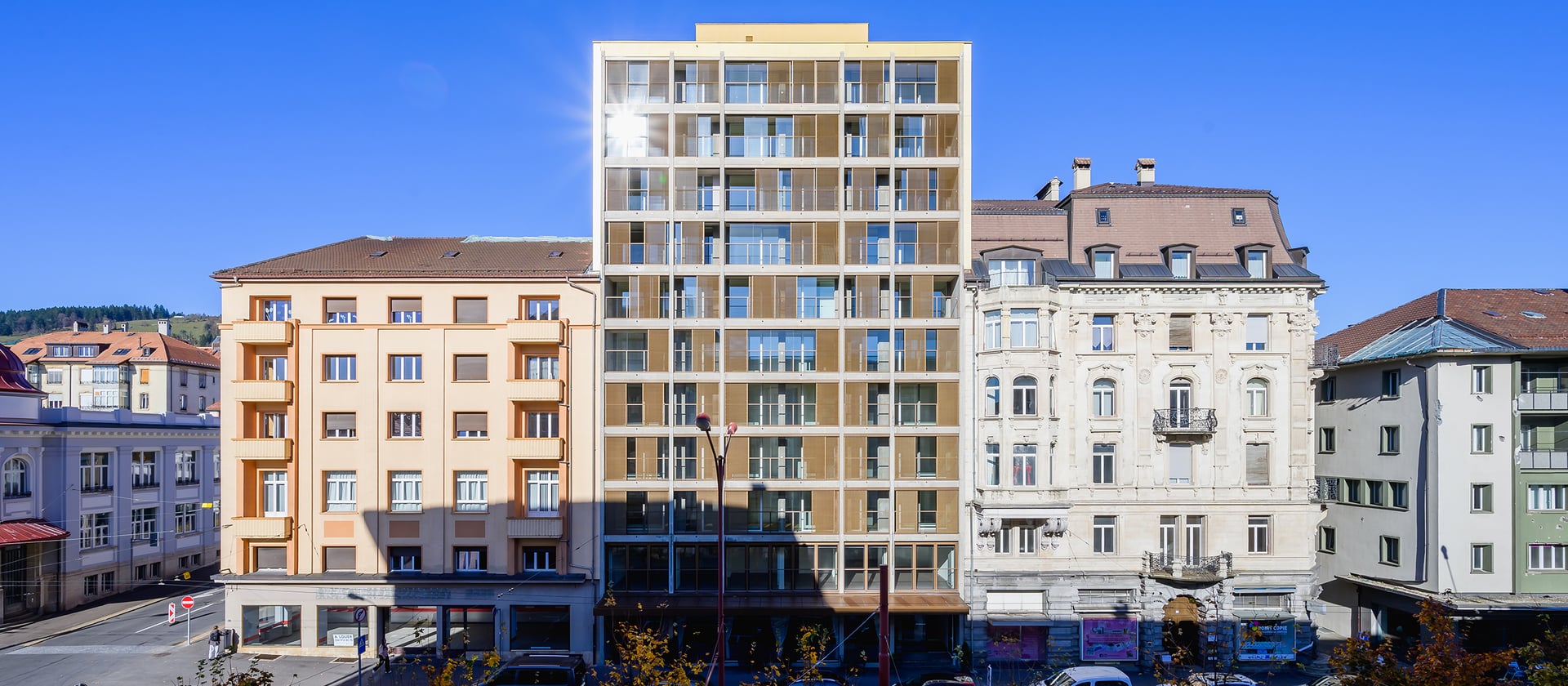
Upgraded.
Following a major fire in the 1960s, an early 20th-century cabaret known throughout the Swiss city of La Chaux-de-Fonds was replaced by a residential and office building with a distinct Brutalist influence.
The technical infrastructure was no longer up to present-day standards, so the concrete building had to be refurbished from top to bottom. The architects tasked with the job followed a principle of retaining and recycling rather than replacing and rebuilding. Also important was making the history of the building visible.
The roots of the freshly refurbished building on the busy Avenue Léopold-Robert reach further back than the actual year it was built. A sumptuous complex in a Historicist style once peered over the street from the same spot. It housed a popular cabaret whose name was inspired by the striking gold-coloured sphere on the roof of the building: “Boule d’or” – “golden ball”.
After the fire in 1965, the building required a radical rethink. Three years later the building was entirely rebuilt – but this time with a completely different face. Inspired by Le Corbusier, who saw his first plans become reality in this, his hometown, architect Jean-Pierre Horni designed a building that drew on the spirit of “Béton Brut”, which turned exposed concrete into a style. This Brutalist, rationalist design was highly controversial at the time; the building was even labelled as “disruptive” in the city’s architectural inventory. It is only in recent years, as the world has rediscovered the Brutalist movement, that the historical and architectural value of Horni’s work has been recognised and its austere charm celebrated. “The building is part of a row of buildings that represent different architectural strains, with traces of various epochs between the late 19th century and the mid 20th century. This diversity represents a de facto stylistic wealth,” according to the practice Evard Architectes. “So the refurbishment concept was soon in place: retain and recycle rather than replace and rebuild.”
The roots of the freshly refurbished building on the busy Avenue Léopold-Robert reach further back than the actual year it was built. A sumptuous complex in a Historicist style once peered over the street from the same spot. It housed a popular cabaret whose name was inspired by the striking gold-coloured sphere on the roof of the building: “Boule d’or” – “golden ball”.
After the fire in 1965, the building required a radical rethink. Three years later the building was entirely rebuilt – but this time with a completely different face. Inspired by Le Corbusier, who saw his first plans become reality in this, his hometown, architect Jean-Pierre Horni designed a building that drew on the spirit of “Béton Brut”, which turned exposed concrete into a style. This Brutalist, rationalist design was highly controversial at the time; the building was even labelled as “disruptive” in the city’s architectural inventory. It is only in recent years, as the world has rediscovered the Brutalist movement, that the historical and architectural value of Horni’s work has been recognised and its austere charm celebrated. “The building is part of a row of buildings that represent different architectural strains, with traces of various epochs between the late 19th century and the mid 20th century. This diversity represents a de facto stylistic wealth,” according to the practice Evard Architectes. “So the refurbishment concept was soon in place: retain and recycle rather than replace and rebuild.”
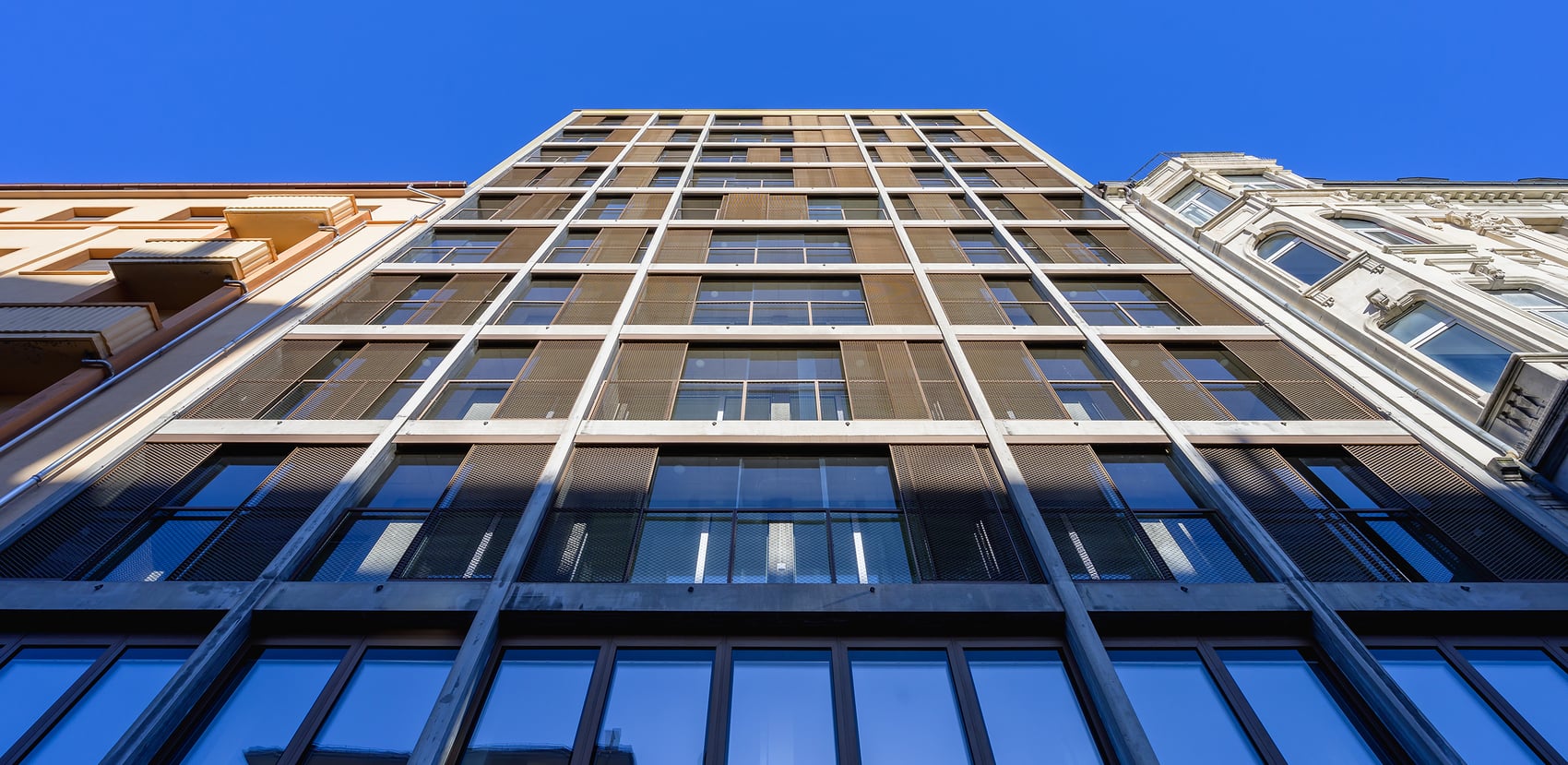
Less noise, comfortable temperatures: expanded metal elements set before loggias on the south side and composite sashes with integrated solar protection keep heat and street noise outside.
The building consists of ten storeys, 24 apartments, office space on the first floor and a restaurant on the ground floor. The basic structure of the premises was almost entirely retained, with some spaces restored with their original fixtures. Numerous interior doors and the original door handles were preserved.
The loggias on the south side also retained their original style, while receiving an elegant upgrade: the old railings were replaced by a dual hull consisting of moving elements, made of glass for better protection from street noise and expanded metal for movable protection from the sun. For additional flexible protection against sun and noise, Finstral installed new windows with composite sashes and Venetian blinds fitted between the panes.
The loggias on the south side also retained their original style, while receiving an elegant upgrade: the old railings were replaced by a dual hull consisting of moving elements, made of glass for better protection from street noise and expanded metal for movable protection from the sun. For additional flexible protection against sun and noise, Finstral installed new windows with composite sashes and Venetian blinds fitted between the panes.
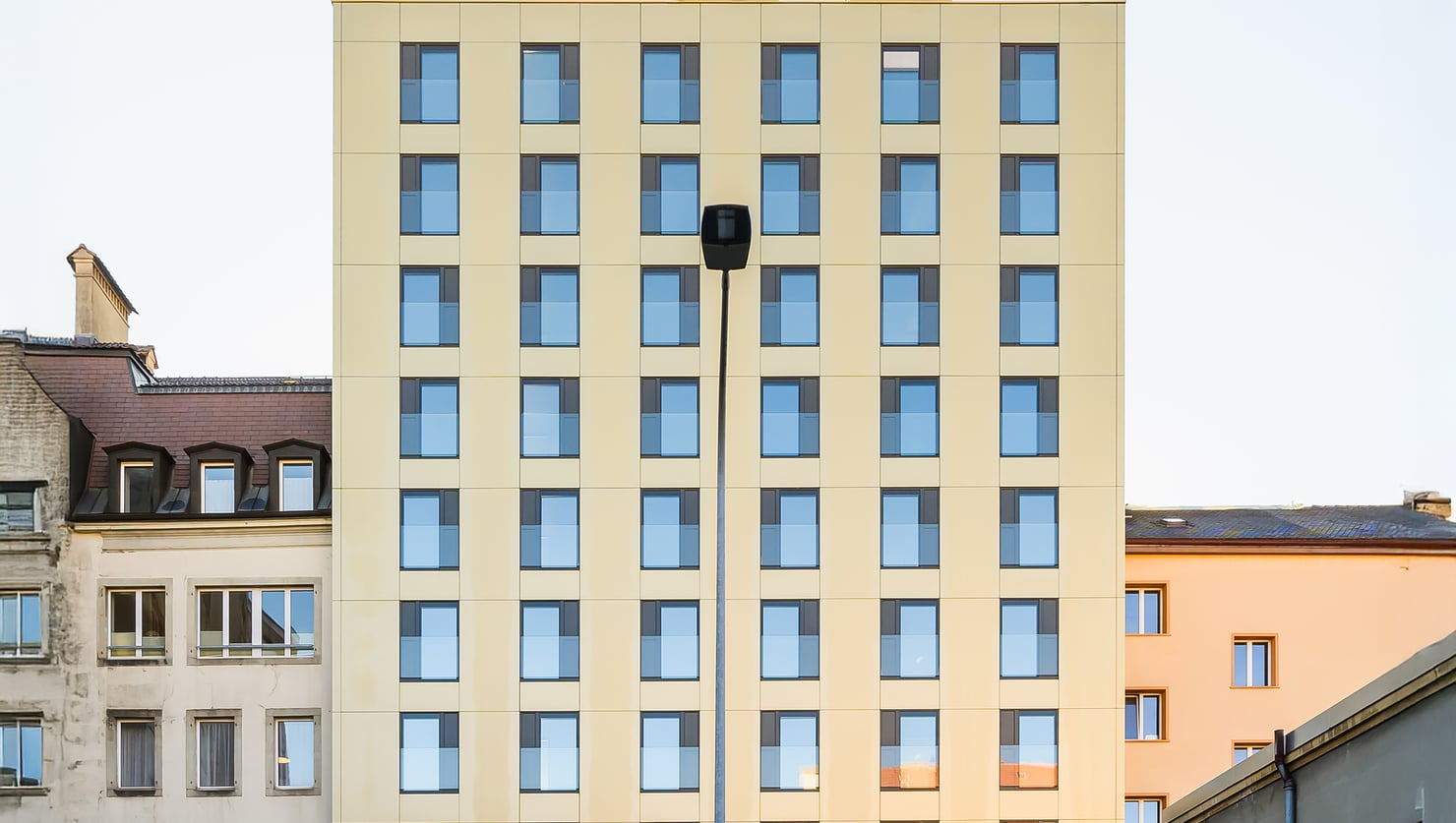
The northern façade in its full splendour: with the golden hue of the aluminium cladding as a nod to the previous building with its golden sphere.
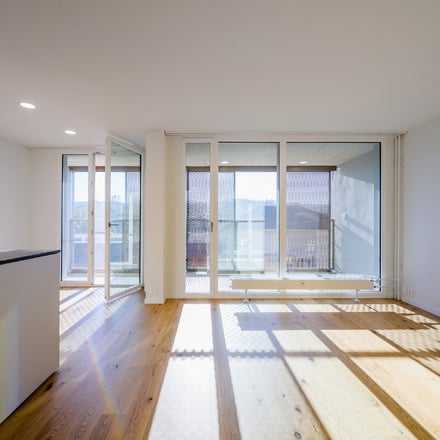
Perfect light, calming serenity: for flexible protection against sun and noise on the southern side, Finstral installed new windows with composite sashes and Venetian blinds fitted between the panes.
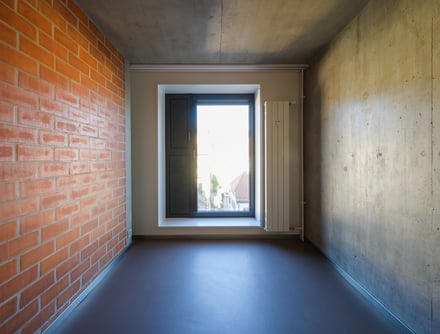
Favourite spot: the inviting new niches are perfect for sitting and reading in comfort.
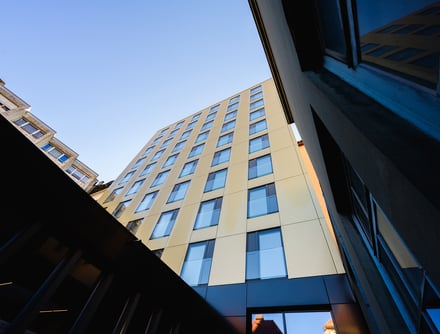
Energy optimisation: the new aluminium windows on the north side ensure measurably improve thermal insulation and fit harmoniously in the design of the façade.
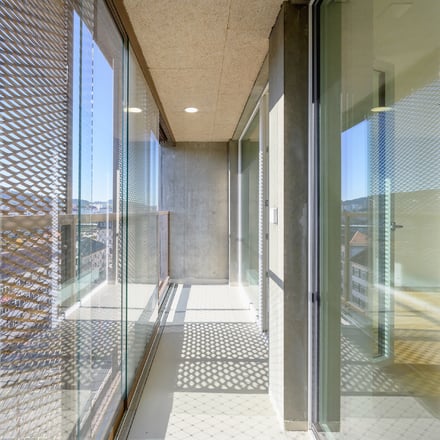
Flexible solar protection: the movable units guard against the sun at the precise locations where this is needed.
For the north façade, the focus was on optimising energy efficiency. The new aluminium windows have measurably improved thermal insulation with aesthetics that nonetheless respect the original style. Along with the large window elements there are smaller windows that can be opened and which feature flush, dark aluminium infills – a Finstral product devised especially for this project. With the improved insulation, the niches created by the window constructions are ideal for use as reading nooks or a place to sit and think. The windows, integrated flush with the façade, provide more living space without changing floor plans. Not just a design coup, this was also particularly welcomed by the client – the public-sector pension fund for the canton of Neuenburg. The smooth look of the northern façade was also retained. The windows are installed flush and the Venetian blinds for sun protection are fitted in the space between the panes – just as on the south side.
The highlight of the northern façade is the new cladding made up of aluminium composite panels. It drapes over the façade like a second skin and ensures perfect thermal insulation. For the architects it has further significance – the shimmering gold of the aluminium cladding also recalls the previous building with its “boule d’or” – the golden ball.
Project profile:
Property: Residential and office building
Construction task: Window replacement
Architects: Evard Architectes SA
Year of construction: 1968;
refurbishment: 2023
Total area: 2,860 m²
Locality: La Chaux-de-Fonds, Switzerland
Finstral elements:
The highlight of the northern façade is the new cladding made up of aluminium composite panels. It drapes over the façade like a second skin and ensures perfect thermal insulation. For the architects it has further significance – the shimmering gold of the aluminium cladding also recalls the previous building with its “boule d’or” – the golden ball.
Project profile:
Property: Residential and office building
Construction task: Window replacement
Architects: Evard Architectes SA
Year of construction: 1968;
refurbishment: 2023
Total area: 2,860 m²
Locality: La Chaux-de-Fonds, Switzerland
Finstral elements:
- Window FIN-Window Nova-line Twin 77 uPVC-uPVC
- Window FIN-Window Nova-line Twin 77+8 aluminium-uPVC
- Window FIN-Project Nova-line Cristal Twin 78 aluminium-aluminium
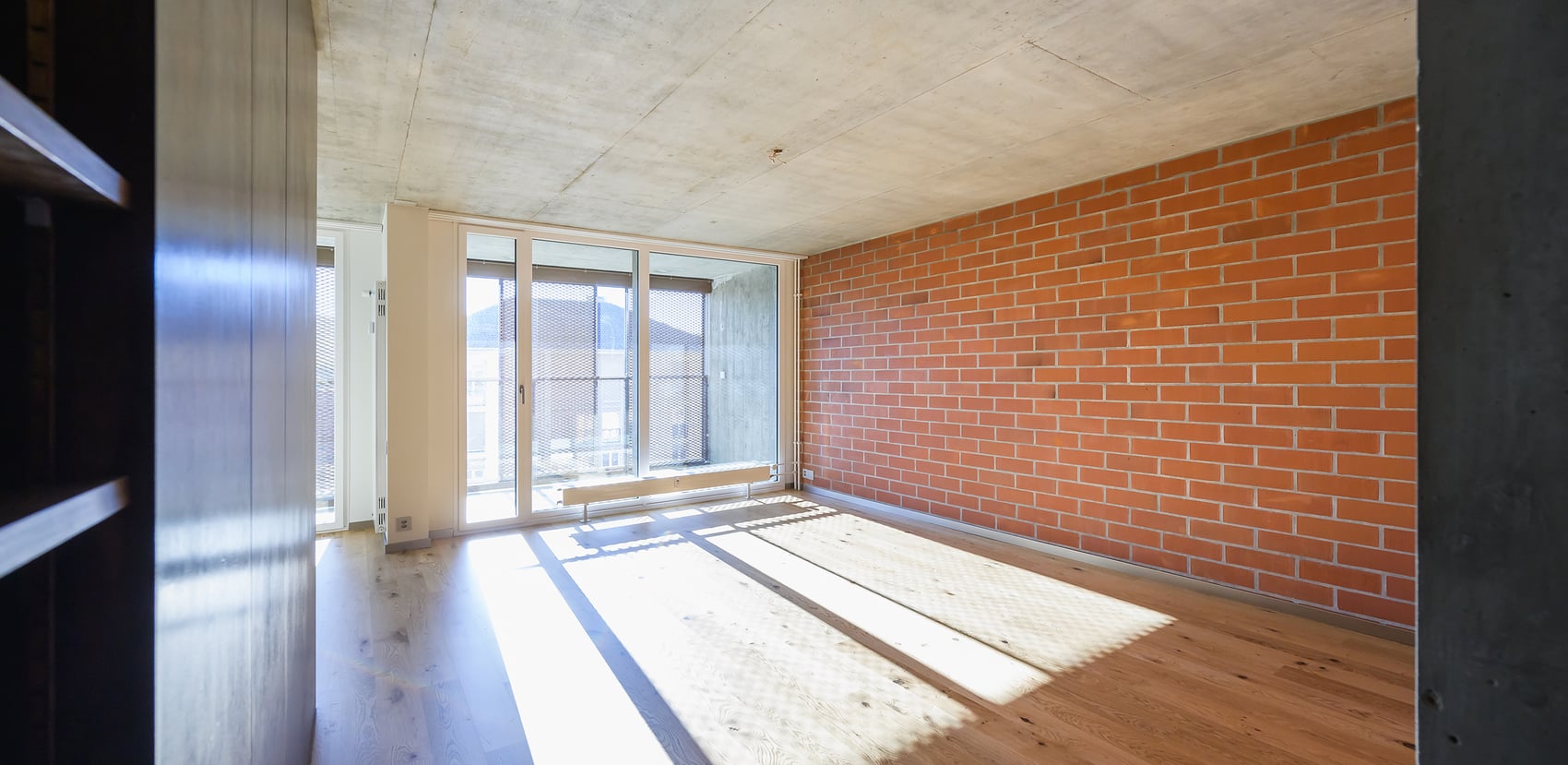
No change: the basic layout of the interior was almost completely retained.
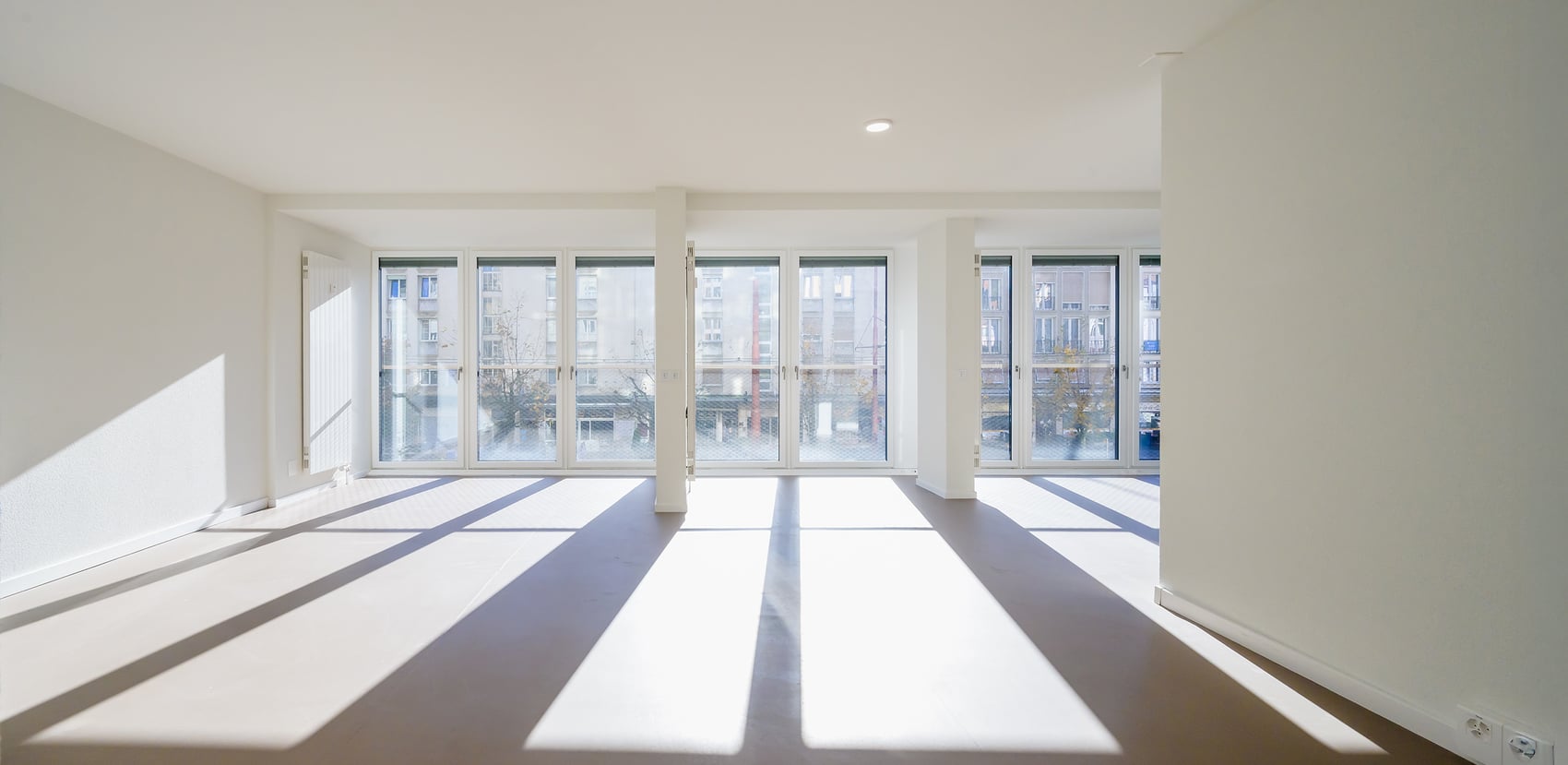
Ample space: the large glass areas make the interior spaces appear even larger.
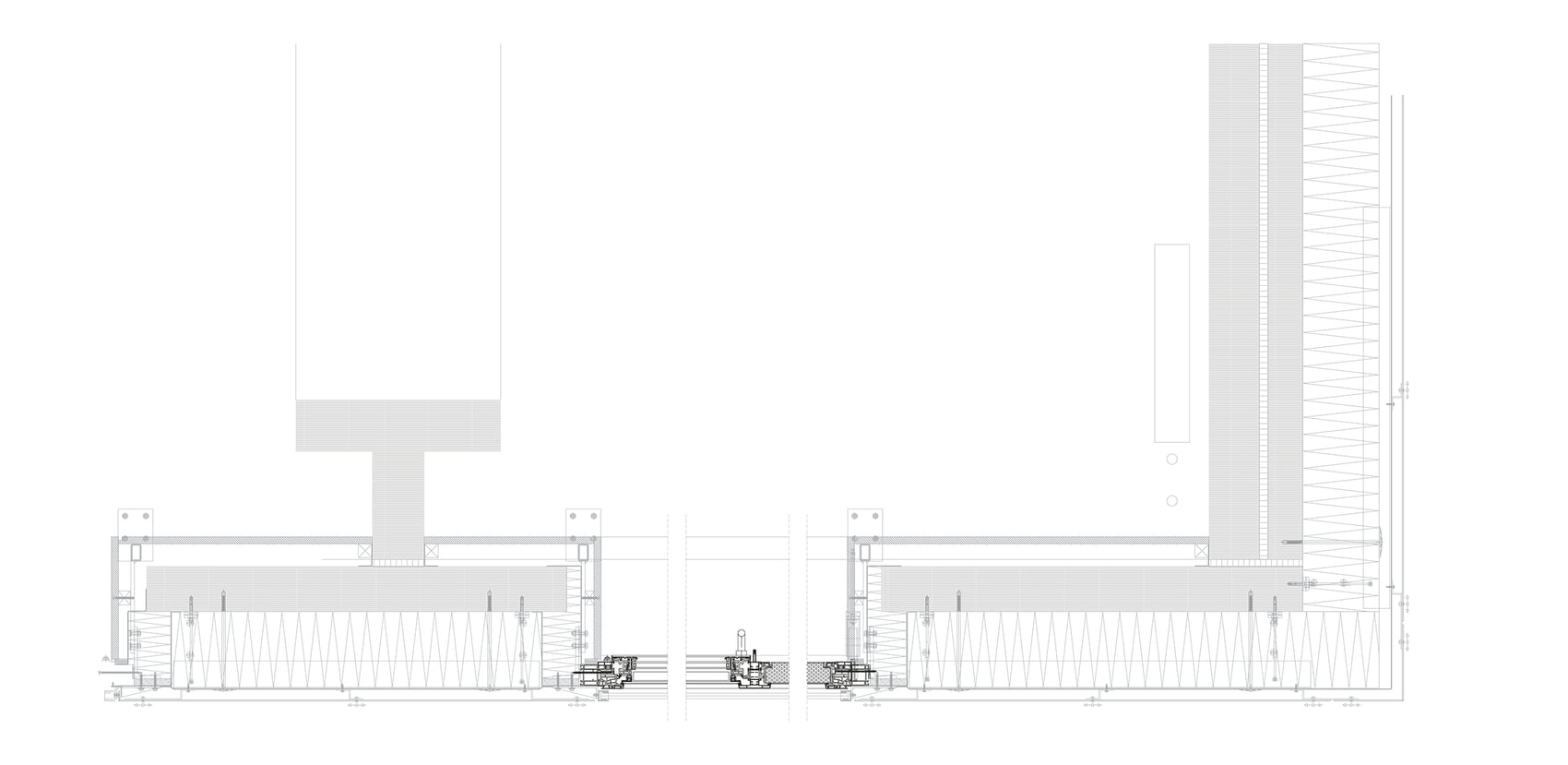
Building connection
A three-part window element with glass railings was installed on the rear side of the building. The large FIN-Project Nova-line Cristal Twin window sash has frame-covering glass inside and out. Low-maintenance Venetian blinds integrated between the panes, protected from the weather, provide sun protection. This means there is no shading box required, and the building connection is much simpler. Alongside it is a narrow vent ventilation sash that is set above a fixed-glass field. They both reference the look of the Cristal window sash with glass-covered frame, which means all three fields close flush. The three-part configuration of the window enhances the pixellated impression of the perforated façade. From the inside, the glass sash and the flush panelling make it a high-quality modern fixture in the space.
A three-part window element with glass railings was installed on the rear side of the building. The large FIN-Project Nova-line Cristal Twin window sash has frame-covering glass inside and out. Low-maintenance Venetian blinds integrated between the panes, protected from the weather, provide sun protection. This means there is no shading box required, and the building connection is much simpler. Alongside it is a narrow vent ventilation sash that is set above a fixed-glass field. They both reference the look of the Cristal window sash with glass-covered frame, which means all three fields close flush. The three-part configuration of the window enhances the pixellated impression of the perforated façade. From the inside, the glass sash and the flush panelling make it a high-quality modern fixture in the space.
Still want more?
See here for further interesting reading matter.
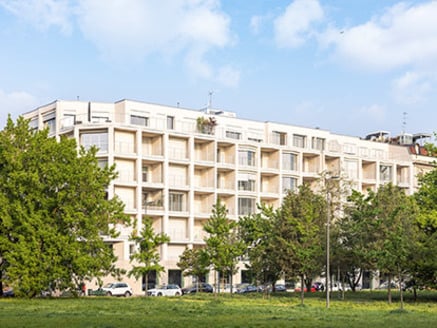
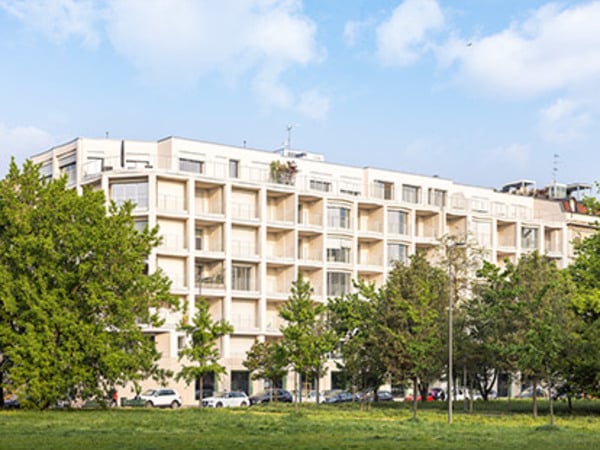
Where urban and green space meet - a residential complex opens onto a park.
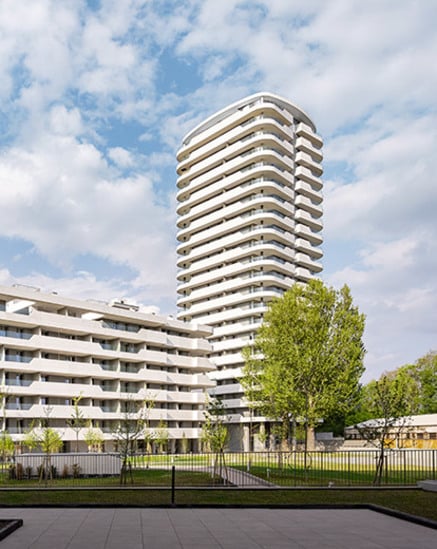
At home in an urban landscape: different systems, a single architectural language.