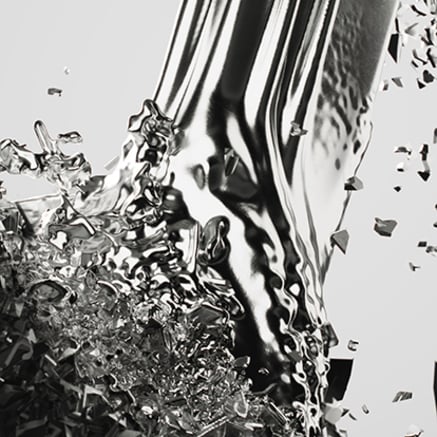
What does self-preserving architecture look like? We went in search of answers, solutions and opportunities. What we found: materials that remain. Circuits that can be closed. And ideas that transform waste into resources.
1. Production
Glass is made out of sand (silicium dioxide), soda and lime at a temperature of over 1,500°C. To reduce energy consumption, recycled used glass is added in the form of shards – around 35–40% in total. The majority comes from production offcuts (pre-consumer glass); to date there is little use of post-consumer glass – from old windows, for instance. Float glass production entails 1.2–1.6 tonnes of CO2 per tonne of glass – primarily in the energy-intensive melting process.
2. Opportunities
Unlimited recycling: Glass is up to 100% recyclable and can be re-used with no loss of quality. The circular economy drastically reduces dependency on primary raw materials (sand, carbonate).
Carbon reduction through recycling: Recycled glass (in shards) reduces the energy requirement of glass manufacturing because it melts at lower temperatures. This also removes the chemical carbon emissions that arise from smelting sand and carbonates.
Carbon reduction through green energy: The greatest contribution to emissions reduction is the use of hydrogen and the electrification of the smelting process. A pilot project with 30% hydrogen saw a 70% reduction in direct emissions. But glass recycling is also essential in a low-carbon future, as it significantly reduces energy consumption.
Zero-carbon float glass: Pilot projects have achieved completely climate-neutral float glass manufacturing with 100% renewable energies (biogas and green electricity) and 100% recycled glass.
3. Challenges
Energy-intensive production: Float glass plants run 24/7 for many years, as running down and starting up again are almost entirely unfeasible for technical and economic reasons. A single plant uses as much energy as a town with 20,000 inhabitants.
High purity requirements: Glass for high-quality applications has to be free of contaminants. The slightest amount of foreign particles such as metal residue can render the material unusable.
Low proportion of recycled post-consumer glass: While production offcuts (pre-consumer glass) are often recycled, the proportion of window glass from old buildings (post-consumer glass) is only around 1% at present. The main reasons for this are the lack of widespread collection systems and the complex sorting and purifying processes.
Lack of statutory incentives: Regulators often treat used glass as waste rather than a valuable raw material. There are no mandatory take-back systems for old windows, and landfill costs are often too low to make recycling an economically attractive alternative.
High costs for transportation and processing: The transportation and purification of used glass is often more expensive than the use of primary raw materials. Without incentives or subsidy programmes, recycling costs will remain high.
Low acceptance: Customers expect flawless glass. In the premium segment, the smallest optical deviation (such as a near-invisible dot in the glass) is sufficient cause to reject recycled glass.
4. Best-case scenario 2050
Closed recycling circuits: Used glass flows back into production at a rate of 100%. An efficient material cycle renders the use of raw materials superfluous.
Stricter regulation: Higher landfill costs and mandatory take-back make recycling more economical. Carbon pricing for primary glass promotes the use of recycled glass.
Efficient collection systems: Decentralised recycling centres facilitate the return of glass waste and are open to anyone who wishes to offload their old materials.
Automated processes: Advanced sorting and purification systems ensure a more stable quality of materials. Widespread use of technologies for the removal of metal and sorting of different types of glass.
Low-carbon or carbon-free glass production: The glass industry uses only renewable energies and hydrogen as energy sources. Electrified smelting furnaces and smelting technologies enable near emission-free production. The increased use of shards maximises carbon savings.
Recycled and low-carbon glass as industry standard: By 2050 the majority of window products will consist of low-carbon glass with a recycling rate of over 70%. By comparison: Finstral only began making extensive use of this glass in 2025 and has already reduced its consumption of raw materials and its carbon footprint by 6% compared to the previous year.