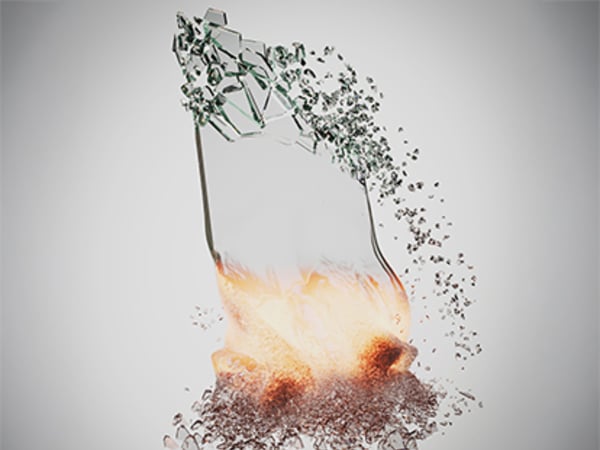
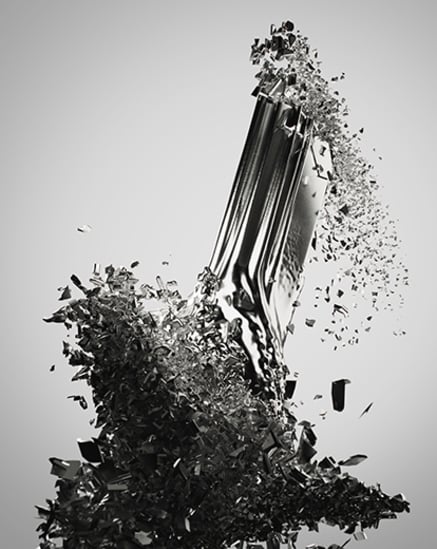
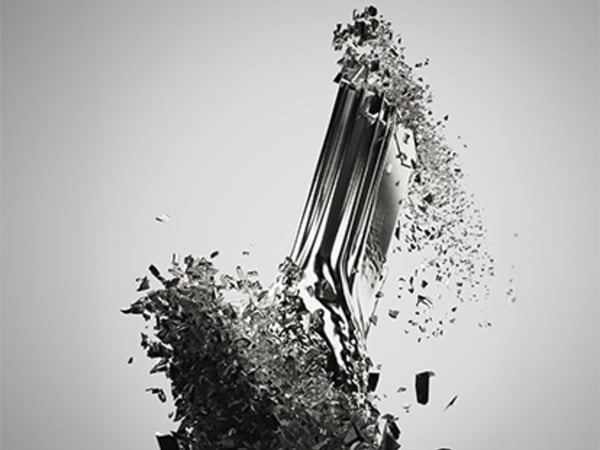
What does self-preserving architecture look like? We went in search of answers, solutions and opportunities. What we found: materials that remain. Circuits that can be closed. And ideas that transform waste into resources.
1. Production
uPVC (polyvinyl chloride) is made up of two main raw materials: chlorine, which is derived from salt, and ethylene, which comes from fossil-based raw materials, bio-ethylene or chemical recycling. These materials react to form vinyl chloride monomers (VCM), which are then polymerised to become uPVC. Producing one tonne of uPVC from fossil-based raw materials generates 1.9–2.6 tonnes of CO2 – depending on the source of electricity and the primary products used. As well as electricity, the process requires heating energy, particularly for cracking processes and drying.
2. Opportunities
Durability: uPVC is particularly durable – a key sustainability criterion.
Mechanical recycling: uPVC waste is shredded, purified and processed into granulate or powder without changing its chemical structure. This is a low-energy, cost-efficient process that preserves the material quality and it is particularly suitable for creating pure uPVC from production residues or old windows. Material blends, contaminants, foreign substances and plasticisers make uPVC much more difficult to recycle.
Chemical recycling: Plastic is chemically decomposed into its basic elements, which produces raw materials (such as ethylene) in the same quality as primary sources. The challenges presented by this energy-intensive method lie in the removal of the high chlorine content and regulatory restrictions on the use of recycled materials (see “Mass balance principle”, below).
Bio-ethylene: The sustainable alternative to fossil ethylene – extracted from rapeseed oil or cooking fat and other food waste – is chemically indistinguishable. uPVC made from bio-ethylene reduces the carbon footprint by over 60%.
Defossilisation: Using raw materials of biological origin such as bio-ethylene from organic waste or carbon from carbon capture technologies is a sustainable alternative to fossil carbon sources. This means uPVC could be used as a carbon sink in the future.
Carbon as a raw material (carbon capture and utilisation, CCU): CO2 – from industrial exhaust gas or directly from the atmosphere – could replace petrol as a source of carbon in the future. Ethylene – the key precursor for uPVC – can be produced through a range of chemical conversion processes. That means that in the future, uPVC could be climate-neutral or even climate-positive.
Mass balance principle: This process allows raw materials of identical quality but different origins (fossil, bio-based, recycled) to be mixed and their proportions in the end product recorded to be verified for accounting purposes, but not physically. In the power industry, it is this principle that allows green electricity to be fed into the general grid. For ethylene and other raw materials in the chemical industry, approval of the mass balance principle would be a real game-changer. But to date, regulations do not permit the use of ethylene under the mass balance principle for uPVC production.
3. Challenges
Technical hurdles in recycling: We can only achieve a closed mechanical circuit without downcycling if the materials remain unmixed. “Co-extrusion” – the blending of high- and low-quality uPVC materials – makes it much more difficult to recycle. Contaminants such as stabilising lead are also problematic. Although the European uPVC industry stopped using lead compounds in 2015, older products and even new windows that contain recycled materials from old frames can contain lead. That makes recycling more expensive, and in some cases impossible.
High costs: Bio-ethylene is up to three times more expensive than ethylene.
Regulatory uncertainty: There is no uniform recognition of the mass balance process, which is an impediment to recycling strategies. The EU is discussing various models that would require certification under ISCC+ or REDcert as verification of the recycled content of products. There is also uncertainty around whether chemical recycling can be fully counted towards recycling quotas.
Focus on recycling quotas rather than carbon reduction: Lawmakers impose fixed recycling quotas. A footprint-based system could represent a more innovative, technology-neutral approach to carbon reduction.
Energy source as the key to carbon reduction: Producing uPVC takes a lot of energy. Chlorine electrolysis alone requires 2.5–3.5 MWh electricity per tonne. That means renewable energies are essential.
Indirect emissions: In addition to direct emissions – through chlorine electrolysis, for instance – there is a further carbon cost associated with process energy, transportation and the use of auxiliary materials.
4. Best-case scenario 2050
Standardised carbon footprint calculation within the EU: Material decisions are based on actual climate footprints rather than recycling rates.
Closed recycling circuits: Mechanical and chemical recycling are a great match; through mechanical recycling, pure uPVC waste can re-enter the production cycle with no loss of quality, while all other waste can be re-used through chemical recycling.
Decarbonised production: Fossil raw materials are replaced by ethylene of biological origin, CCU technologies and chemical recycling.
uPVC as a carbon sink: The use of carbon from the atmosphere for polymer production binds carbon in materials for the long term. This means that ideally, uPVC is actually climate-positive.
Production with self-sufficient energy: uPVC production runs completely on renewable energy. Energy-intensive processes such as carbon capture have become economical thanks to cheap green electricity.
Endless recycling: The combination of mechanical and chemical recycling processes means that PVC products remain in circulation with no loss in quality.