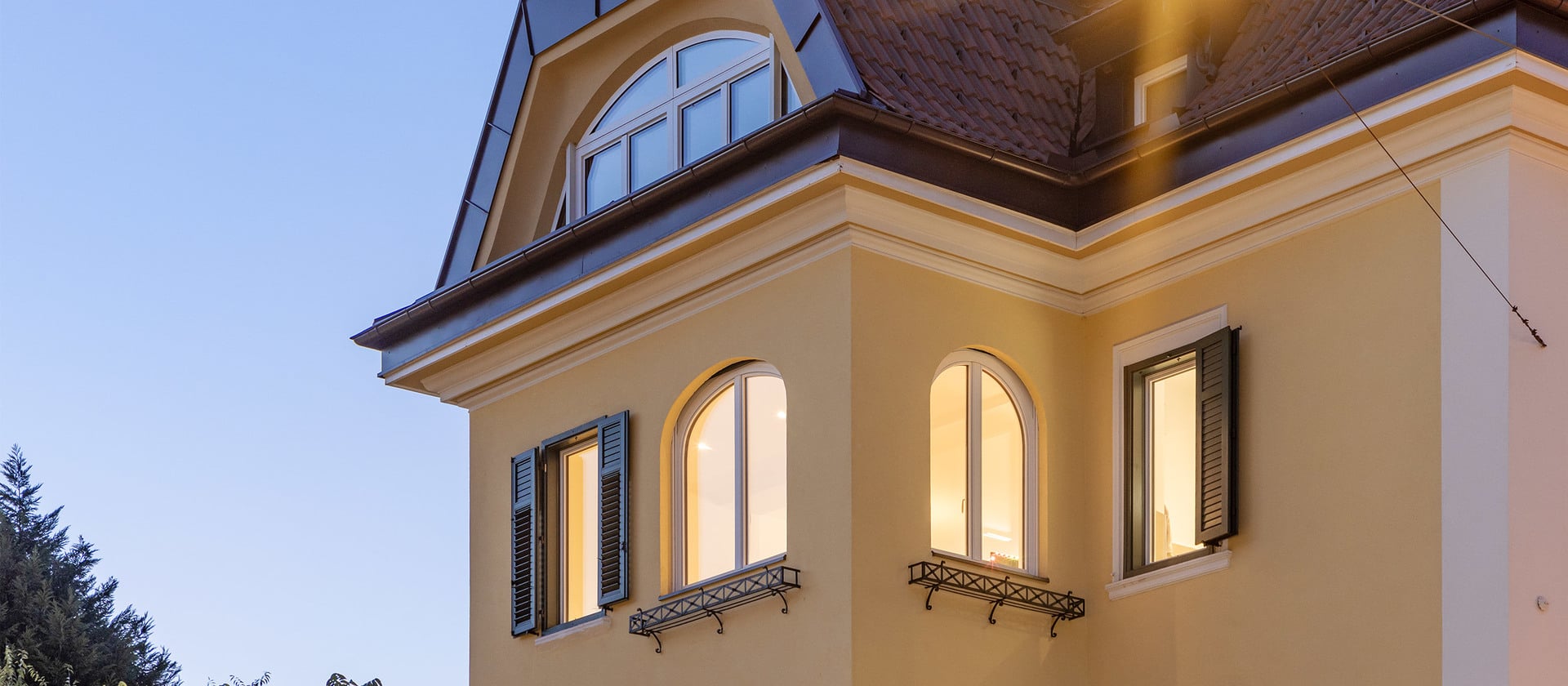
Traditional building front with new windows: villa refurbishment in Bozen.
South Tyrolean window manufacturer Finstral successfully replaced the windows and shutters in an apartment building in Bozen.
Just one last sip of espresso, then it’s back to work for salesman Thomas Wiedenhofer and Kristin Oberrauch, Head of Direct Sales in the South Tyrol to Verona territory and member of the Finstral Board of Directors. They leave a small bar and walk back along the road in Bozen to view their finished project. With a satisfied look, they contemplate the villa where, on the first and second storeys, Finstral replaced both the windows and hinged and roller shutters.
“Despite being an easily manageable project by Finstral’s standards, its true merit consists – as always – in the painstaking response to the existing fabric and the precise detailing of each individual unit,” Wiedenhofer explains. The striking feature of the new windows is the slenderness of their frames, which serves to maximise daylighting while responding sensitively to the proportions of the historic façades. The white uPVC consciously and subtly echoes the existing architectural idiom – on both interior and exterior.
“Despite being an easily manageable project by Finstral’s standards, its true merit consists – as always – in the painstaking response to the existing fabric and the precise detailing of each individual unit,” Wiedenhofer explains. The striking feature of the new windows is the slenderness of their frames, which serves to maximise daylighting while responding sensitively to the proportions of the historic façades. The white uPVC consciously and subtly echoes the existing architectural idiom – on both interior and exterior.
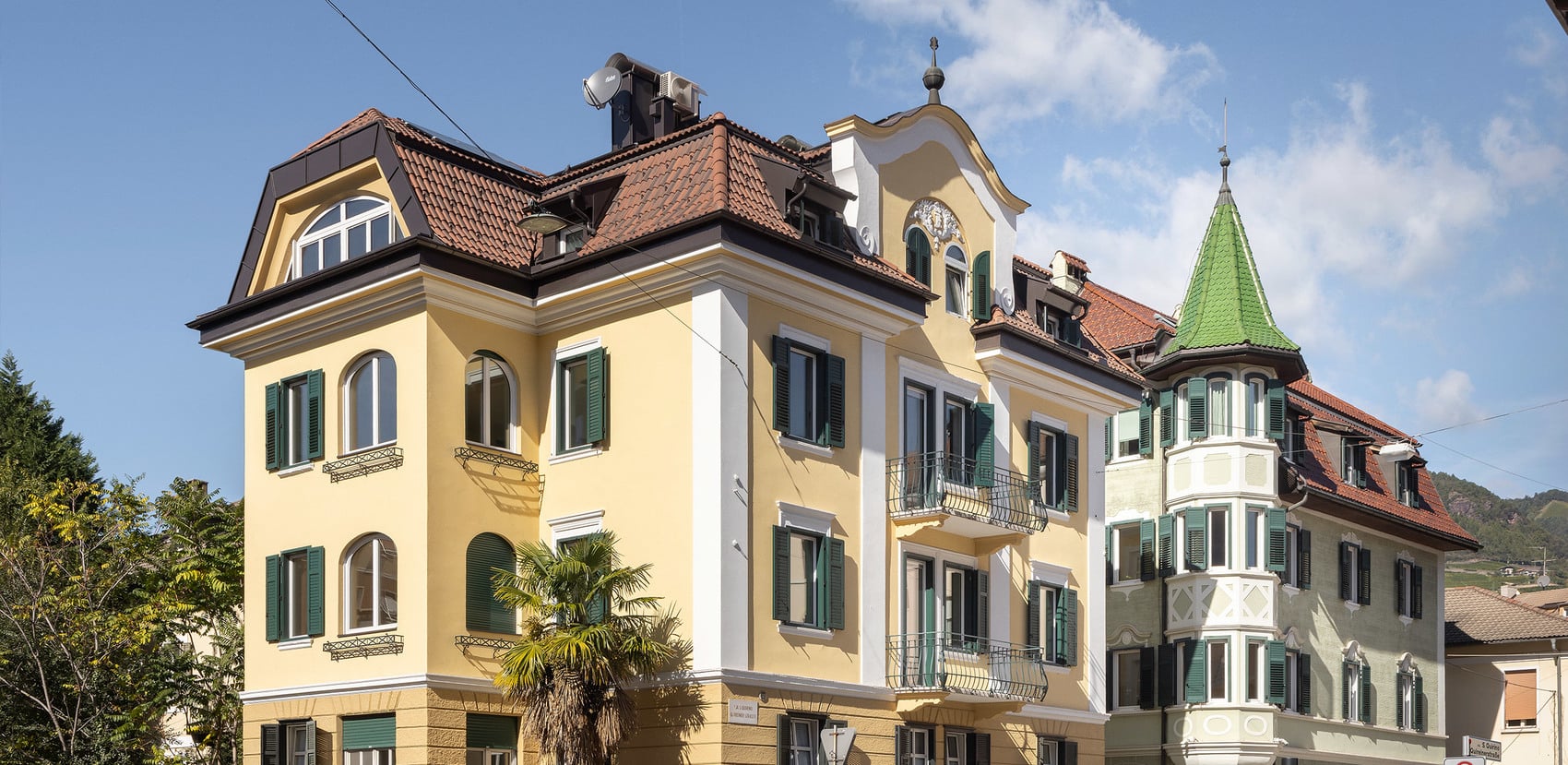
Corner view of building: marriage of historic façade with state-of-the-art window technology.
The round-arch windows, in particular, shape the character and preserve the charm of the old building while offering contemporary functionality: the incorporated mullions divide the units into two smoothly opening sashes for maximum convenience during everyday use. At the same time, the triple glazing meets modern-day demands in terms of energy efficiency and living comfort.
On the exterior too, the focus was on engaging respectfully with the existing architecture. As the refurbishment was confined to the first and second storeys, the new units had to blend harmoniously with the ground-floor and attic-level elevations to maintain the building’s overall unified composition. The hinged and roller shutters were accordingly painted green to emulate the original units. The adjustable slats of the hinged shutters cater for the close control of daylighting and ventilation while also providing for efficient, flexible visual privacy and solar protection.
On the exterior too, the focus was on engaging respectfully with the existing architecture. As the refurbishment was confined to the first and second storeys, the new units had to blend harmoniously with the ground-floor and attic-level elevations to maintain the building’s overall unified composition. The hinged and roller shutters were accordingly painted green to emulate the original units. The adjustable slats of the hinged shutters cater for the close control of daylighting and ventilation while also providing for efficient, flexible visual privacy and solar protection.
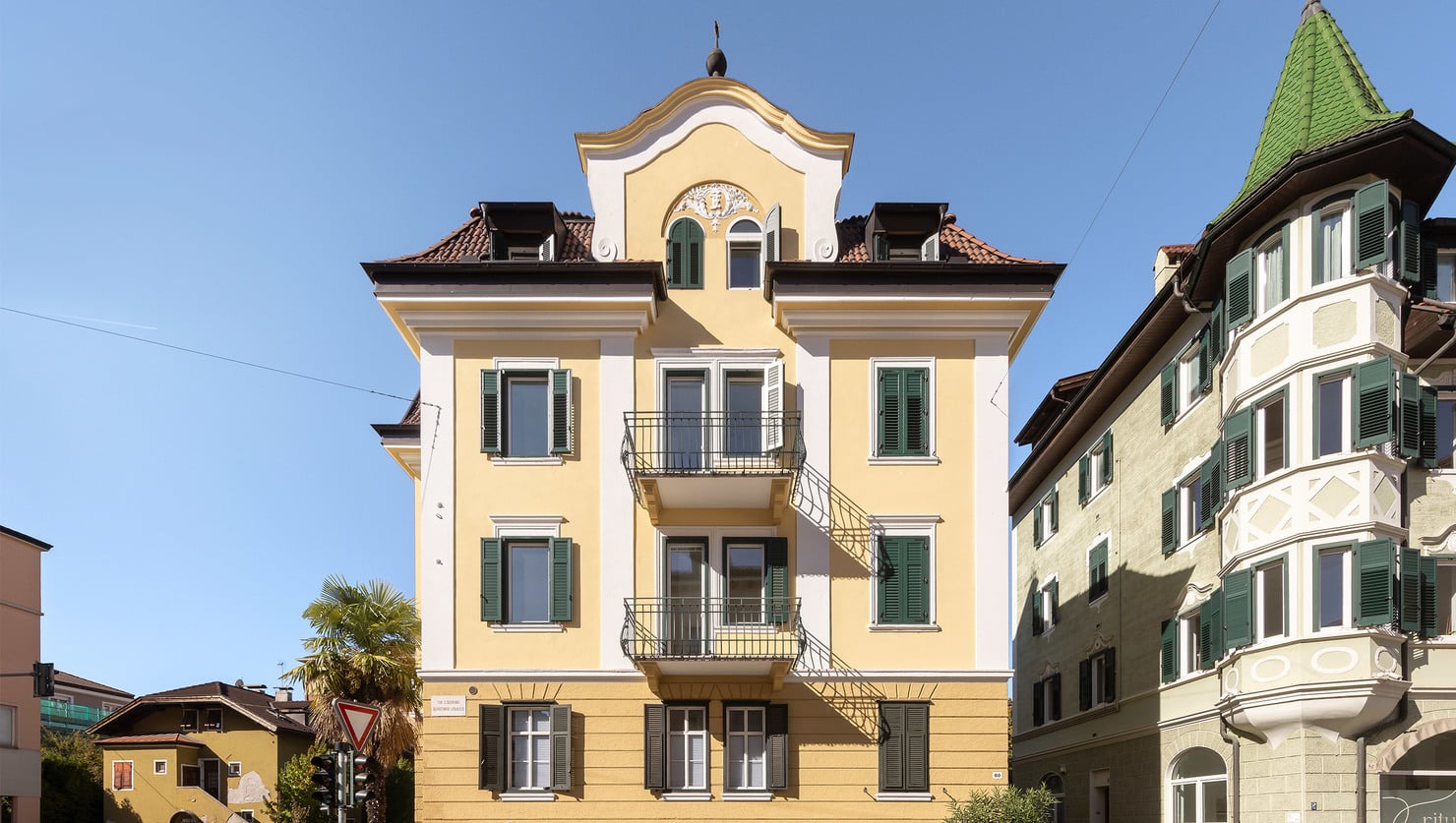
Street front of refurbished villa boasting new Finstral windows and green hinged shutters on first and second floors.
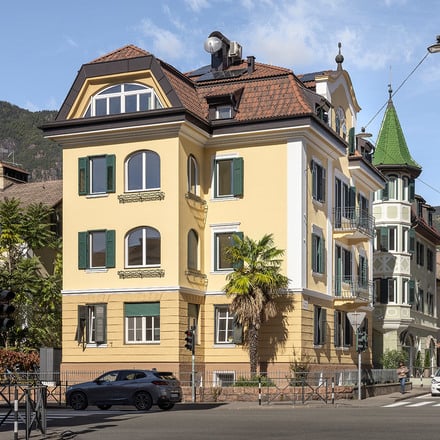
Window replacement in existing building: slender frames and triple glazing for enhanced comfort.
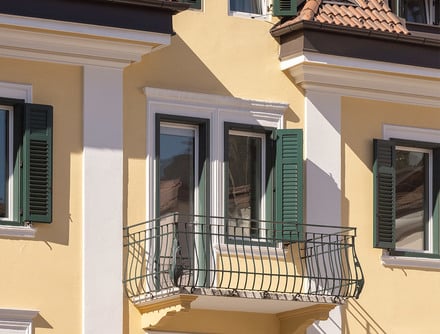
The second-floor windows and hinged shutters were replaced while the original fabric was retained at attic level.
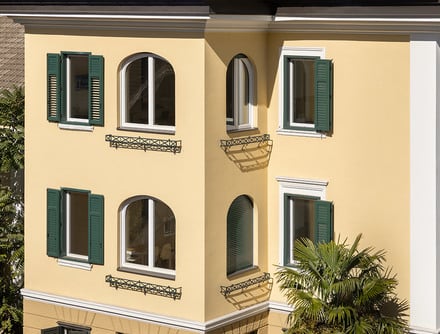
Windows with hinged shutters and round-arch windows with roller shutters – meticulously detailed to blend with the façade’s historic character.
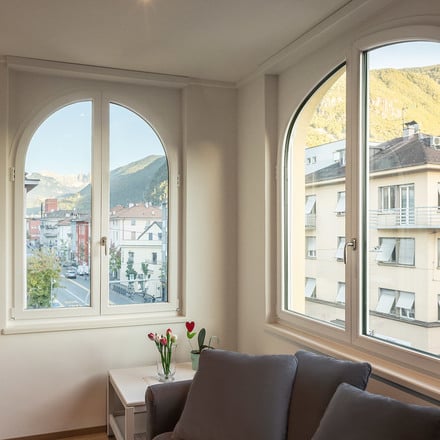
Interior view with round-arch windows: ample daylight and contemporary living comfort in refurbished building.
Key to the window replacement contract was the use of the FIN-Fix mounting frame. Here – after removal of the existing components and preparation of the openings – thermally insulating uPVC frames are fixed to the masonry together with the roller shutter boxes and plastered over during the wet construction phase. The actual windows are not installed until the dry construction phase after the “heavy” structural and plastering/rendering works have been completed. This clearly structured procedure creates the ideal basis for supreme quality, precision and reliable project delivery.
As Kristin Oberrauch points out, “The mounting frame facilitates a clear-cut organisation of the construction process in which the windows are protected to the very end.” Particularly challenging was the combination of round arches and integrated roller shutter boxes – a solution custom-developed for this project. “The precise and coherent accommodation of even this special requirement testifies to the system’s flexibility,” says Oberrauch.
The villa in Bozen epitomises best practice in the sensitive treatment of existing building fabric. The upper-floor window replacement demonstrates the convincing marriage of historic architecture and up-to-the-minute technology – without any design incongruities. Thanks to its scrupulously detailed solutions and clearly structured site procedures, Finstral succeeded in preserving the character of the building while appreciably enhancing living comfort. The project underlines the paramount importance of both technical know-how and architectural sensitivity for sustainable refurbishment concepts.
As Kristin Oberrauch points out, “The mounting frame facilitates a clear-cut organisation of the construction process in which the windows are protected to the very end.” Particularly challenging was the combination of round arches and integrated roller shutter boxes – a solution custom-developed for this project. “The precise and coherent accommodation of even this special requirement testifies to the system’s flexibility,” says Oberrauch.
The villa in Bozen epitomises best practice in the sensitive treatment of existing building fabric. The upper-floor window replacement demonstrates the convincing marriage of historic architecture and up-to-the-minute technology – without any design incongruities. Thanks to its scrupulously detailed solutions and clearly structured site procedures, Finstral succeeded in preserving the character of the building while appreciably enhancing living comfort. The project underlines the paramount importance of both technical know-how and architectural sensitivity for sustainable refurbishment concepts.
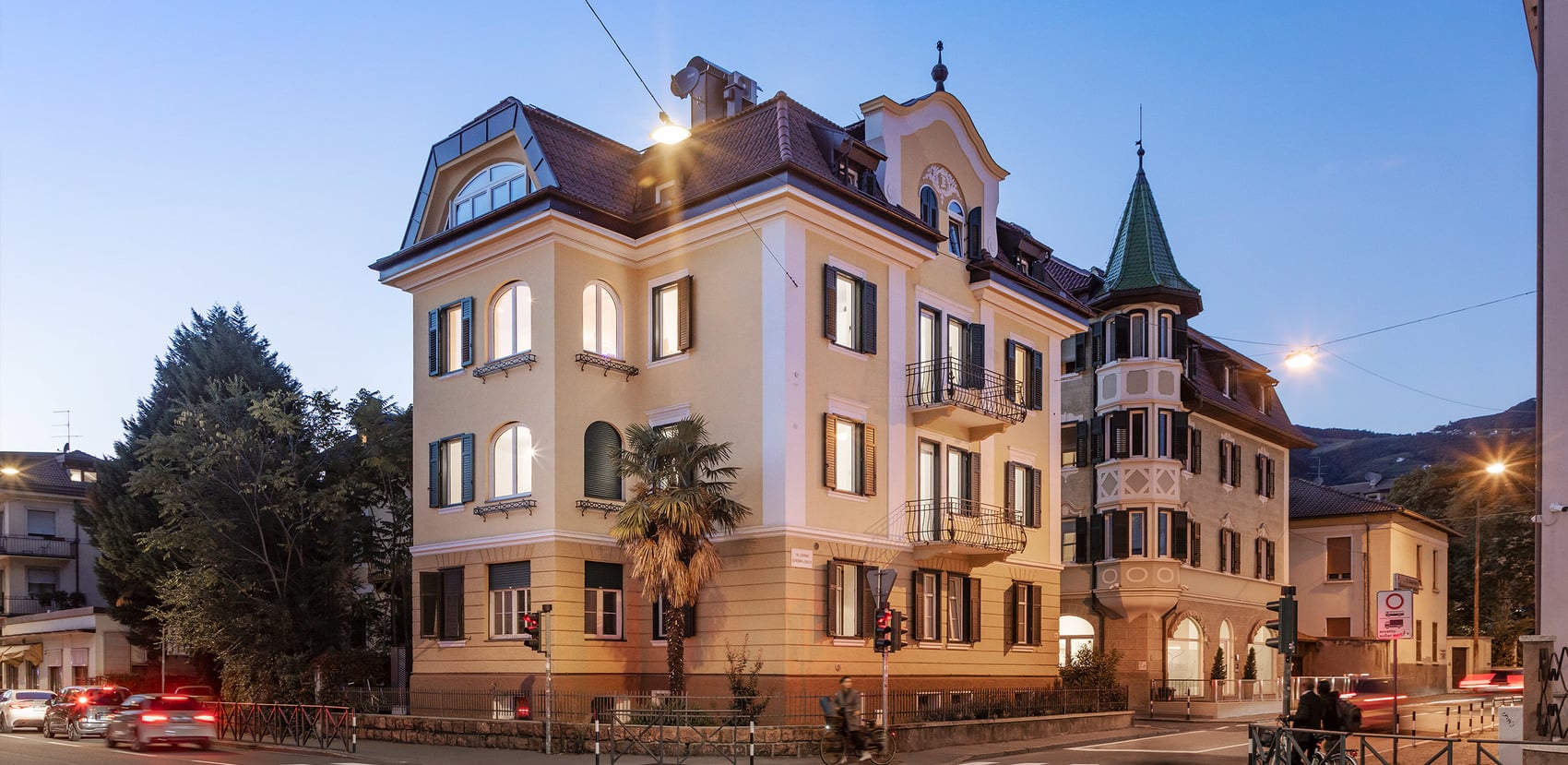
Twilight view of villa.
Still want more?
See here for further interesting reading matter.

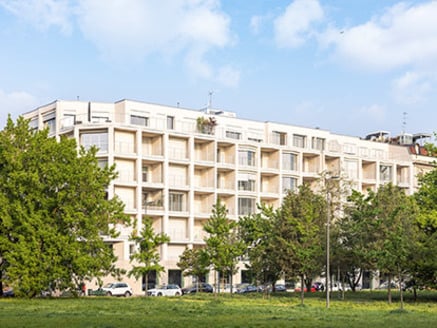
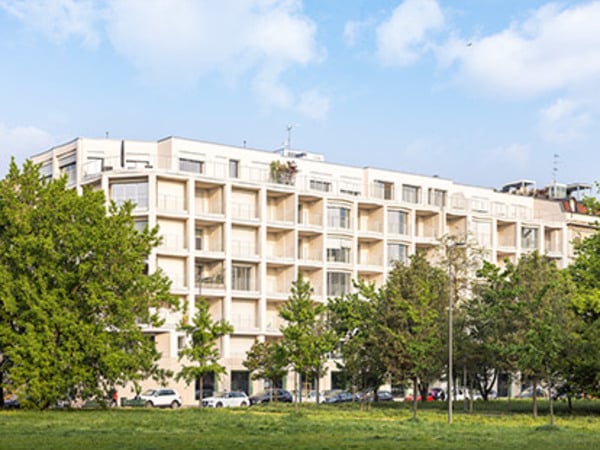
Where urban and green space meet - a residential complex opens onto a park.
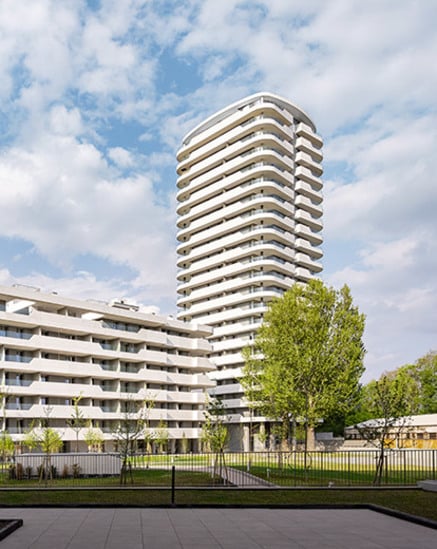
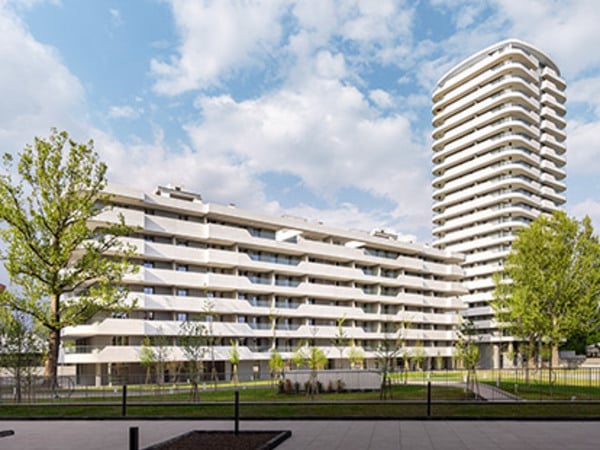
At home in an urban landscape: different systems, a single architectural language.