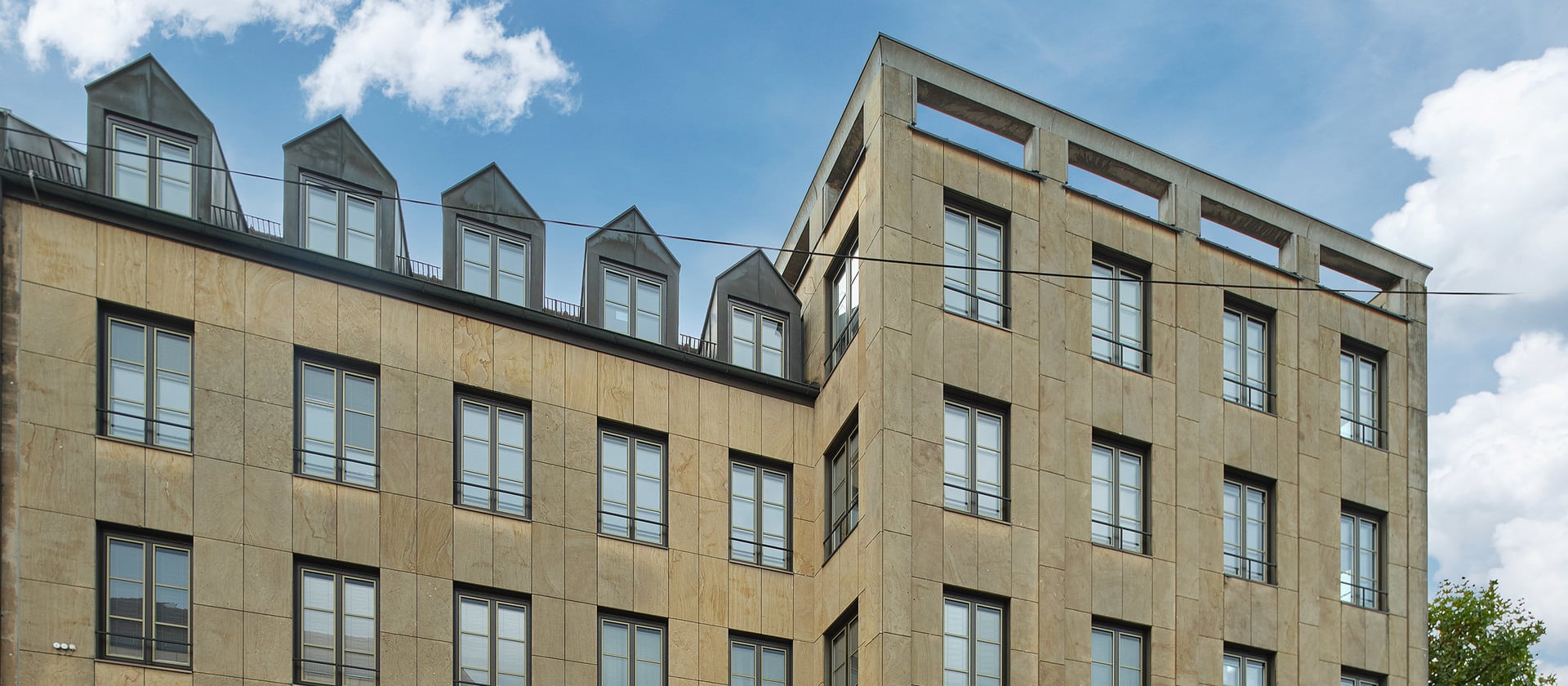
Smart window replacement with Finstral: modular and minimally invasive.
For a scheme in the heart of the Bavarian city of Erlangen, the window manufacturer delivered dovetailed product solutions – with everything running like clockwork thanks to the company’s innovative slide-in installation method and modular range.
Werner Schmidt from Finstral’s Architect Service is standing in the centre of Erlangen – between the main street and pedestrian precinct. As pedestrians scurry past, he takes a contented look at a building with offices and small medical practices. What is it that makes this building so special?
“In this complex, unnoticed by virtually everyone, we managed to replace over 50 window units in just under three weeks – all thanks to Finstral’s innovative slide-in installation method,” Schmidt reports. During this process, the existing window frames and their connection to the building remained fully intact. Only the sash frame and hardware were removed. On the interior, the existing window frame is faced by a profile that acts as a window frame for the new sash. The fact that this method requires no cutting of frame profiles, nor any masonry works, with all operations performed from the inside, makes the replacement fast and flexible – without any noise, dirt or scaffolding.
Its advantages were crucial for this contract. Given the centrality of the location and resulting spatial constraints, bulk delivery of the windows was not feasible. “That's why we only delivered the units that were to be installed on the same day. We took those that had been dismantled back with us in the evening,” Schmidt adds.
“In this complex, unnoticed by virtually everyone, we managed to replace over 50 window units in just under three weeks – all thanks to Finstral’s innovative slide-in installation method,” Schmidt reports. During this process, the existing window frames and their connection to the building remained fully intact. Only the sash frame and hardware were removed. On the interior, the existing window frame is faced by a profile that acts as a window frame for the new sash. The fact that this method requires no cutting of frame profiles, nor any masonry works, with all operations performed from the inside, makes the replacement fast and flexible – without any noise, dirt or scaffolding.
Its advantages were crucial for this contract. Given the centrality of the location and resulting spatial constraints, bulk delivery of the windows was not feasible. “That's why we only delivered the units that were to be installed on the same day. We took those that had been dismantled back with us in the evening,” Schmidt adds.
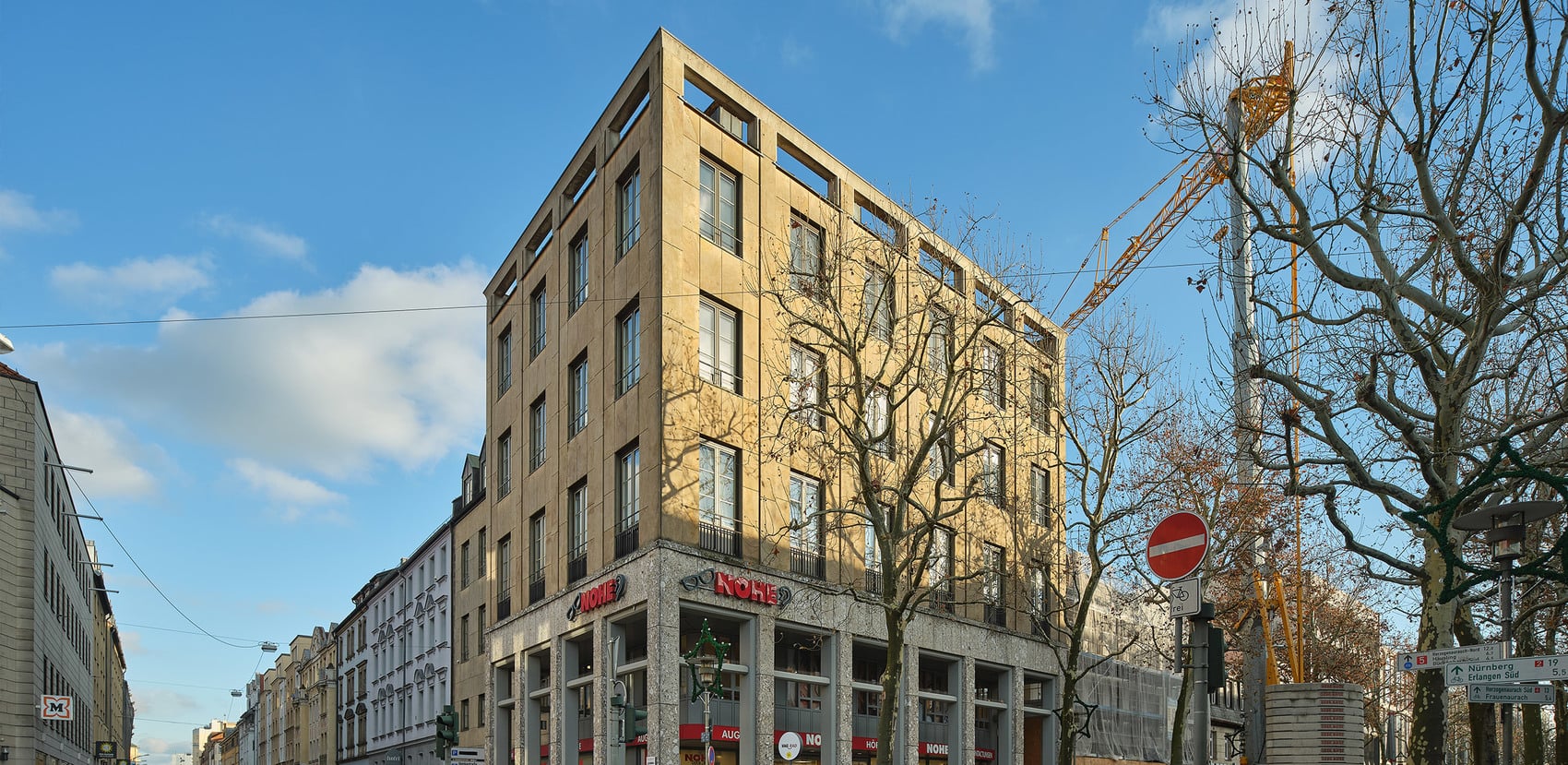
Successful window replacement in the centre of Erlangen.
Maximum flexibility was also a key requirement for the actual installation works as the four- to five-strong team had to accommodate the ongoing operations of the offices and practices. “We worked according to a meticulously planned procedure and always replaced those windows in spaces that were currently unoccupied. If the dentist had a patient in Room 1, we worked in Room 2. If the audiologist was carrying out hearing tests in the morning, we would move to another part of the building or perform other tasks – always for the purpose of preventing noise disturbance,” Schmidt explains.
As slide-in installation involves fitting new windows from the interior, no works to the masonry were required. Which is just as well given that a window replacement would have necessitated dismantling parts of the building envelope – a stone façade – from the outside. Werner Schmidt gives a grin: “The fact that our method – hopefully, like most of the dental treatment – is minimally invasive allowed us to leave the building envelope completely untouched and dispense with any scaffolding. Which saved effort, money – and, most importantly, time.” Schmidt proudly describes the satisfaction of architect Florian Veh from Erlangen-based Gräßel ARCHITEKTEN, citing his feedback: “Without slide-in installation, the replacement would have taken three or four times as long – with massive inconvenience for the tenants. The operations […] ran exactly to plan […] and the works were accepted without any defects identified – a rarity on major projects like this.” In the words of the architect, “The adopted renovation method completely won me over.”
As slide-in installation involves fitting new windows from the interior, no works to the masonry were required. Which is just as well given that a window replacement would have necessitated dismantling parts of the building envelope – a stone façade – from the outside. Werner Schmidt gives a grin: “The fact that our method – hopefully, like most of the dental treatment – is minimally invasive allowed us to leave the building envelope completely untouched and dispense with any scaffolding. Which saved effort, money – and, most importantly, time.” Schmidt proudly describes the satisfaction of architect Florian Veh from Erlangen-based Gräßel ARCHITEKTEN, citing his feedback: “Without slide-in installation, the replacement would have taken three or four times as long – with massive inconvenience for the tenants. The operations […] ran exactly to plan […] and the works were accepted without any defects identified – a rarity on major projects like this.” In the words of the architect, “The adopted renovation method completely won me over.”
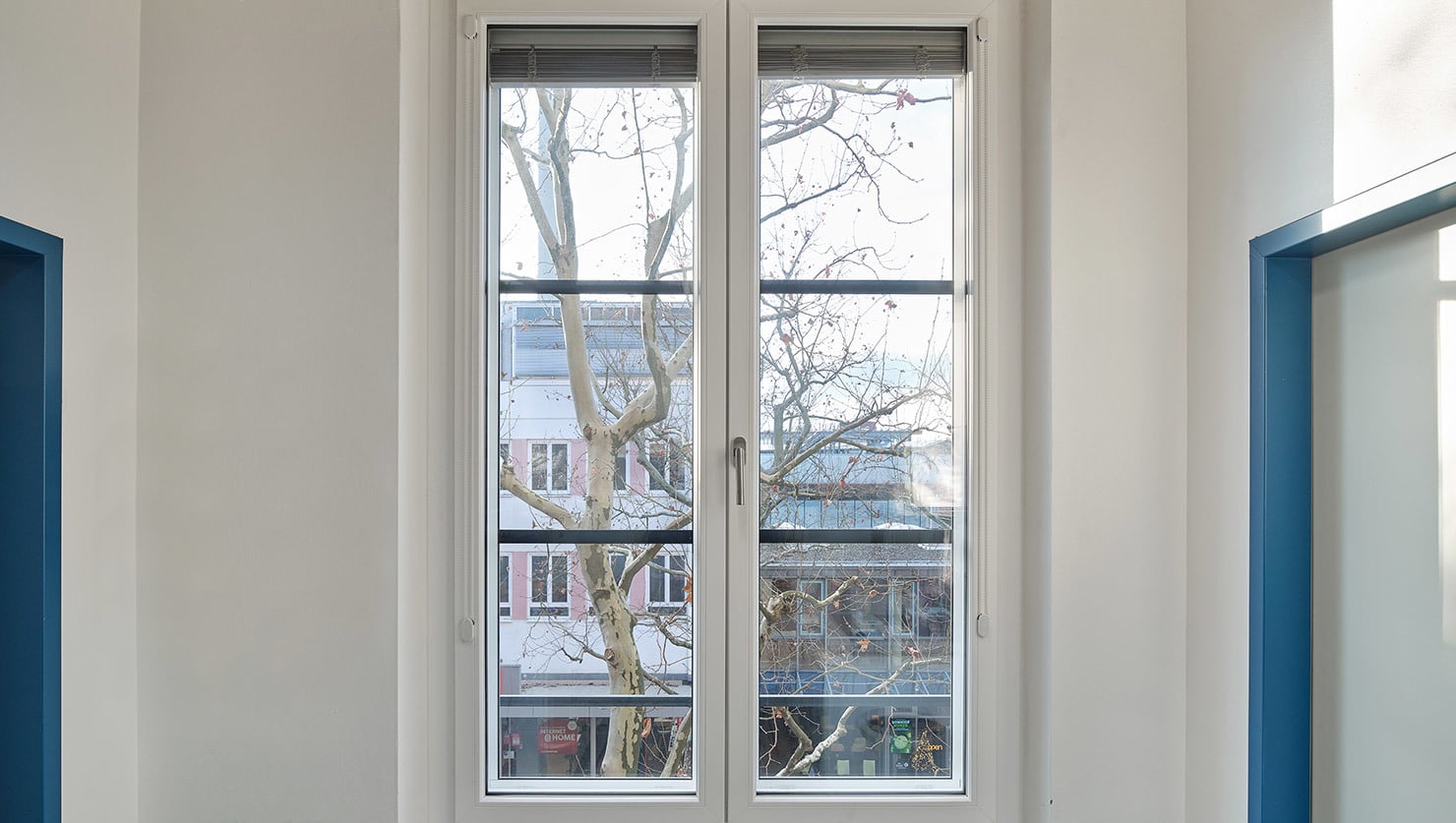
Strips of enamelled glass echo the glazing bar aesthetic on the interior.
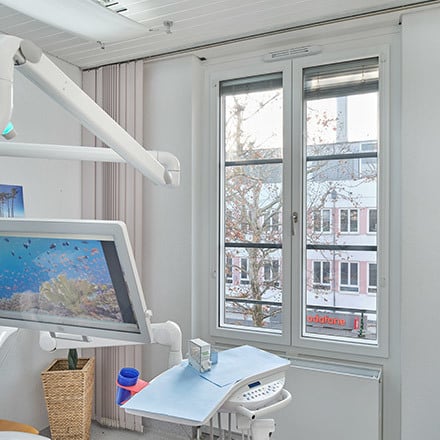
Minimally invasive – both in the dentist’s chair and during installation.
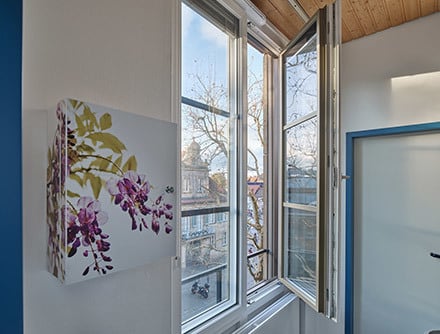
Externally attached glazing bars in Pale Bronze; dark, enamelled strips on the interior.
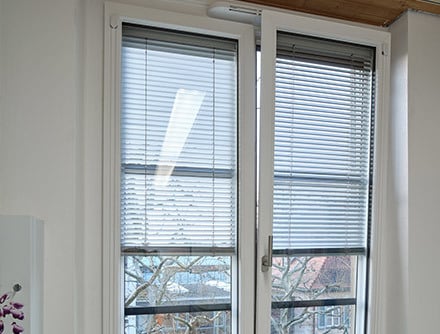
The Venetian blinds in the gap between the coupled sashes vouch for flexible solar protection.

Werner Schmidt; Technical Sales Germany
Despite the lack of any formal aesthetic requirements – e.g. regarding heritage or ensemble conservation – the client team still wanted to preserve the building’s appearance while at the same time adding contemporary user comfort. The brief called for double-sash glazing bar windows – combined with flexible solar protection and enhanced sound insulation on account of the busy adjoining main road.
The solution took the form of double-sash windows with coupled sashes and interstitial Venetian blind. The assembly thus comprises two sashes with two glass panes separated by a generous gap. Compared to a standard window sash, this improves thermal insulation by approx. 20% and sound insulation by up to 100%.
Additionally fitted in the frame was a mechanical ventilator with humidity control and sound insulation module. This vouches for a continuous supply of fresh air without any additional noise disturbance. All of which catered for the required user comfort. But what about the aesthetics?
The client team wanted windows with glazing bars. This, in combination with a coupled sash assembly and the Nova-line frame shape typically adopted for slide-in installation, was technically challenging. Given the lack of space in the gap between the panes for interstitial glazing bars, external versions were specified. However, with the Nova-line frame shape – where the frame is hidden behind glass – this would have necessitated the incorporation of cover caps.
“To sidestep this aesthetic compromise, we opted for the equally slender Slim-line frame shape,” Schmidt points out.
A further custom specification resulted from the client team's requirement for glazing bars only on the exterior. “Which would have resulted in adhesive strips being visible from the inside.” Schmidt laughs and continues, “That would hardly have been very aesthetically appealing, of course.” “So we concealed the area with dark, enamelled glass.”
The client team also opted for sash frames in Pale Bronze and window frames in Dark Bronze – a wish easily accommodated by Finstral.
This project necessitated the development of a range of customised solutions. Yet, Finstral’s modular system allowed even challenging requirements to be precisely met – to deliver aesthetically harmonious window solutions with impressive functional performance and allowing smooth, trouble-free installation.
The solution took the form of double-sash windows with coupled sashes and interstitial Venetian blind. The assembly thus comprises two sashes with two glass panes separated by a generous gap. Compared to a standard window sash, this improves thermal insulation by approx. 20% and sound insulation by up to 100%.
Additionally fitted in the frame was a mechanical ventilator with humidity control and sound insulation module. This vouches for a continuous supply of fresh air without any additional noise disturbance. All of which catered for the required user comfort. But what about the aesthetics?
The client team wanted windows with glazing bars. This, in combination with a coupled sash assembly and the Nova-line frame shape typically adopted for slide-in installation, was technically challenging. Given the lack of space in the gap between the panes for interstitial glazing bars, external versions were specified. However, with the Nova-line frame shape – where the frame is hidden behind glass – this would have necessitated the incorporation of cover caps.
“To sidestep this aesthetic compromise, we opted for the equally slender Slim-line frame shape,” Schmidt points out.
A further custom specification resulted from the client team's requirement for glazing bars only on the exterior. “Which would have resulted in adhesive strips being visible from the inside.” Schmidt laughs and continues, “That would hardly have been very aesthetically appealing, of course.” “So we concealed the area with dark, enamelled glass.”
The client team also opted for sash frames in Pale Bronze and window frames in Dark Bronze – a wish easily accommodated by Finstral.
This project necessitated the development of a range of customised solutions. Yet, Finstral’s modular system allowed even challenging requirements to be precisely met – to deliver aesthetically harmonious window solutions with impressive functional performance and allowing smooth, trouble-free installation.
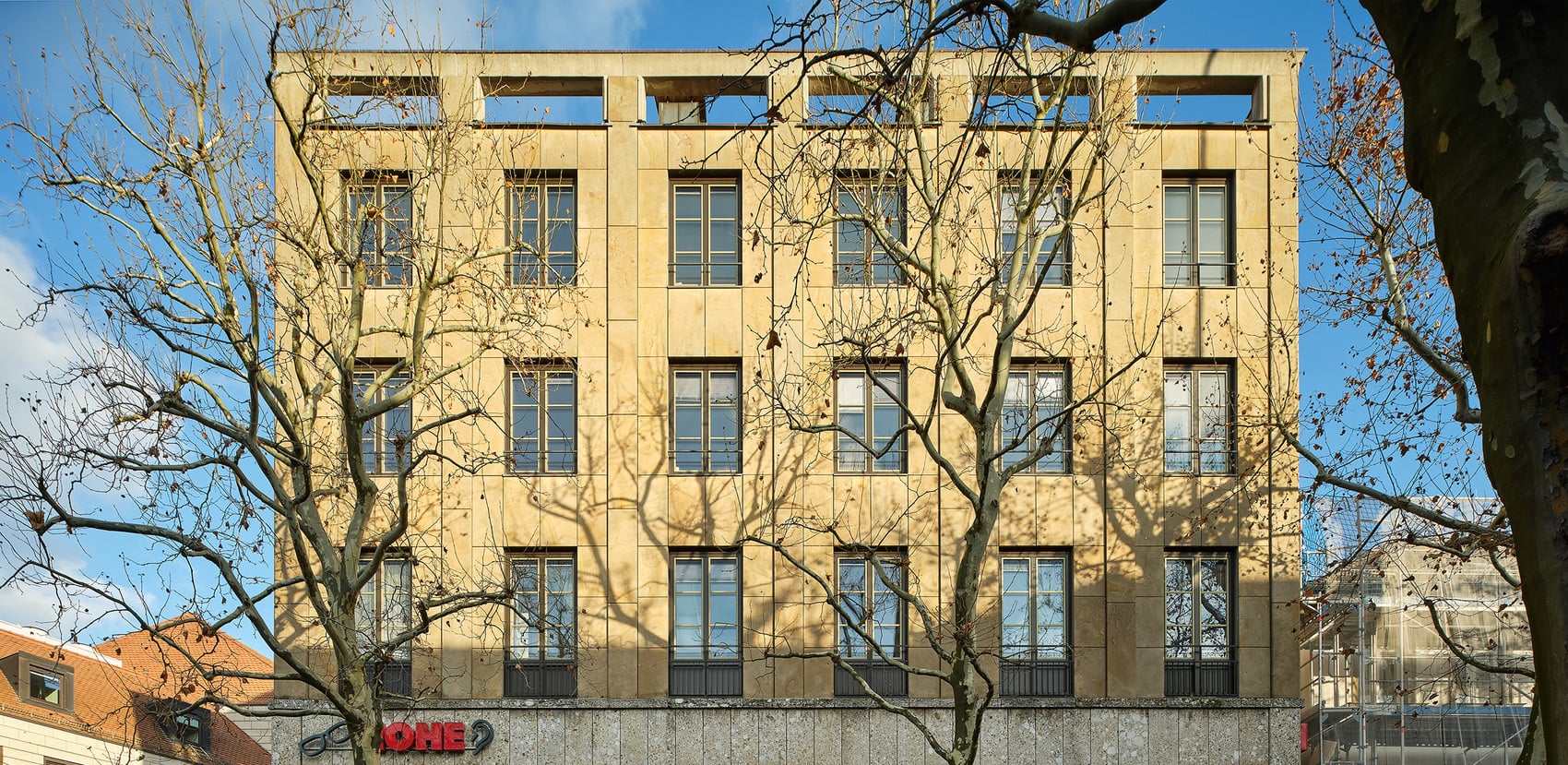
The glazing bar aesthetic has been preserved thanks to the externally attached bars.
Still want more?
See here for further interesting reading matter.


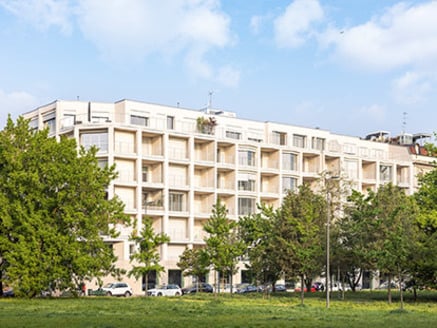
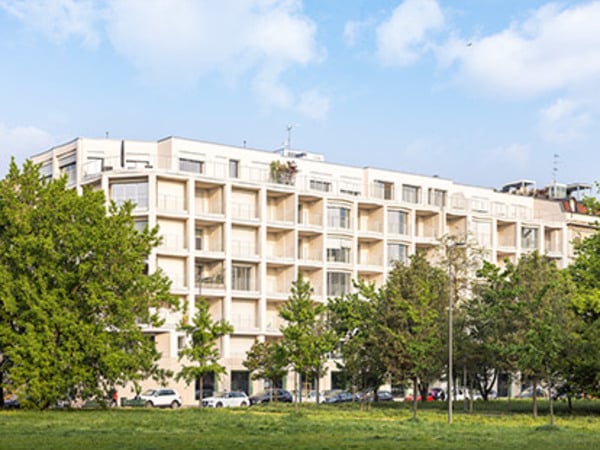
Where urban and green space meet - a residential complex opens onto a park.
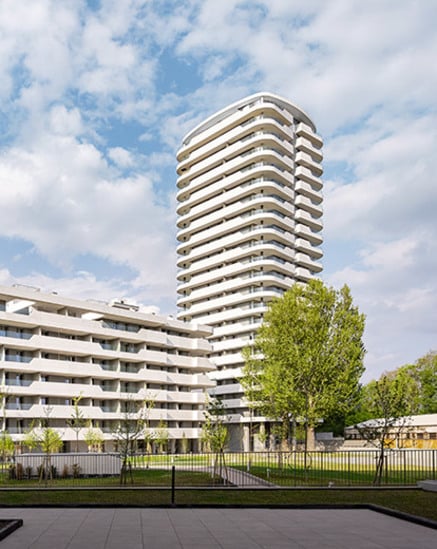
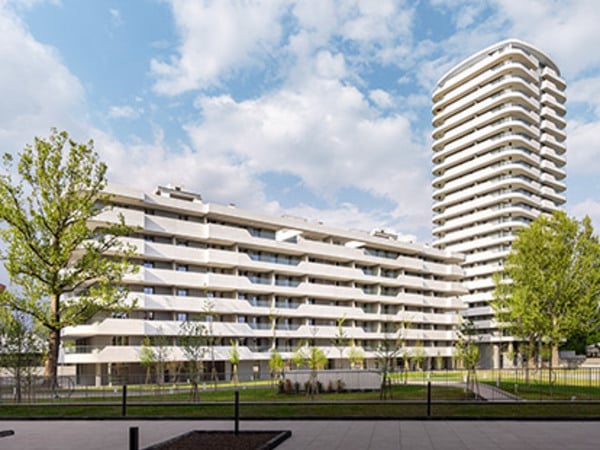
At home in an urban landscape: different systems, a single architectural language.