Reframe Interior.
Furniture with a view.
A room is defined by its vertical and horizontal axes. By its walls, its ceiling, its floor. It is defined by its architectonic context and its function. Does a room need a window to be considered a room? No. So is the window the first fixture in a room? The first piece of furniture? How would a furniture designer see it? For Jonathan Olivares, Senior Vice President of Design at Knoll, design is a vibrant dialogue between past and future, intuition and function. With this in mind he entered into this personal dialogue with Verena Oberrauch. A discussion about rooms and furniture, life experience and learning, commonalities and contrasts. And the vision of the window as a design object rather than a construction component.
Jonathan Olivares interviewed by Verena Oberrauch
Image credits: Stefano Graziani, Tanya and Zhenya Posternak, Bas Princen, Federico Cedrone, Daniele Ansidei
So let’s get started with a family matter: my late father, Hans Oberrauch, was the founder of Finstral. But long before that, he actually worked as a carpenter in a small mountain village, from a very humble background, in very humble surroundings. And his great dream was to become a furniture designer. Now you, Mr Olivares, in a way, are living my father’s dream. And I am so curious to learn what brought you to design. How did you end up in this field? How did you get to this wonderful place that you’re in right now?
Jonathan Olivares: It’s touching to hear about your father’s path. Your question reminds me of something André 3000 said: knowing what you’re good at is different from knowing what you want to do. I always imagined I’d have a studio making furniture, but my path and strengths led me to a broader role; I’m really more of a thinker. It’s like wanting to be a violinist but realising you’re better suited to conducting.
From a young age, I was sensitive to my surroundings and objects. I vividly remember my scale-model Porsche 911 – I also had a Lamborghini Countach and a 320SL Mercedes but for me it was super clear: the other ones are cool, but the 911 is the one. I still remember all the details, the sound of it, the doors closing. I also remember skateboarding at the foot of I.M. Pei’s Hancock Tower as a teenager and noticing details in buildings. That sense of connection to objects and spaces stayed with me and influenced my approach, whether designing furniture, showrooms or interiors. I try not to draw too many boundaries. When I joined Knoll, people asked if I missed designing, and I thought, “I am designing – just at a different scale.”
I wanted to mention something I truly admire – your emphasis on finding like-minded people, staying curious and building genuine friendships. I recall a beautiful quote from your time with Konstantin Grcic, where you mentioned discovering the joy that work could bring. What made your experience there so fulfilling?
If I had to sum it up, it would be curiosity. The level of curiosity in Konstantin’s studio was intense – people were deeply invested in understanding a subject and building a creative framework around it. It was a bit like seeing people in LA who spend hours at the gym, fully immersed. The more seriously we took the work, the more fun it became. It may seem contradictory, but the more commitment, focus and hours you put in, the more you get out of it spiritually.
That said, there’s a big caveat. It’s been 20 years since I started in Konstantin’s office, and after 10 or 12 years of working with that focused mindset, I burned out. I didn’t even want to think about design. I closed my physical office and radically changed my approach. It took years to unlearn that structured way of working. I realized my best ideas come when I’m not trying to work. Living in LA helped me see that. My artist and actor friends didn’t work constantly – they had lots of downtime. I realised I don’t need any of this. I made a prison for myself. I didn’t need to stay busy or have a packed schedule. I’d rather be in a coffee shop, watch a movie in the middle of the day or spend time at the gym. For me, working means not being in an office, ever. I prefer “loitering,” like skateboarders in public plazas – not entirely welcome but thinking and doing things differently. Working in Konstantin’s office was a beautiful experience, but after ten years, I realized it wasn’t my style. I prefer how I worked in college. I actually don’t enjoy working hard. I enjoy thinking deeply about a project for two, three years and when the time is right, it takes me three hours to execute – because I know exactly what to do by then. Different ways of working, I suppose.
From your perspective, is it even possible to design something truly timeless? For instance, our products are designed to function beautifully for three, four, even five decades. We want people to keep our windows not only because they last but also because they remain aesthetically pleasing.
My instinct tells me there’s no such thing as future or past – only the present. Many great thinkers say this, and I believe it. When you’re genuinely present in your work, it has a greater chance of resonating in the future. Overthinking or being tied to a future can quickly date a design, because it’s too rigid. It’s locked in a place and a time.
Some postmodern architecture is iconic of the ’80s and brilliant, yet very much of its time. In a way, though, everything was once contemporary and still is. If you’re fully present, your work can become timeless – because it’s always going to be a representation of that moment. So, now is always now, in a way. Perhaps there’s no formula, but being present may be a way to create something enduring.
“For me as a designer, working means not being in an office, ever. I don’t enjoy working hard. I enjoy thinking deeply about a project for two, three years and when the time is right, it takes me three hours to execute.” – Jonathan Olivares
You say you’re designing a company, yet it’s clear you also love products. I wonder – what role do trends play for you?
When I closed my office 15 years ago, I also became allergic to design media – I don’t buy design magazines or browse design sites. Occasionally, I’ll pick up an architecture or sculpture book, but more often I just look at things I find beautiful, like skateboarding, photography and contemporary art, not for trying to understand where the world is today, which I don’t really care about. At Knoll, we often say the brand exists outside of trends. For new pieces, I focus on capturing the architectural zeitgeist, which reflects the era’s essence more than trends do. Trends feel like an “after,” like Pinterest boards, asking “What are others doing?” I consider whether a piece relates to today’s architectural language and whether it’s usable in interiors.
That leads me to people like Frida Escobedo and Dozie Kanu, who shape the current zeitgeist and inspire me. But also I look at the practical side – can the art and design community interpret it? I believe if you balance those two aspects, you’ll create timeless pieces because they’re fundamentally good. In some ways, my job at Knoll is like an editor’s for a newspaper: to say, “We’re doing the cover page – five stories a year, the essentials of what matters most for us today.”
Jonathan Olivares interviewed by Verena Oberrauch
Image credits: Stefano Graziani, Tanya and Zhenya Posternak, Bas Princen, Federico Cedrone, Daniele Ansidei
So let’s get started with a family matter: my late father, Hans Oberrauch, was the founder of Finstral. But long before that, he actually worked as a carpenter in a small mountain village, from a very humble background, in very humble surroundings. And his great dream was to become a furniture designer. Now you, Mr Olivares, in a way, are living my father’s dream. And I am so curious to learn what brought you to design. How did you end up in this field? How did you get to this wonderful place that you’re in right now?
Jonathan Olivares: It’s touching to hear about your father’s path. Your question reminds me of something André 3000 said: knowing what you’re good at is different from knowing what you want to do. I always imagined I’d have a studio making furniture, but my path and strengths led me to a broader role; I’m really more of a thinker. It’s like wanting to be a violinist but realising you’re better suited to conducting.
From a young age, I was sensitive to my surroundings and objects. I vividly remember my scale-model Porsche 911 – I also had a Lamborghini Countach and a 320SL Mercedes but for me it was super clear: the other ones are cool, but the 911 is the one. I still remember all the details, the sound of it, the doors closing. I also remember skateboarding at the foot of I.M. Pei’s Hancock Tower as a teenager and noticing details in buildings. That sense of connection to objects and spaces stayed with me and influenced my approach, whether designing furniture, showrooms or interiors. I try not to draw too many boundaries. When I joined Knoll, people asked if I missed designing, and I thought, “I am designing – just at a different scale.”
I wanted to mention something I truly admire – your emphasis on finding like-minded people, staying curious and building genuine friendships. I recall a beautiful quote from your time with Konstantin Grcic, where you mentioned discovering the joy that work could bring. What made your experience there so fulfilling?
If I had to sum it up, it would be curiosity. The level of curiosity in Konstantin’s studio was intense – people were deeply invested in understanding a subject and building a creative framework around it. It was a bit like seeing people in LA who spend hours at the gym, fully immersed. The more seriously we took the work, the more fun it became. It may seem contradictory, but the more commitment, focus and hours you put in, the more you get out of it spiritually.
That said, there’s a big caveat. It’s been 20 years since I started in Konstantin’s office, and after 10 or 12 years of working with that focused mindset, I burned out. I didn’t even want to think about design. I closed my physical office and radically changed my approach. It took years to unlearn that structured way of working. I realized my best ideas come when I’m not trying to work. Living in LA helped me see that. My artist and actor friends didn’t work constantly – they had lots of downtime. I realised I don’t need any of this. I made a prison for myself. I didn’t need to stay busy or have a packed schedule. I’d rather be in a coffee shop, watch a movie in the middle of the day or spend time at the gym. For me, working means not being in an office, ever. I prefer “loitering,” like skateboarders in public plazas – not entirely welcome but thinking and doing things differently. Working in Konstantin’s office was a beautiful experience, but after ten years, I realized it wasn’t my style. I prefer how I worked in college. I actually don’t enjoy working hard. I enjoy thinking deeply about a project for two, three years and when the time is right, it takes me three hours to execute – because I know exactly what to do by then. Different ways of working, I suppose.
From your perspective, is it even possible to design something truly timeless? For instance, our products are designed to function beautifully for three, four, even five decades. We want people to keep our windows not only because they last but also because they remain aesthetically pleasing.
My instinct tells me there’s no such thing as future or past – only the present. Many great thinkers say this, and I believe it. When you’re genuinely present in your work, it has a greater chance of resonating in the future. Overthinking or being tied to a future can quickly date a design, because it’s too rigid. It’s locked in a place and a time.
Some postmodern architecture is iconic of the ’80s and brilliant, yet very much of its time. In a way, though, everything was once contemporary and still is. If you’re fully present, your work can become timeless – because it’s always going to be a representation of that moment. So, now is always now, in a way. Perhaps there’s no formula, but being present may be a way to create something enduring.
“For me as a designer, working means not being in an office, ever. I don’t enjoy working hard. I enjoy thinking deeply about a project for two, three years and when the time is right, it takes me three hours to execute.” – Jonathan Olivares
You say you’re designing a company, yet it’s clear you also love products. I wonder – what role do trends play for you?
When I closed my office 15 years ago, I also became allergic to design media – I don’t buy design magazines or browse design sites. Occasionally, I’ll pick up an architecture or sculpture book, but more often I just look at things I find beautiful, like skateboarding, photography and contemporary art, not for trying to understand where the world is today, which I don’t really care about. At Knoll, we often say the brand exists outside of trends. For new pieces, I focus on capturing the architectural zeitgeist, which reflects the era’s essence more than trends do. Trends feel like an “after,” like Pinterest boards, asking “What are others doing?” I consider whether a piece relates to today’s architectural language and whether it’s usable in interiors.
That leads me to people like Frida Escobedo and Dozie Kanu, who shape the current zeitgeist and inspire me. But also I look at the practical side – can the art and design community interpret it? I believe if you balance those two aspects, you’ll create timeless pieces because they’re fundamentally good. In some ways, my job at Knoll is like an editor’s for a newspaper: to say, “We’re doing the cover page – five stories a year, the essentials of what matters most for us today.”
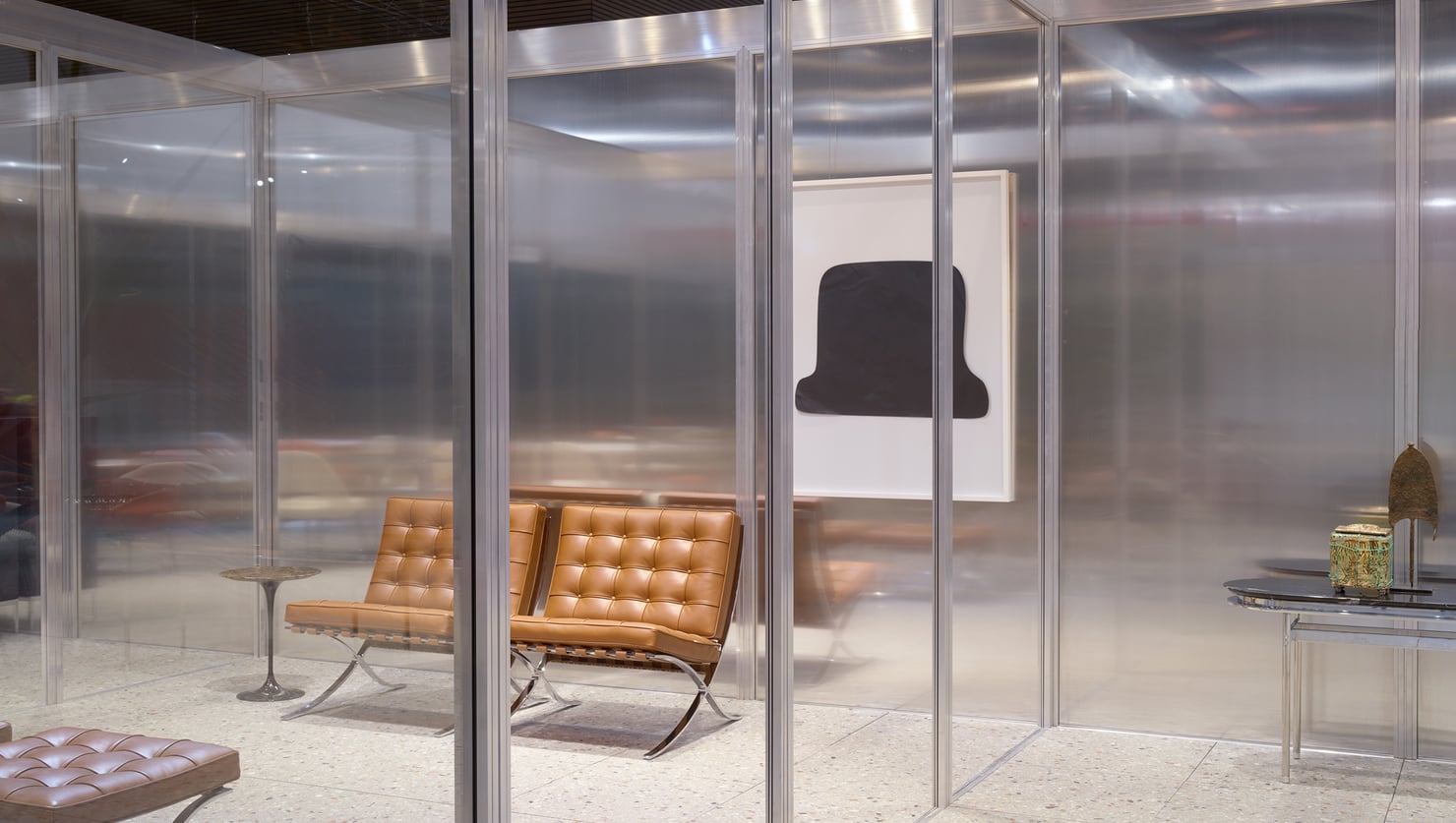
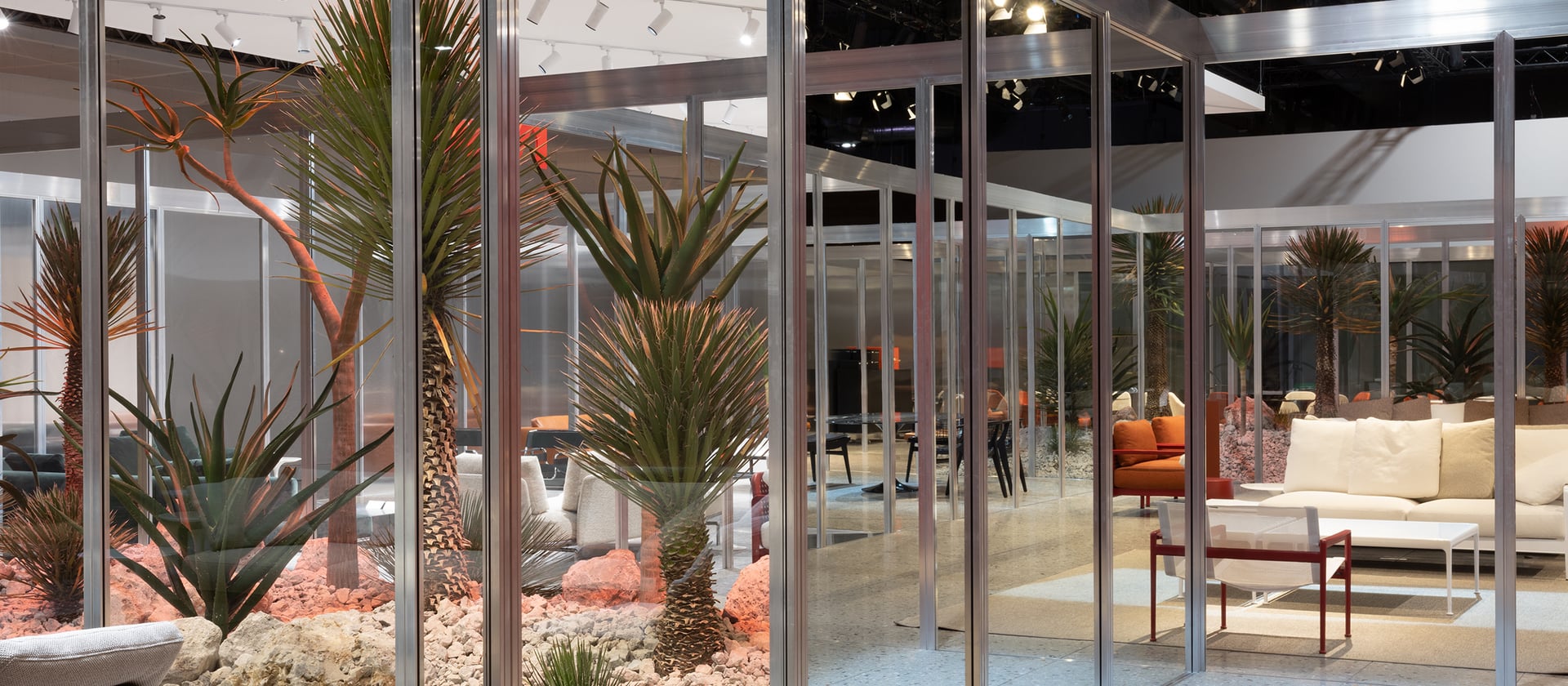
Forward-thinking: Under Jonathan Olivares' leadership, the Knoll pavilion at the Salone del Mobile received a new design. Designed by the Belgium-based and internationally operating architectural practice OFFICE, the pavilion embraces the codes of modernism and features a structure made from recycled and recyclable materials by Finstral. It can be dismantled and reused as often as needed.
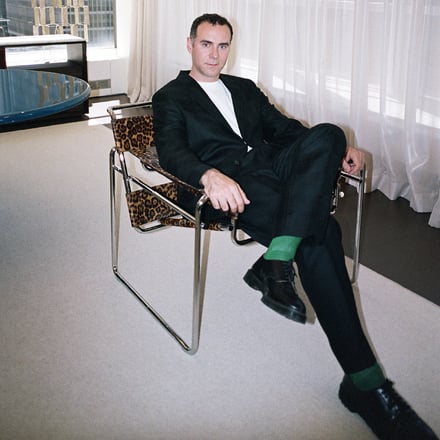
Jonathan Olivares is one of the leading figures in contemporary American industrial design. Based in Los Angeles, he has collaborated with Jasper Morrison and Konstantin Grcic, and worked for Vitra, Nike, and Kvadrat. His formally rigorous furniture pieces are part of the collections at the Vitra Design Museum and LACMA in Los Angeles. Since April 2022, he has been serving as Senior Vice President of Design at Knoll, overseeing the brand’s evolution into the future while honoring its rich design heritage.
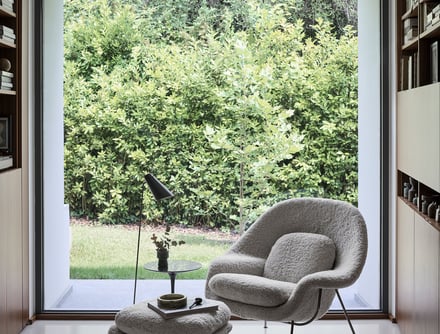
Furniture with a view: A window frames the outdoors and creates room for new stories to unfold.
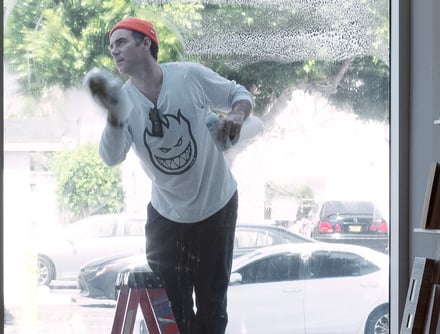
Every detail counts: Whether it’s waxing a cabinet to bring it back to life or cleaning windows before an exhibition opening – for Olivares, tending to details is an intimate act. The love you invest comes back to you.
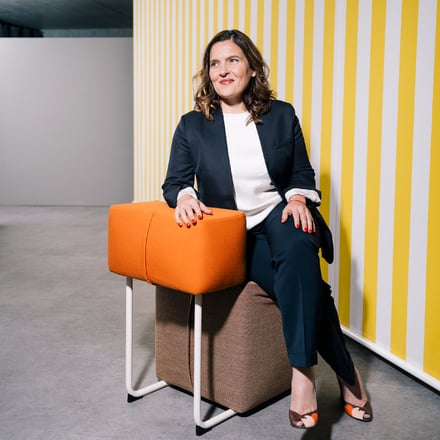
Verena Oberrauch is a member of the Board of Directors at the family-owned company Finstral and currently leads the business division for Belgium, Switzerland and Austria. After studying international politics in Washington, D.C., and business administration in Milan, she worked as a management consultant in international development cooperation before joining the family business in 2010.
We come from a very product-driven background – artisans, carpenters, technical people. We know how to make our windows better each year functionally. But we’re also exploring beauty – what makes a window beautiful? Should we follow trends? Where do we find inspiration? My father loved beautiful design, and though he’s no longer with us, we want to keep that vision alive. You are right, perhaps it’s about finding the right people who interpret our time in meaningful ways.
Exactly. If there are problems to solve, I go to the client. I spend a lot of time with clients in their spaces – homes, offices, architecture firms. That’s where I connect the dots, realising, “Oh, we missed this or that, and oh, that’s a growing need.” I’ve built a Knoll design team: Kersten Geers and David van Severen work on pavilions and some furniture; Frida Escobedo designs some furniture; and I also work with Jonathan Muecke, Johnston Marklee and trusted architects and sculptors. I bring them specific projects, framing our challenges, rather than waiting for them to pitch ideas. My role is to identify challenges and define strategies, aligning client needs with our manufacturing strengths. If we define an intelligent market challenge and have strong manufacturing capabilities, then we need this partner, a designer who will look at it with a fresh point of view and say, “Well, what if we do it like this?” For me, an important phase of the project is setting up the structure – the bullseye. Then, it’s up to the designer to hit it and make it resonate.
As a designer or even as a private person: what makes a beautiful window?
My favorite houses are those designed for photographers or artists, where the window acts as a frame, much like a camera aperture, offering a controlled view of the landscape. I’m notdrawn to floor-to-ceiling panoramic windows where you see everything – that’s naked, almost pornographic! And I also really admire Gerhard Richter’s glass works – his Eight Grey series. Marcel Duchamp’s The Bride Stripped Bare by Her Bachelors also fascinates me, where glass functions as both window and canvas. I also love commercial window art – painted windows, neon signs, the energy of places like Sunset Boulevard and the Sunset Strip.
There’s a beautiful photograph of you cleaning a window at the bookshop you designed. I imagined it as part of preparing the space, that excitement before unveiling something new – this touched me …
Have you ever read The Poetics of Space by Gaston Bachelard? It’s the one book I recommend to everyone. Bachelard explores the home’s every corner – the bathroom, the cabinet etc. – from a spiritual, poetic, human perspective, describing the intimate act of caring for each detail, like rubbing a cabinet with wax to bring it back to life. There’s love in it, and the love comes back to you. I’ve always loved cleaning, even as a boy. My father had a glass table, a sort of imitation Le Corbusier, and my fingerprints on it drove him crazy. So I was in charge of cleaning it. I grew to love the smell of window cleaner and the process – I could clean glass all day. If design doesn’t work out, I’d happily be a window cleaner, squeegee in hand. I also love waxing and washing my car. Spending a Saturday doing that? That’s my perfect day.
I was going to ask about your favorite project, but it sounds like it’s always the one you’re working on next.
That reminds me of what Richard Sapper once said: “My best project, the only project I want to talk about, is the one I’m working on now.”
At Knoll, we’re currently focused on creating new products within the context that Kersten, David and you at Finstral helped establish. This is our third year with this “house” theme at Salone del Mobile. Now we have a space to dream in, a place to design furniture for. This year, we’re introducing three new pieces: a lounge chair, a sofa collection and a dining collection, all by different designers. Jonathan Muecke, a sculptor, and the architects Johnston Marklee are collaborating on a sofa, while Willo Perron is designing a follow-up lounge chair to last year’s sofa.
I work with architects, interior designers, and sculptors rather than traditional industrial designers, because Knoll isn’t about standalone objects; it’s about creating pieces that relate to architectural ideas. Many industrial designers don’t approach furniture this way. For Knoll, having a dedicated team is essential – we want unique voices from architecture, interiors and sculpture who see this as an opportunity to create something meaningful in furniture design.
“Trends feel like an ‘after’, like Pinterest boards, asking ‘What are others doing?’ I consider whether a piece relates to today’s architectural language and whether it’s usable in interiors.” – Jonathan Olivares
At Finstral we make interior partition systems, but at heart we are a window company. So it makes me really happy that you’ll be using the house in Milan again. It brings my father’s vision full circle.
When Kersten and David mentioned collaborating with a façade glass company, I just thought, “Great!” Over time, it’s become clear that you’re a cultural company that truly understands our work, just as we understand yours. It’s fantastic to have a friendship where we share similar values and passions. That makes me very happy.
What keeps me busy at work is this: with eight billion unique individuals, what does it mean to offer customers choices to personalize a product? You once said, “Much of Knoll’s furniture is unfinished in the sense that the client plays an active role in completing the pieces through selecting colors, finishes and materials.” Does this really enhance the design process?
That quote was specific to Knoll. Personally, I don’t believe in offering choices – I do the work for me, I’m the client, and it doesn’t really matter what anyone else thinks (a Rick Rubin sentiment). But Knoll is an interiors company, our clients are architects and interior design studios, so choices empower them to incorporate our pieces into their broader visions, which is why we offer colors, materials and textiles.
That’s beautifully put. I’d even say Finstral is, in a way, also an interiors company.
Absolutely! I believe the best architectural manufacturers are. My role is to keep architects looking to us for support, not to dictate their work. I often say Knoll is like a farmers’ market, curating the best ingredients – vegetables, meats, cheeses – while the architect is the chef. We provide the finest elements and they create the final dish. In that way, we’re quite similar.
I think clients view Knoll products as highly valuable investment pieces. On the other hand, many people still see windows as foundational furniture, setting the tone for a room. I often see furniture beautifully photographed against windowed façades, yet windows themselves rarely receive designers’ attention. Why do these worlds connect so rarely?
Imagine if a developer, without hiring Herzog & de Meuron, could still include a Herzog & de Meuron-designed window – similar to choosing a Philippe Starck toilet or Dinesen flooring. I can envision a shift where windows are appreciated as designer objects. I remember Ross Lovegrove’s glass façade at La Triennale – extreme, I don’t think anyone would use that window besides Ross Lovegrove, but it illustrated the potential. And it made it easy to imagine more universal, elegant solutions that elevate the window as an architectural feature.
When I joined the company after working in consulting, my father said, “Verena, I also thought windows were boring at first, but over time, I learned otherwise.” How has your perspective changed? How have you evolved?
When I was 18, some of my friends moved to California to become pro skateboarders. I could’ve followed, at least to California. I’m not sure I’d have made it as a pro, but some of them did, even making it into Tony Hawk’s video game. But I remember thinking, I want to do something I can still be fully dedicated to at 50 and actually improve at over time. With skateboarding, your body just starts failing.
Ettore Sottsass, for instance, hit his stride at 60 years old – Memphis was his crescendo. Design has a depth that grows with experience. In my 20s and 30s, I never thought I was “there” yet; I figured I’d get good later. With time, you start connecting dots you couldn’t see before, and what once seemed separate becomes a cohesive whole. I’ve become more open-minded and decisive, making quicker, instinctive decisions. The older I get, the more I trust that gut-driven approach over pure logic – it’s like a second nature taking over.
Exactly. If there are problems to solve, I go to the client. I spend a lot of time with clients in their spaces – homes, offices, architecture firms. That’s where I connect the dots, realising, “Oh, we missed this or that, and oh, that’s a growing need.” I’ve built a Knoll design team: Kersten Geers and David van Severen work on pavilions and some furniture; Frida Escobedo designs some furniture; and I also work with Jonathan Muecke, Johnston Marklee and trusted architects and sculptors. I bring them specific projects, framing our challenges, rather than waiting for them to pitch ideas. My role is to identify challenges and define strategies, aligning client needs with our manufacturing strengths. If we define an intelligent market challenge and have strong manufacturing capabilities, then we need this partner, a designer who will look at it with a fresh point of view and say, “Well, what if we do it like this?” For me, an important phase of the project is setting up the structure – the bullseye. Then, it’s up to the designer to hit it and make it resonate.
As a designer or even as a private person: what makes a beautiful window?
My favorite houses are those designed for photographers or artists, where the window acts as a frame, much like a camera aperture, offering a controlled view of the landscape. I’m notdrawn to floor-to-ceiling panoramic windows where you see everything – that’s naked, almost pornographic! And I also really admire Gerhard Richter’s glass works – his Eight Grey series. Marcel Duchamp’s The Bride Stripped Bare by Her Bachelors also fascinates me, where glass functions as both window and canvas. I also love commercial window art – painted windows, neon signs, the energy of places like Sunset Boulevard and the Sunset Strip.
There’s a beautiful photograph of you cleaning a window at the bookshop you designed. I imagined it as part of preparing the space, that excitement before unveiling something new – this touched me …
Have you ever read The Poetics of Space by Gaston Bachelard? It’s the one book I recommend to everyone. Bachelard explores the home’s every corner – the bathroom, the cabinet etc. – from a spiritual, poetic, human perspective, describing the intimate act of caring for each detail, like rubbing a cabinet with wax to bring it back to life. There’s love in it, and the love comes back to you. I’ve always loved cleaning, even as a boy. My father had a glass table, a sort of imitation Le Corbusier, and my fingerprints on it drove him crazy. So I was in charge of cleaning it. I grew to love the smell of window cleaner and the process – I could clean glass all day. If design doesn’t work out, I’d happily be a window cleaner, squeegee in hand. I also love waxing and washing my car. Spending a Saturday doing that? That’s my perfect day.
I was going to ask about your favorite project, but it sounds like it’s always the one you’re working on next.
That reminds me of what Richard Sapper once said: “My best project, the only project I want to talk about, is the one I’m working on now.”
At Knoll, we’re currently focused on creating new products within the context that Kersten, David and you at Finstral helped establish. This is our third year with this “house” theme at Salone del Mobile. Now we have a space to dream in, a place to design furniture for. This year, we’re introducing three new pieces: a lounge chair, a sofa collection and a dining collection, all by different designers. Jonathan Muecke, a sculptor, and the architects Johnston Marklee are collaborating on a sofa, while Willo Perron is designing a follow-up lounge chair to last year’s sofa.
I work with architects, interior designers, and sculptors rather than traditional industrial designers, because Knoll isn’t about standalone objects; it’s about creating pieces that relate to architectural ideas. Many industrial designers don’t approach furniture this way. For Knoll, having a dedicated team is essential – we want unique voices from architecture, interiors and sculpture who see this as an opportunity to create something meaningful in furniture design.
“Trends feel like an ‘after’, like Pinterest boards, asking ‘What are others doing?’ I consider whether a piece relates to today’s architectural language and whether it’s usable in interiors.” – Jonathan Olivares
At Finstral we make interior partition systems, but at heart we are a window company. So it makes me really happy that you’ll be using the house in Milan again. It brings my father’s vision full circle.
When Kersten and David mentioned collaborating with a façade glass company, I just thought, “Great!” Over time, it’s become clear that you’re a cultural company that truly understands our work, just as we understand yours. It’s fantastic to have a friendship where we share similar values and passions. That makes me very happy.
What keeps me busy at work is this: with eight billion unique individuals, what does it mean to offer customers choices to personalize a product? You once said, “Much of Knoll’s furniture is unfinished in the sense that the client plays an active role in completing the pieces through selecting colors, finishes and materials.” Does this really enhance the design process?
That quote was specific to Knoll. Personally, I don’t believe in offering choices – I do the work for me, I’m the client, and it doesn’t really matter what anyone else thinks (a Rick Rubin sentiment). But Knoll is an interiors company, our clients are architects and interior design studios, so choices empower them to incorporate our pieces into their broader visions, which is why we offer colors, materials and textiles.
That’s beautifully put. I’d even say Finstral is, in a way, also an interiors company.
Absolutely! I believe the best architectural manufacturers are. My role is to keep architects looking to us for support, not to dictate their work. I often say Knoll is like a farmers’ market, curating the best ingredients – vegetables, meats, cheeses – while the architect is the chef. We provide the finest elements and they create the final dish. In that way, we’re quite similar.
I think clients view Knoll products as highly valuable investment pieces. On the other hand, many people still see windows as foundational furniture, setting the tone for a room. I often see furniture beautifully photographed against windowed façades, yet windows themselves rarely receive designers’ attention. Why do these worlds connect so rarely?
Imagine if a developer, without hiring Herzog & de Meuron, could still include a Herzog & de Meuron-designed window – similar to choosing a Philippe Starck toilet or Dinesen flooring. I can envision a shift where windows are appreciated as designer objects. I remember Ross Lovegrove’s glass façade at La Triennale – extreme, I don’t think anyone would use that window besides Ross Lovegrove, but it illustrated the potential. And it made it easy to imagine more universal, elegant solutions that elevate the window as an architectural feature.
When I joined the company after working in consulting, my father said, “Verena, I also thought windows were boring at first, but over time, I learned otherwise.” How has your perspective changed? How have you evolved?
When I was 18, some of my friends moved to California to become pro skateboarders. I could’ve followed, at least to California. I’m not sure I’d have made it as a pro, but some of them did, even making it into Tony Hawk’s video game. But I remember thinking, I want to do something I can still be fully dedicated to at 50 and actually improve at over time. With skateboarding, your body just starts failing.
Ettore Sottsass, for instance, hit his stride at 60 years old – Memphis was his crescendo. Design has a depth that grows with experience. In my 20s and 30s, I never thought I was “there” yet; I figured I’d get good later. With time, you start connecting dots you couldn’t see before, and what once seemed separate becomes a cohesive whole. I’ve become more open-minded and decisive, making quicker, instinctive decisions. The older I get, the more I trust that gut-driven approach over pure logic – it’s like a second nature taking over.
Still want more?
See here for further interesting reading matter.
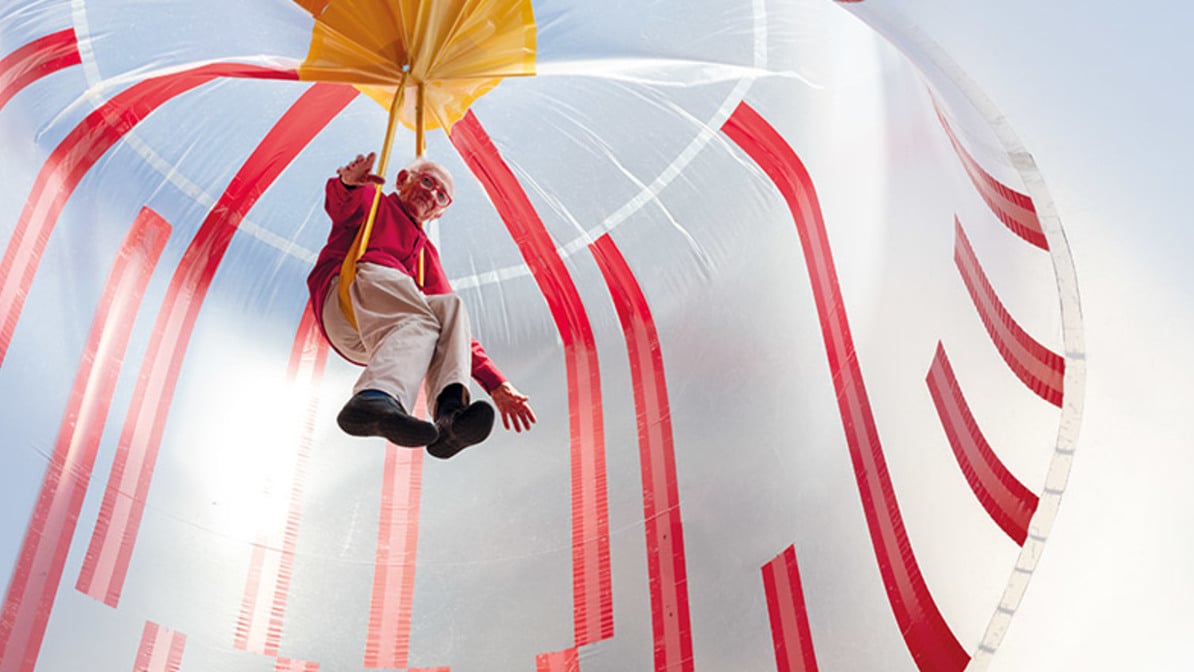
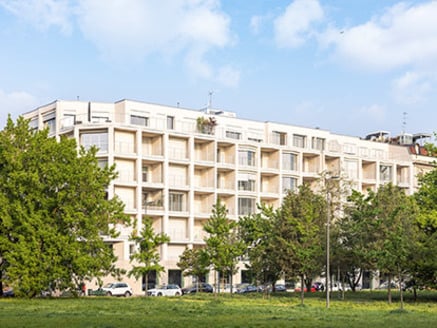
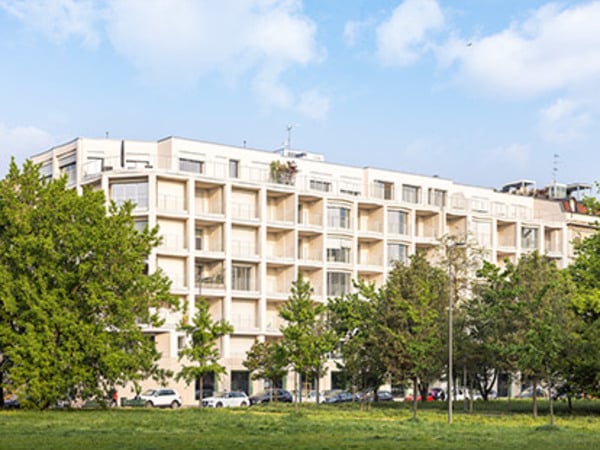
Where urban and green space meet - a residential complex opens onto a park.
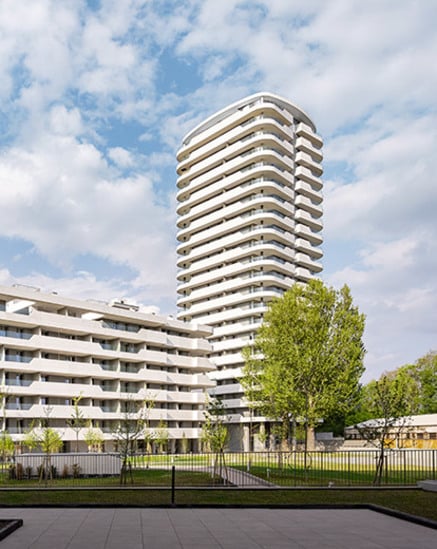
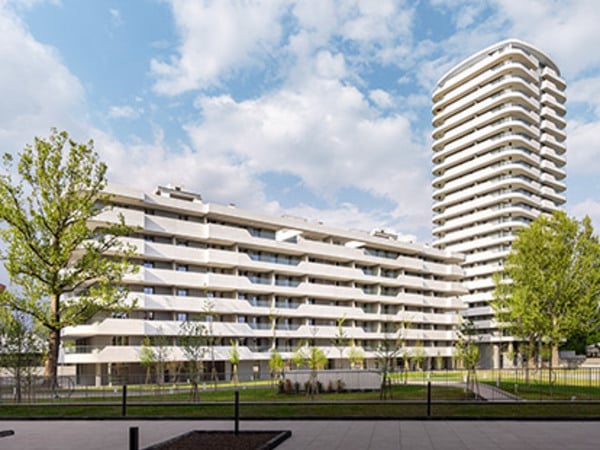
At home in an urban landscape: different systems, a single architectural language.