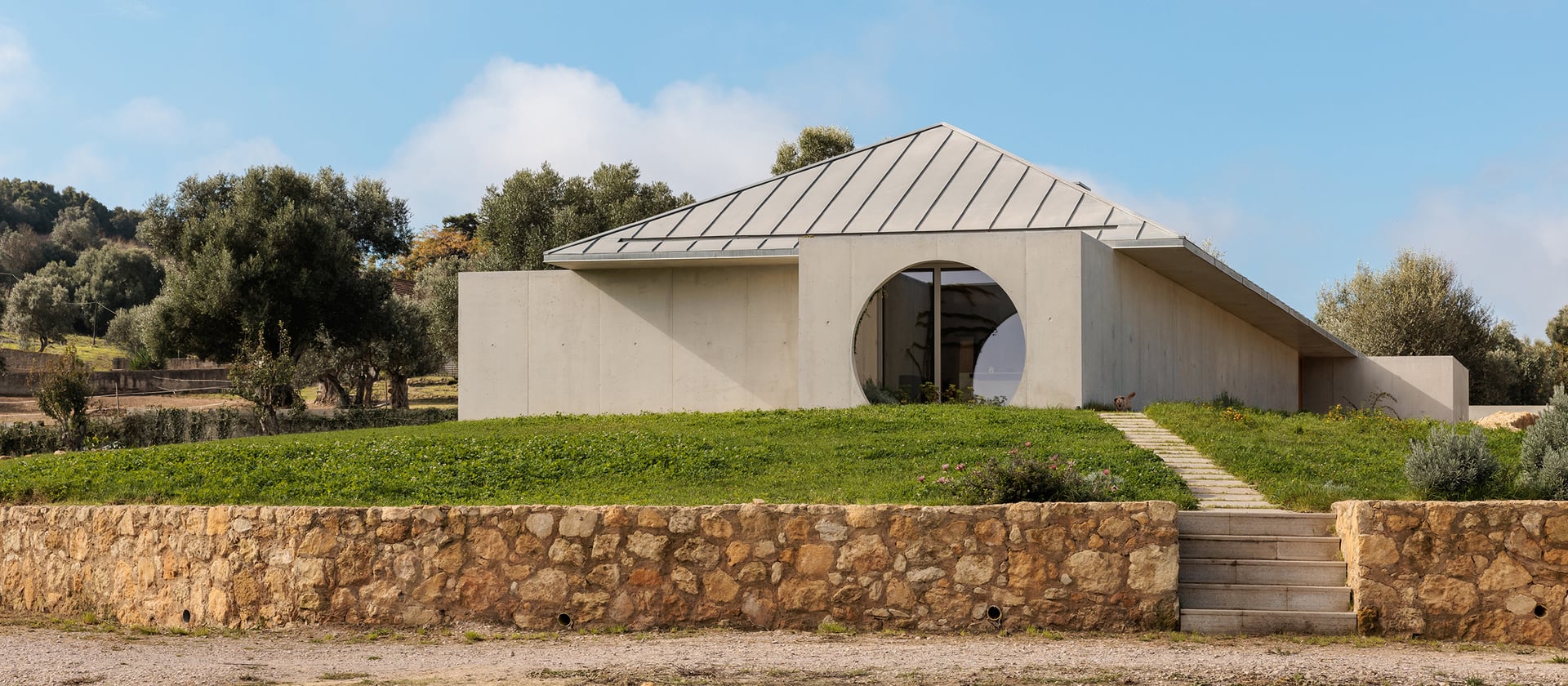
Geometric forms, contrasting materials.
An unusual house for a family of three near the town of Palmela, a regional hub in Portugal.
The client wanted an architecturally ambitious building with long-lasting materials and a maximum of privacy. The Portuguese architect João Completo fulfilled all these requirements perfectly, designing a villa that plays with geometric forms, and a raw exposed-concrete façade that presents a compelling contrast to the warm wooden tones of the interior.
Circle, triangle, rectangle – nestled in the Serra do Louro, part of the Arrábida Natural Park, a new-build on geometric lines sits atop a hill. The severe exterior establishes a dialogue with the rural setting and its lush vegetation. Architect João Completo created a house that is restricted to elemental forms which nonetheless offer impressive spatial diversity.
Circle, triangle, rectangle – nestled in the Serra do Louro, part of the Arrábida Natural Park, a new-build on geometric lines sits atop a hill. The severe exterior establishes a dialogue with the rural setting and its lush vegetation. Architect João Completo created a house that is restricted to elemental forms which nonetheless offer impressive spatial diversity.
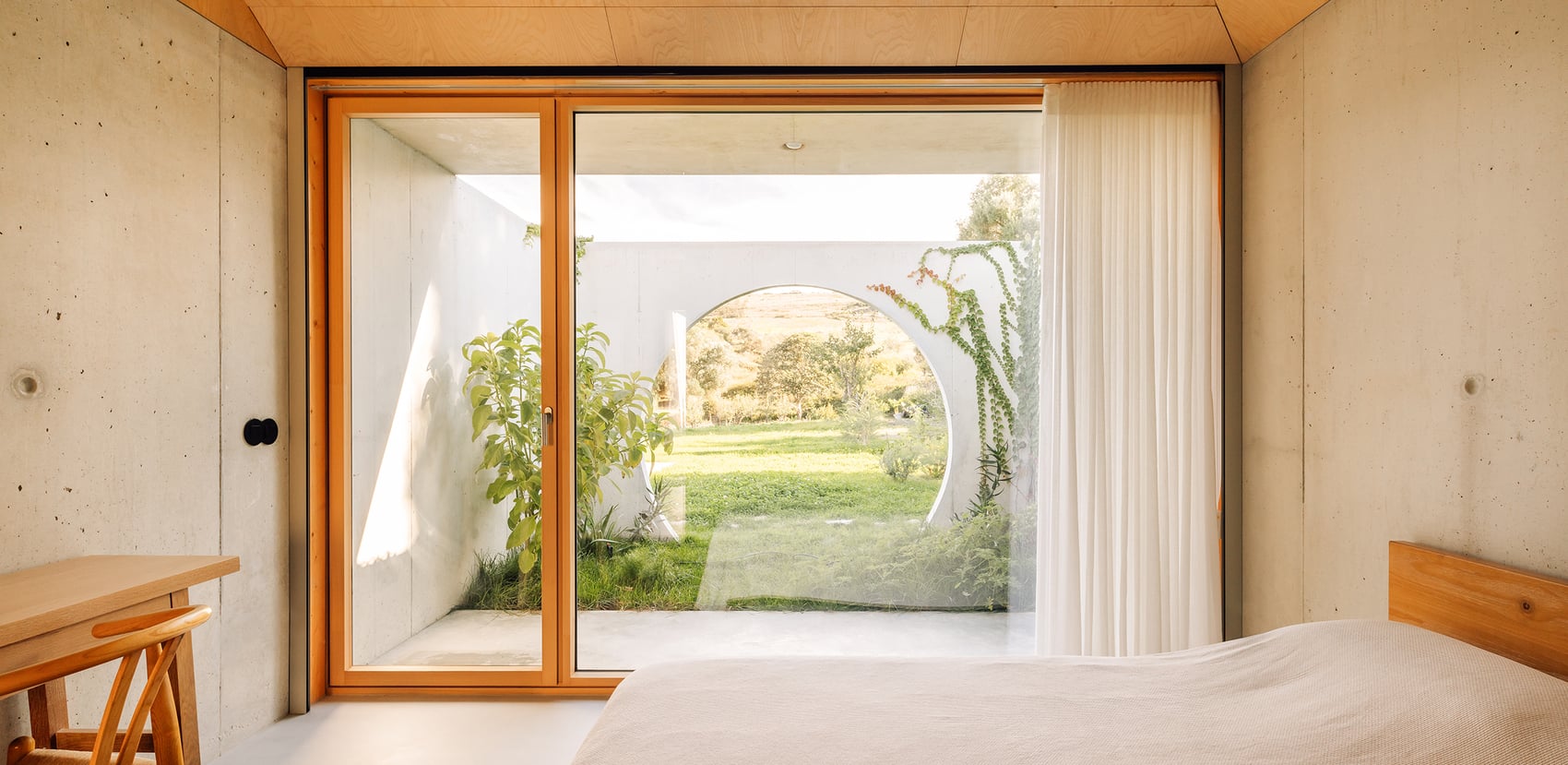
The geometric elements create zones with varying degrees of protection from sight, while the generously proportioned glass surfaces bring plenty of light into the rooms.
Circular openings punctuate the exposed concrete wall of the exterior areas, mellowing the raw character of the material. Inside, the round form creates a fluid connection between kitchen and living area. The geometric elements create zones with varying degrees of protection from sight, while the generously proportioned glass surfaces bring plenty of light into the rooms. While the terraces giving off the bathrooms are completely enclosed by concrete walls to form charming little courtyards, the circular or rectangular openings in the other rooms provide curated views. The living area is the only space that opens out completely to the landscape.
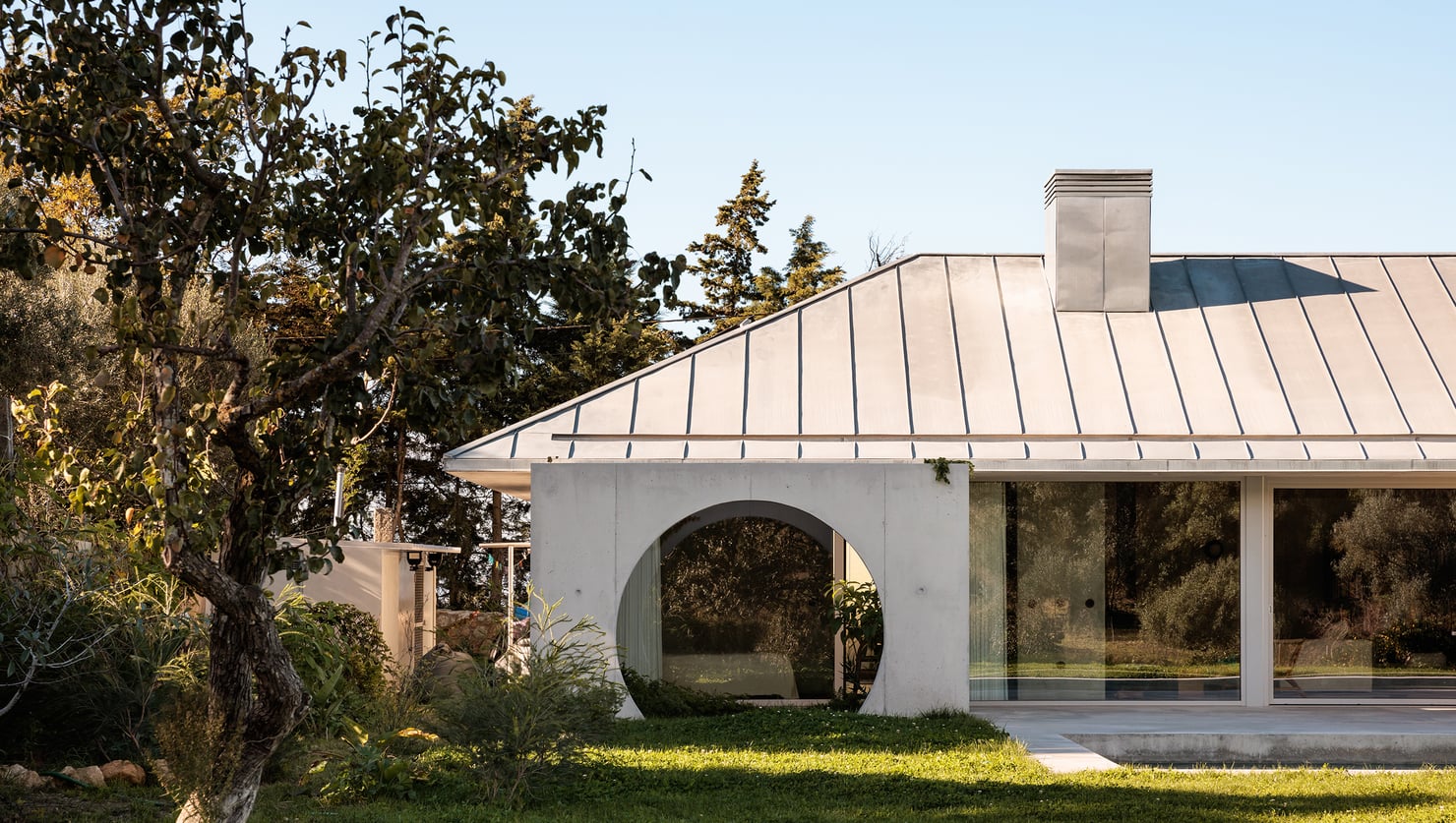
Rooms with view, no view of the rooms: round openings in the offset concrete walls ensure greater privacy.
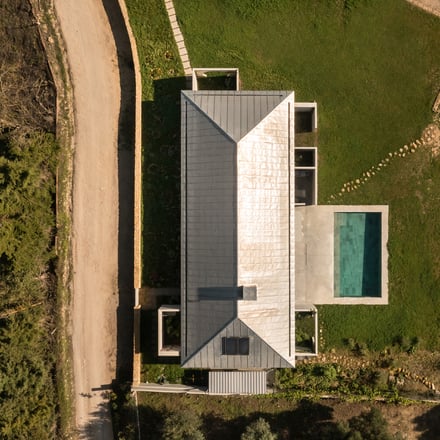
Bird's eye view: the prismatic hip roof sits in harmony with the villa’s elemental forms.
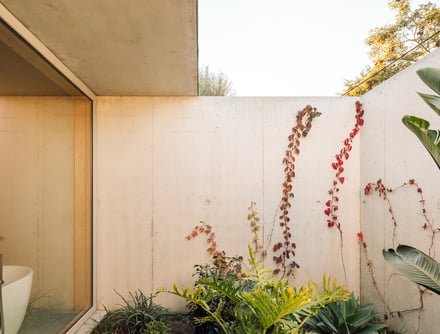
Greater privacy: the concrete walls offer a visual screen for the bathrooms while creating charming little courtyards.
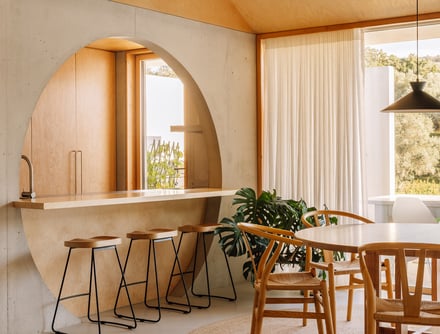
The inviting presence of the spacious birch roof tempers the raw aspect of the fair-faced concrete walls and blends harmoniously with the wood of the window frames.
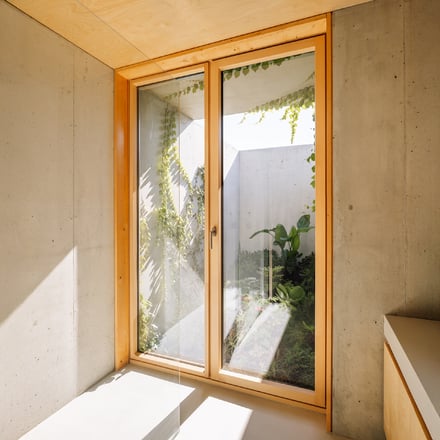
Cosy and warm: the spruce window frames form a perfect contrast with the raw concrete walls.
Exposed concrete walls, cement floors, a zinc roof and the bright aluminium of the window frames lend the building a modern yet timeless character. For the architect Completo, the sustainability of the materials was just as important as their aesthetic impact. “They are all durable, low-maintenance, and resistant to heat and weather – a key factor considering the region’s typically warm, dry summers and mild, wet winters.” The Finstral aluminium window frames are ideal for the Mediterranean setting. They resist intense heat and also remain impermeable and robust in extreme weather conditions. In the interior, the warm, inviting presence of the expansive birch roof contrasts with the raw, cool tones of the exterior materials, while also softening the raw exposed concrete of the interior walls. The unusual combination of materials in the window frames – aluminium on the outside, spruce on the inside – picks up on this contrast. Also essential for the building is the unusual treatment of glass, most noticeably in the large windows, but the sliding door also forges a link between the interior and exterior materials. At the same time, the dominant, cuboid concrete walls, with their playful positioning, combine to create a harmonious whole.
Even though most of the windows and the sliding door are south-facing, the striking roof shape means the double glazing with sun protection is enough – no extra shading required. The prismatic hip roof protrudes 1.15 metres beyond the building and appears to be resting evenly on the concrete cuboids. In summer it wards off the sun; in winter, when the sun is lower in the sky, it lets plenty of light into the house and supports the natural warming of the rooms. For João Completo, this unusual villa that is seamlessly embedded in its natural surrounds is "a response to environmental influences and the warming climate of the region.” The Finstral windows play a key role here, in both functional and aesthetic terms.
Project profile:
Property: Single-family house
Construction task: New-builds
Architects: João Completo
Year of construction: 2023
Total area: 200 m²
Locality: Palmela, Portugal
Finstral elements:
Even though most of the windows and the sliding door are south-facing, the striking roof shape means the double glazing with sun protection is enough – no extra shading required. The prismatic hip roof protrudes 1.15 metres beyond the building and appears to be resting evenly on the concrete cuboids. In summer it wards off the sun; in winter, when the sun is lower in the sky, it lets plenty of light into the house and supports the natural warming of the rooms. For João Completo, this unusual villa that is seamlessly embedded in its natural surrounds is "a response to environmental influences and the warming climate of the region.” The Finstral windows play a key role here, in both functional and aesthetic terms.
Project profile:
Property: Single-family house
Construction task: New-builds
Architects: João Completo
Year of construction: 2023
Total area: 200 m²
Locality: Palmela, Portugal
Finstral elements:
- Window FIN-Project Nova-line 95 Aluminium-wood
- Window FIN-Project Nova-line Plus 95 Aluminium-wood
- Sliding door FIN-Slide Slim-line 169 Aluminium-wood
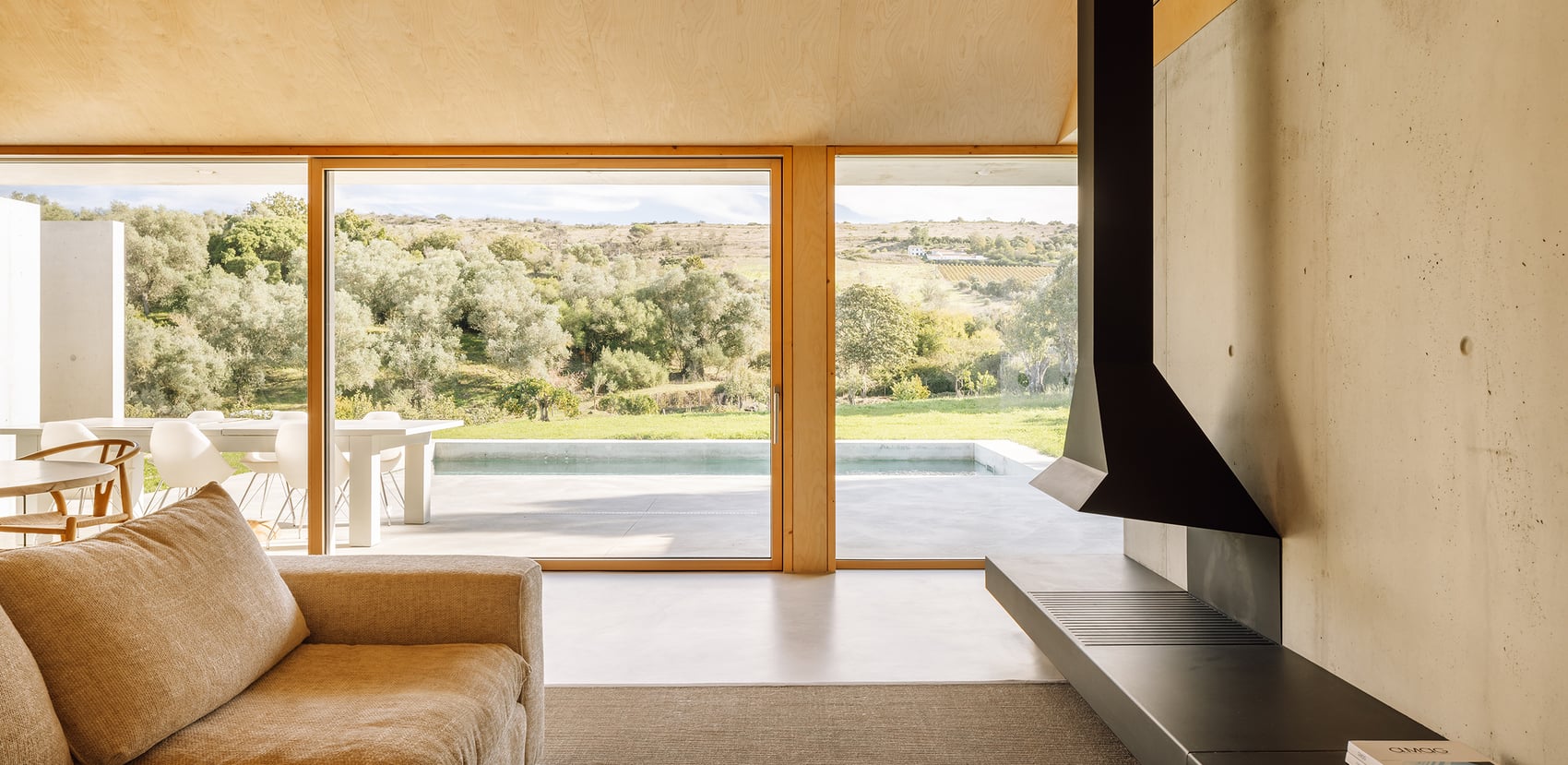
The large glass areas create a link between indoors and outdoors.
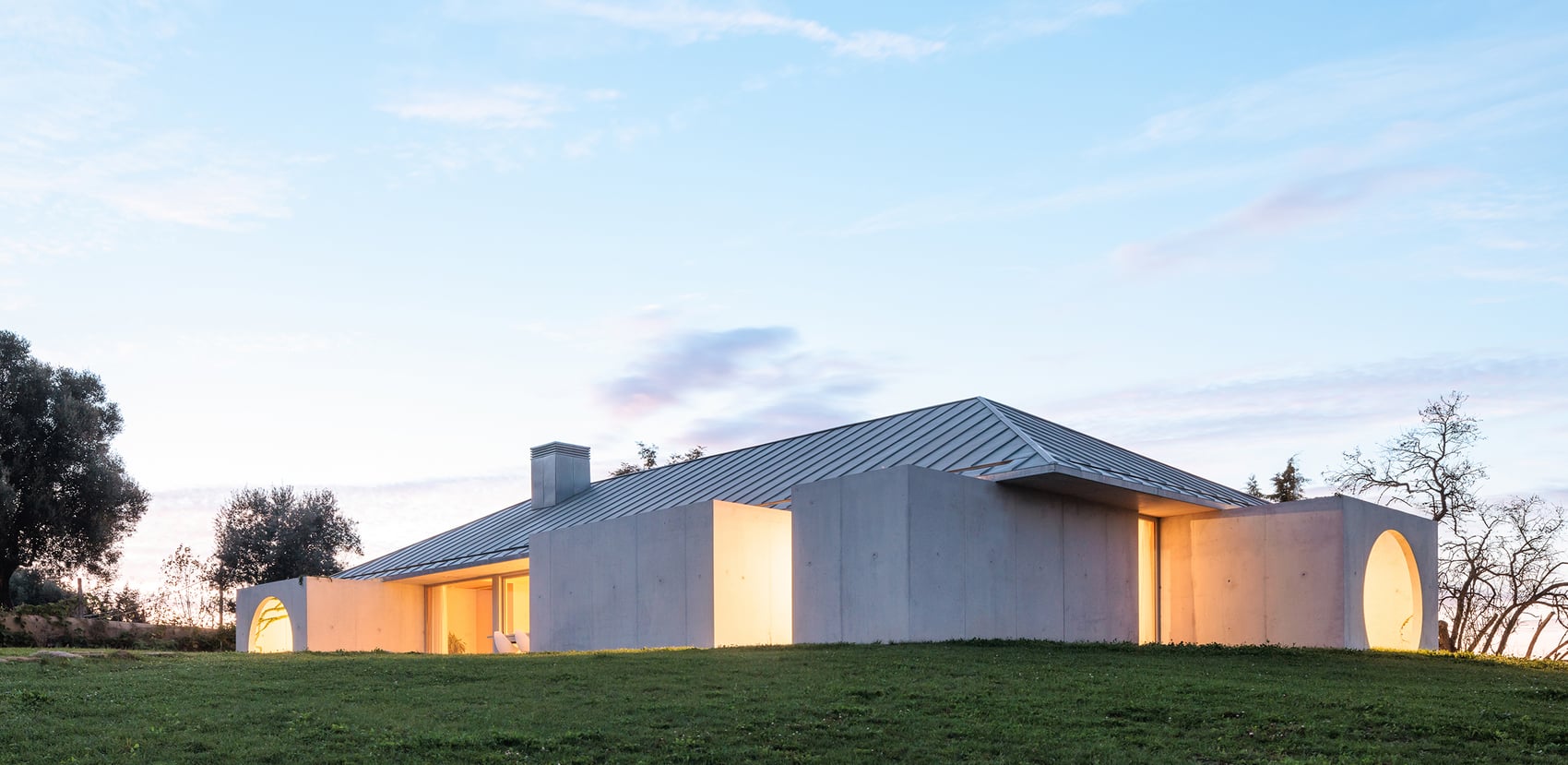
With simple splendour, the geometric composition of the new-build sits atop an elevation in the nature park.
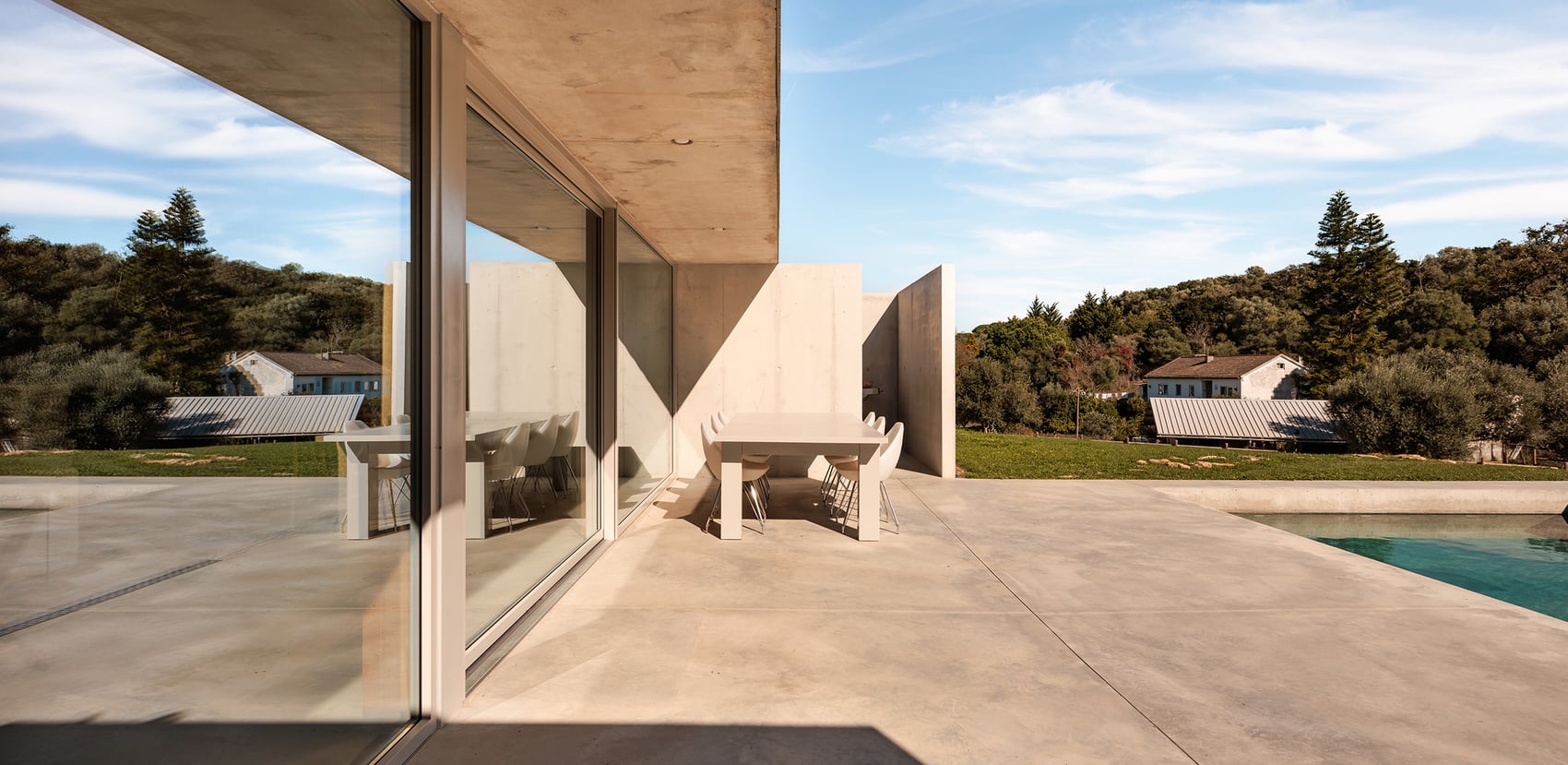
The building exterior with its large areas of glazing enters into a dialogue with the rural setting.
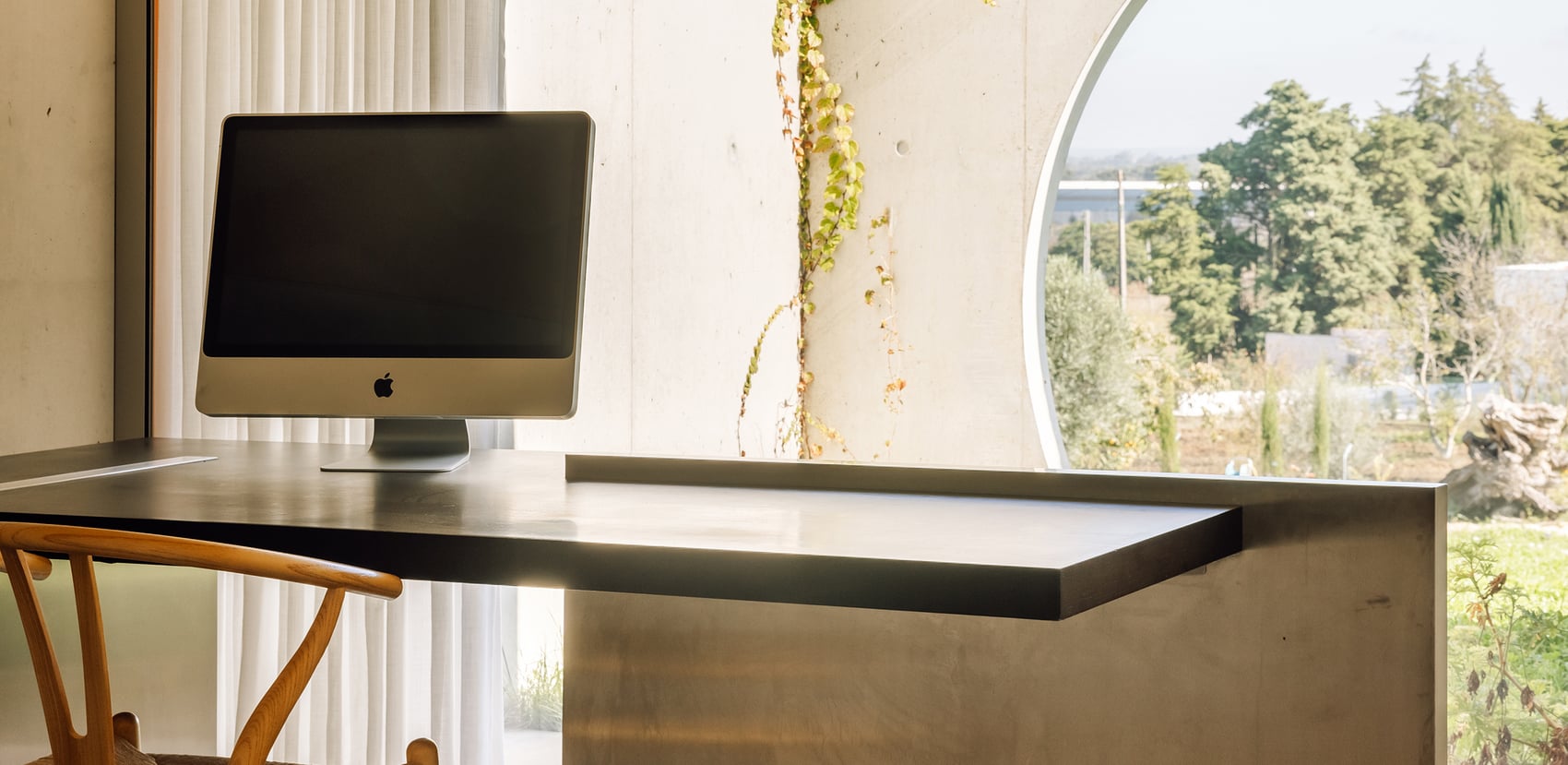
The subtle visual screening provided by the circular form in the outdoor area delivers the ideal place for concentration: views out, though without distraction.
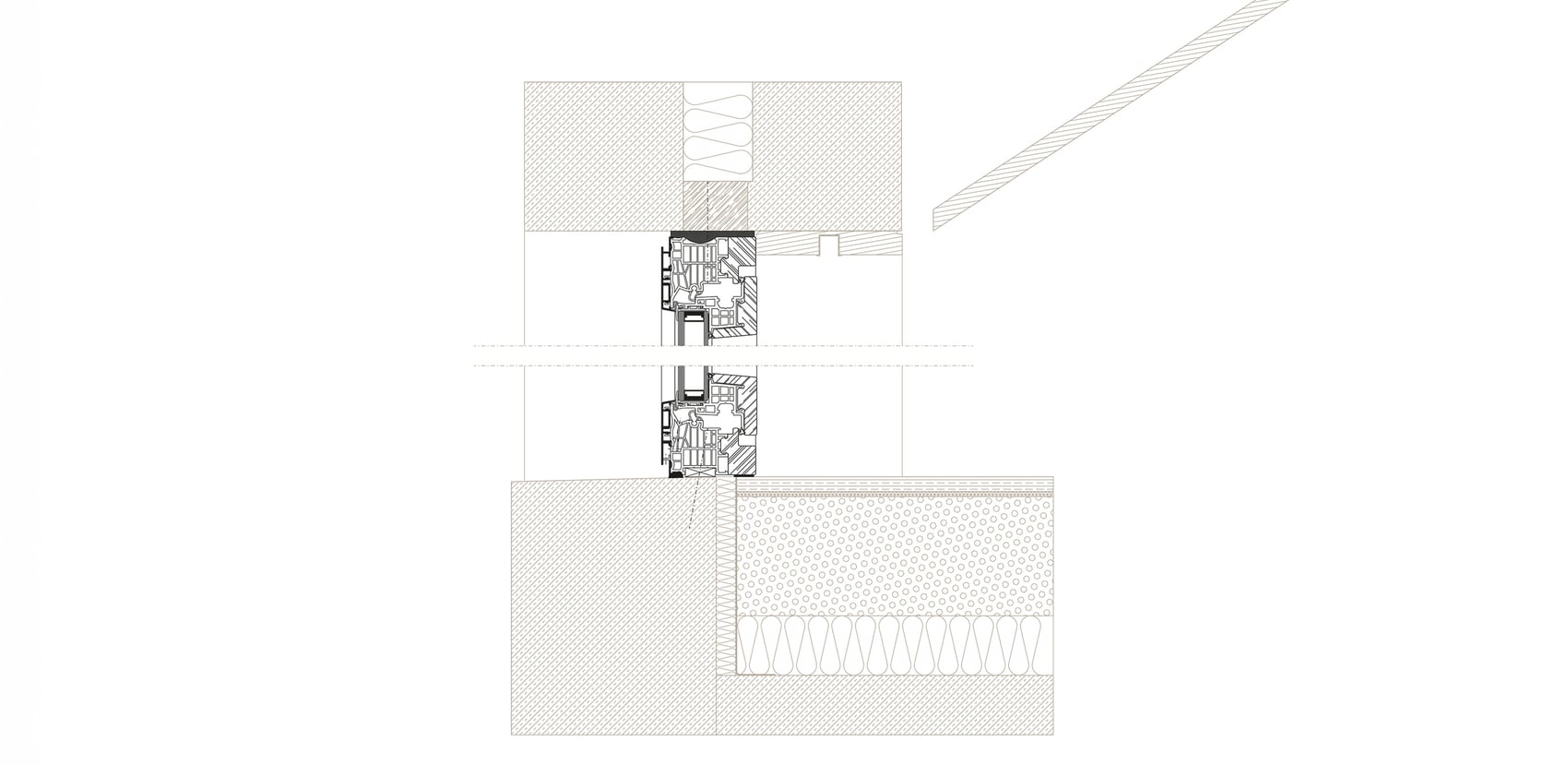
Building connection
Frameless FIN-Project Nova-line windows were chosen for this project, aluminium for the exterior, Oak Nature for the interior. Frames are installed flush. The building connection was installed directly in the reveal.
Frameless FIN-Project Nova-line windows were chosen for this project, aluminium for the exterior, Oak Nature for the interior. Frames are installed flush. The building connection was installed directly in the reveal.
Still want more?
See here for further interesting reading matter.
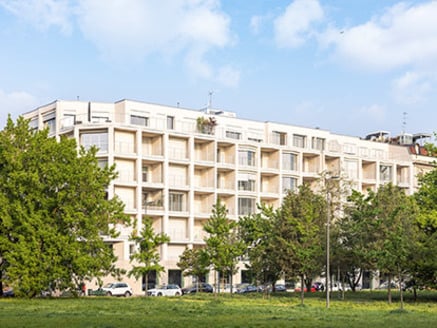
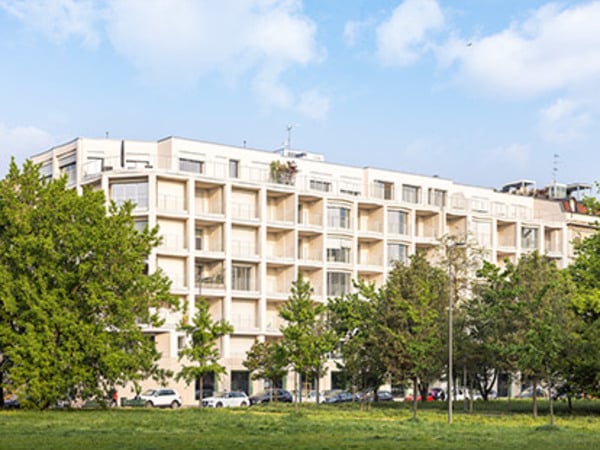
Where urban and green space meet - a residential complex opens onto a park.
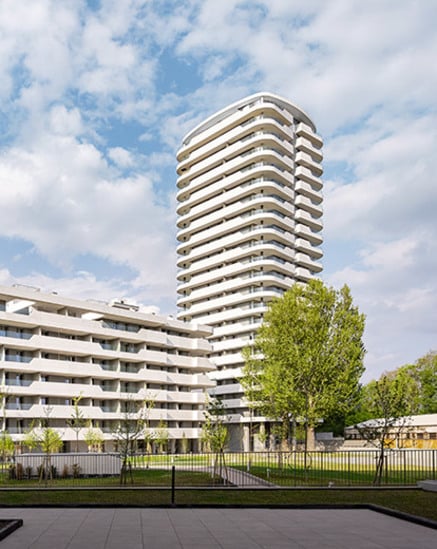
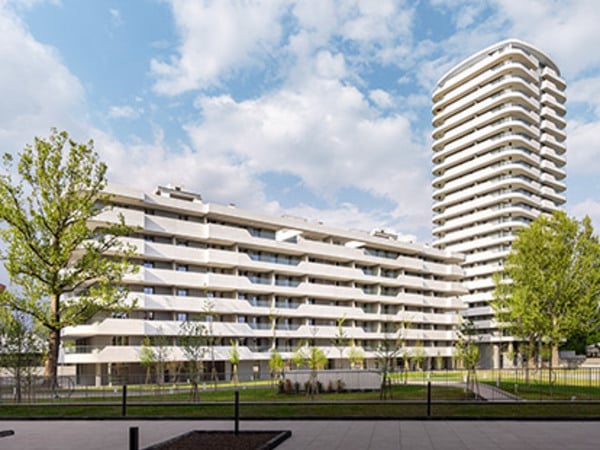
At home in an urban landscape: different systems, a single architectural language.