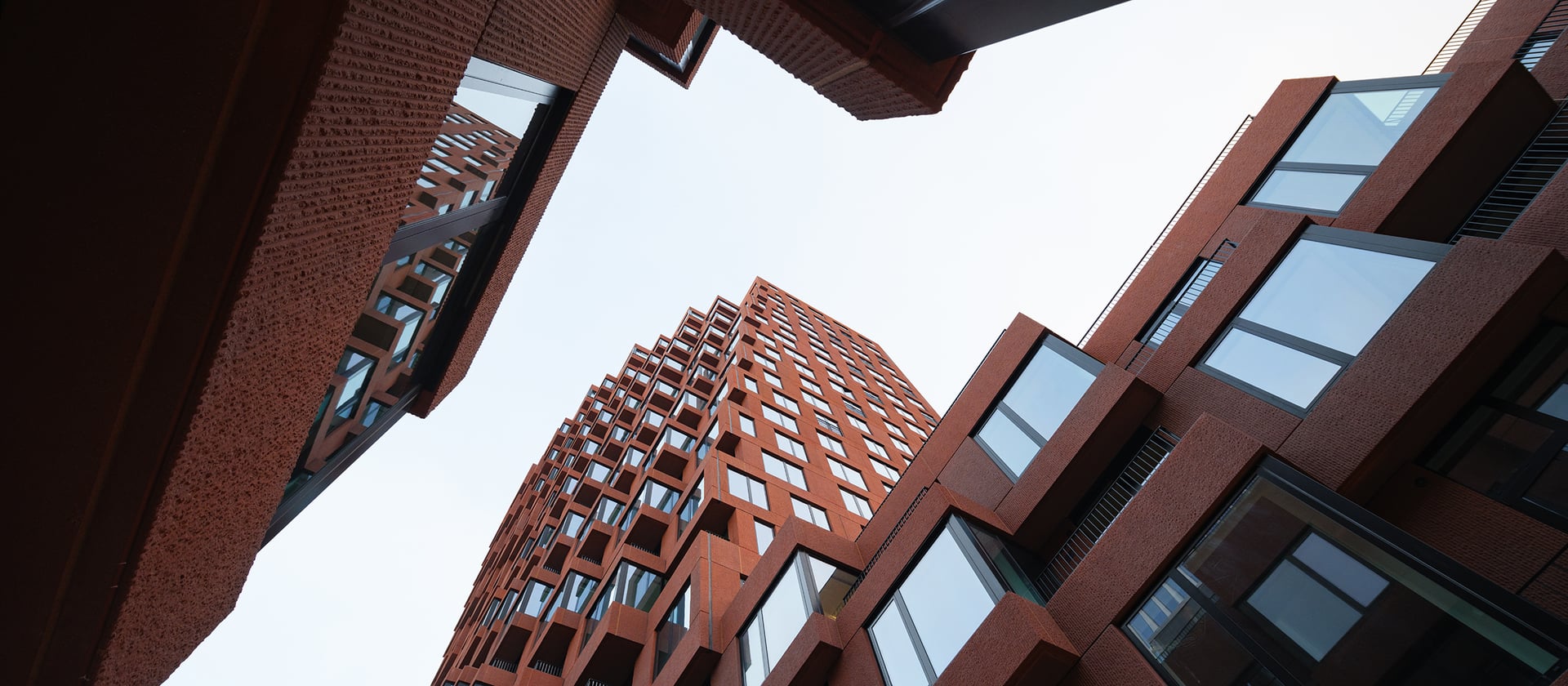
Reframe the building.
Serial not individual.
Do we ultimately have to decide between efficiency and individuality? Between serially produced living and working units and individually planned spaces? No, says Nathalie de Vries, co-founder of the Dutch architectural practice MVRDV. Why struggle with contradictions that don’t have to contradict? She prefers to think about an architecture that is fluid in its response. About designing buildings and construction that better adapt to the requirements of residents. Architecture that is at heart transformable. So do we ultimately have to define modular elements and combine them in a way that results in something unique? A discussion about the language, the functions and the possibilities of architecture.
Arno Ritter in an email discussion with Nathalie de Vries
Image credits: Jason O’Rear, MVRDV, RZGraphics, Barbara Verbij, Schnepp Renou, Rob’t Hart, Ossip van Duivenbode
In the manifesto The language of MVRDV (2019) you systematised your design process. You introduced four modules – stack, pixel, village and activator – and defined terms like “diversity”, “new collectivity” and “density”. The architectural practice MVRDV plans and builds in a range of historically determined cultural and linguistic spaces – was it your aim that this symbol-based language would create a basis for international architectural dialogue?
Yes, that was our aim. But the beginning was far more pragmatic. We were invited to present our practice and our work at an exhibition in the Tyrolean Architecture Centre (AUT) in Innsbruck. The request came just at the right time, because for a while we had been engaged with recategorising our projects internally and discussing various approaches and concepts.
During these discussions we became aware of how important language is in the design process. We noticed shifts: some concepts had disappeared, new ones had emerged. At that point we recognised the potential. We understood that we could create our own architectural language with a clearly defined nomenclature. This would make our design process transparent and facilitate an international architectural dialogue. First, because communication based on symbols is by its very nature international. Second, because our vocabulary isn’t just descriptive, it also expresses what we expect of architecture.
From this process, which was internal initially, we developed a manifesto that also served as an exhibition concept. The MVRDV Manifesto sets out our modular approach to design and makes it easier to talk in abstract terms about space and architecture – for example, about density, diversity and suitable surfaces. This results in a language that can be described as three or even four-dimensional.
“For me, the challenge is in creating great assembly designs while leaving room for individuality.” – Nathalie de Vries
What does the design process with these modular methods look like in your practice, and when working with your clients?
As soon as we have defined the project objectives, we use our language as a tool for exploring various design strategies – related to the overall context, the specific location and how the utilisation programme is structured.
We develop various models and options that we present to the clients to prompt a dialogue about possibilities and their advantages and disadvantages. This exchange about configuration possibilities is visual and three-dimensional, with physical and virtual models. Everyone involved can help shape and influence the design process – that’s what makes it so special. Even for the Netherlands.
What role does the issue of modularity play for you? The modular principle seems to be a recurring and therefore decisive element in your architectural language.
We think in modules, but we often create unique structures for our buildings. Essentially there are various potential answers to this question. On the one hand, a module is the smallest spatial unit that we recognise in a project, often with a social reference, like the smallest work unit of an organisation or an individual house. On the other hand, a convertible module lends the building a generic, modular quality. And on top of that – and this is becoming more important in the context of sustainability – a module can be an individual construction element, such as a façade panel, that makes construction economical, because you can disassemble the whole thing and flexibly redeploy it.
Our designs fit the first answer best, because it describes a module that is not just reproducible, but that can also be varied and which exists in multiple versions. This brings us to the concept of the catalogue. The idea of the module – in our language, the pixel – can be literally used as an input for the programming up to a certain point. The result is then a “data-driven” design. At the same time, I can’t deny that the roots of this idea also lie in the Structuralist movement, which was highly influential in the Netherlands.
Can you explain a little more about the influence of Structuralism in the Netherlands? Who were the architects that influenced you?
Structuralism emerged in the Netherlands in the late 1950s and early ’60s as a response to the industrial and Modernist construction of the post-War era. In architecture, this movement allied with a societal vision that emphasised creativity, equality and openness, the non-hierarchical, the creation of opportunities and spontaneous connections. Interestingly, these designs sometimes lacked the clear direction that enables the exceptional, elevated quality of a promenade architecturale. And sometimes the generic won out over the chance to meet individual needs. Important figures for us when we were students were Herman Hertzberger, as representative of the Structuralist movement, as well as Rem Koolhaas, along with a core group of teachers and professors who were associated with the post-War generations of the Congrès Internationaux d’Architecture Moderne (CIAM).
Our story begins – if you will – in the late 1980s and '90s when all these elements came into contact with postmodernism and neoliberalism. I want to create architectural and urban designs that promote what I would describe as a “new collectivity” – spaces in which like-minded people come together, arranged in larger configurations. I want to design buildings that contain ambiguous spaces and a connection between the public and private spheres.
Arno Ritter in an email discussion with Nathalie de Vries
Image credits: Jason O’Rear, MVRDV, RZGraphics, Barbara Verbij, Schnepp Renou, Rob’t Hart, Ossip van Duivenbode
In the manifesto The language of MVRDV (2019) you systematised your design process. You introduced four modules – stack, pixel, village and activator – and defined terms like “diversity”, “new collectivity” and “density”. The architectural practice MVRDV plans and builds in a range of historically determined cultural and linguistic spaces – was it your aim that this symbol-based language would create a basis for international architectural dialogue?
Yes, that was our aim. But the beginning was far more pragmatic. We were invited to present our practice and our work at an exhibition in the Tyrolean Architecture Centre (AUT) in Innsbruck. The request came just at the right time, because for a while we had been engaged with recategorising our projects internally and discussing various approaches and concepts.
During these discussions we became aware of how important language is in the design process. We noticed shifts: some concepts had disappeared, new ones had emerged. At that point we recognised the potential. We understood that we could create our own architectural language with a clearly defined nomenclature. This would make our design process transparent and facilitate an international architectural dialogue. First, because communication based on symbols is by its very nature international. Second, because our vocabulary isn’t just descriptive, it also expresses what we expect of architecture.
From this process, which was internal initially, we developed a manifesto that also served as an exhibition concept. The MVRDV Manifesto sets out our modular approach to design and makes it easier to talk in abstract terms about space and architecture – for example, about density, diversity and suitable surfaces. This results in a language that can be described as three or even four-dimensional.
“For me, the challenge is in creating great assembly designs while leaving room for individuality.” – Nathalie de Vries
What does the design process with these modular methods look like in your practice, and when working with your clients?
As soon as we have defined the project objectives, we use our language as a tool for exploring various design strategies – related to the overall context, the specific location and how the utilisation programme is structured.
We develop various models and options that we present to the clients to prompt a dialogue about possibilities and their advantages and disadvantages. This exchange about configuration possibilities is visual and three-dimensional, with physical and virtual models. Everyone involved can help shape and influence the design process – that’s what makes it so special. Even for the Netherlands.
What role does the issue of modularity play for you? The modular principle seems to be a recurring and therefore decisive element in your architectural language.
We think in modules, but we often create unique structures for our buildings. Essentially there are various potential answers to this question. On the one hand, a module is the smallest spatial unit that we recognise in a project, often with a social reference, like the smallest work unit of an organisation or an individual house. On the other hand, a convertible module lends the building a generic, modular quality. And on top of that – and this is becoming more important in the context of sustainability – a module can be an individual construction element, such as a façade panel, that makes construction economical, because you can disassemble the whole thing and flexibly redeploy it.
Our designs fit the first answer best, because it describes a module that is not just reproducible, but that can also be varied and which exists in multiple versions. This brings us to the concept of the catalogue. The idea of the module – in our language, the pixel – can be literally used as an input for the programming up to a certain point. The result is then a “data-driven” design. At the same time, I can’t deny that the roots of this idea also lie in the Structuralist movement, which was highly influential in the Netherlands.
Can you explain a little more about the influence of Structuralism in the Netherlands? Who were the architects that influenced you?
Structuralism emerged in the Netherlands in the late 1950s and early ’60s as a response to the industrial and Modernist construction of the post-War era. In architecture, this movement allied with a societal vision that emphasised creativity, equality and openness, the non-hierarchical, the creation of opportunities and spontaneous connections. Interestingly, these designs sometimes lacked the clear direction that enables the exceptional, elevated quality of a promenade architecturale. And sometimes the generic won out over the chance to meet individual needs. Important figures for us when we were students were Herman Hertzberger, as representative of the Structuralist movement, as well as Rem Koolhaas, along with a core group of teachers and professors who were associated with the post-War generations of the Congrès Internationaux d’Architecture Moderne (CIAM).
Our story begins – if you will – in the late 1980s and '90s when all these elements came into contact with postmodernism and neoliberalism. I want to create architectural and urban designs that promote what I would describe as a “new collectivity” – spaces in which like-minded people come together, arranged in larger configurations. I want to design buildings that contain ambiguous spaces and a connection between the public and private spheres.
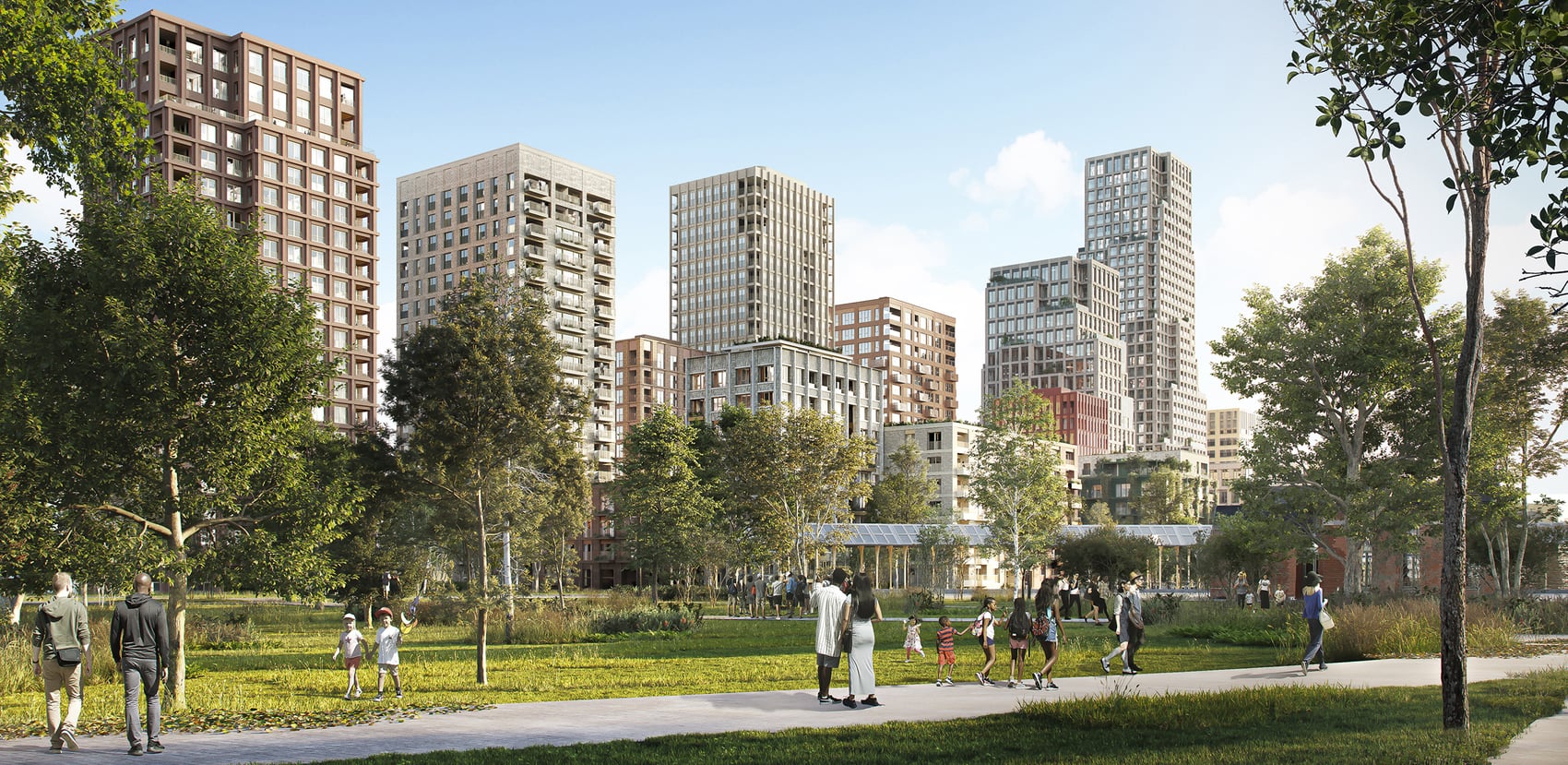
Lakeside project, Brussels (2021): Designed by MVRDV, this project incorporates 17 buildings, 800 apartments and a nine-hectare park. The focal points for the urban planning of the Tour & Taxis site in Brussels were architectonic variety, sustainability and the creation of community spaces.
How would you describe the relation between a modular approach and a serial concept? How do these considerations intersect in your projects – or are they mutually exclusive? What is the significance of the serial for you?
I tend to apply modularity in two contexts. First, it saves costs by redistributing the construction budget to allow additional areas and high-quality spaces for encounters. Second, it makes the future reconstruction of buildings easier. Before we build something new, we should convert what is already there – and our new projects should also be easy to reconfigure. The challenge is to avoid savings that make future conversions difficult. For example, I am always careful not to limit the storey and ceiling height too much.
Does the window have a design function in your modular thinking? What significance does glass have in your architecture?
It is interesting that on the path to more sustainable architecture we are experiencing a comeback of Structuralist thinking. The openness – we are thinking once again about the modularity of buildings, about flexibility, variability, the carbon footprint, but from a new ideological perspective. Glass certainly plays a role in that. In Modernism, glass often stood for the absence of materials. Today it has been redefined, it has literally re-materialised. Gaining and losing energy, the comparison of daylight and electric light, the carbon cost of manufacturing, the design of buildings and of course its reflective quality – all of those things determine its use. Then there’s the view of what is outside and the beauty of natural light. Our depot building for the Rotterdam museum Boijmans van Beuningen and our two towers on the Tour & Taxis site in Brussels show the full spectrum of what you can do with glass.
“We think in modules, but we often create unique structures for our buildings.” – Nathalie de Vries
People increasingly fear that individuality falls short the more we think and build in modules, and thus serially. Where do the terms “serial” and “individual” come in for you? What inspiration do you take from the tension between these two poles, and what does “individual” mean for you as an architect?
For me, the challenge is in creating great assembly designs while leaving room for individuality. I see that in literal terms – today’s digital design tools allow for much greater variety while still keeping the design efficient.
If you want to retain leeway and flexibility you have to be less fixated on the specific usage of the spaces in your planning. In architecture, identity doesn’t just arise from the function, it comes from the character of a space – its form, its materials, its aura.
I tend to apply modularity in two contexts. First, it saves costs by redistributing the construction budget to allow additional areas and high-quality spaces for encounters. Second, it makes the future reconstruction of buildings easier. Before we build something new, we should convert what is already there – and our new projects should also be easy to reconfigure. The challenge is to avoid savings that make future conversions difficult. For example, I am always careful not to limit the storey and ceiling height too much.
Does the window have a design function in your modular thinking? What significance does glass have in your architecture?
It is interesting that on the path to more sustainable architecture we are experiencing a comeback of Structuralist thinking. The openness – we are thinking once again about the modularity of buildings, about flexibility, variability, the carbon footprint, but from a new ideological perspective. Glass certainly plays a role in that. In Modernism, glass often stood for the absence of materials. Today it has been redefined, it has literally re-materialised. Gaining and losing energy, the comparison of daylight and electric light, the carbon cost of manufacturing, the design of buildings and of course its reflective quality – all of those things determine its use. Then there’s the view of what is outside and the beauty of natural light. Our depot building for the Rotterdam museum Boijmans van Beuningen and our two towers on the Tour & Taxis site in Brussels show the full spectrum of what you can do with glass.
“We think in modules, but we often create unique structures for our buildings.” – Nathalie de Vries
People increasingly fear that individuality falls short the more we think and build in modules, and thus serially. Where do the terms “serial” and “individual” come in for you? What inspiration do you take from the tension between these two poles, and what does “individual” mean for you as an architect?
For me, the challenge is in creating great assembly designs while leaving room for individuality. I see that in literal terms – today’s digital design tools allow for much greater variety while still keeping the design efficient.
If you want to retain leeway and flexibility you have to be less fixated on the specific usage of the spaces in your planning. In architecture, identity doesn’t just arise from the function, it comes from the character of a space – its form, its materials, its aura.
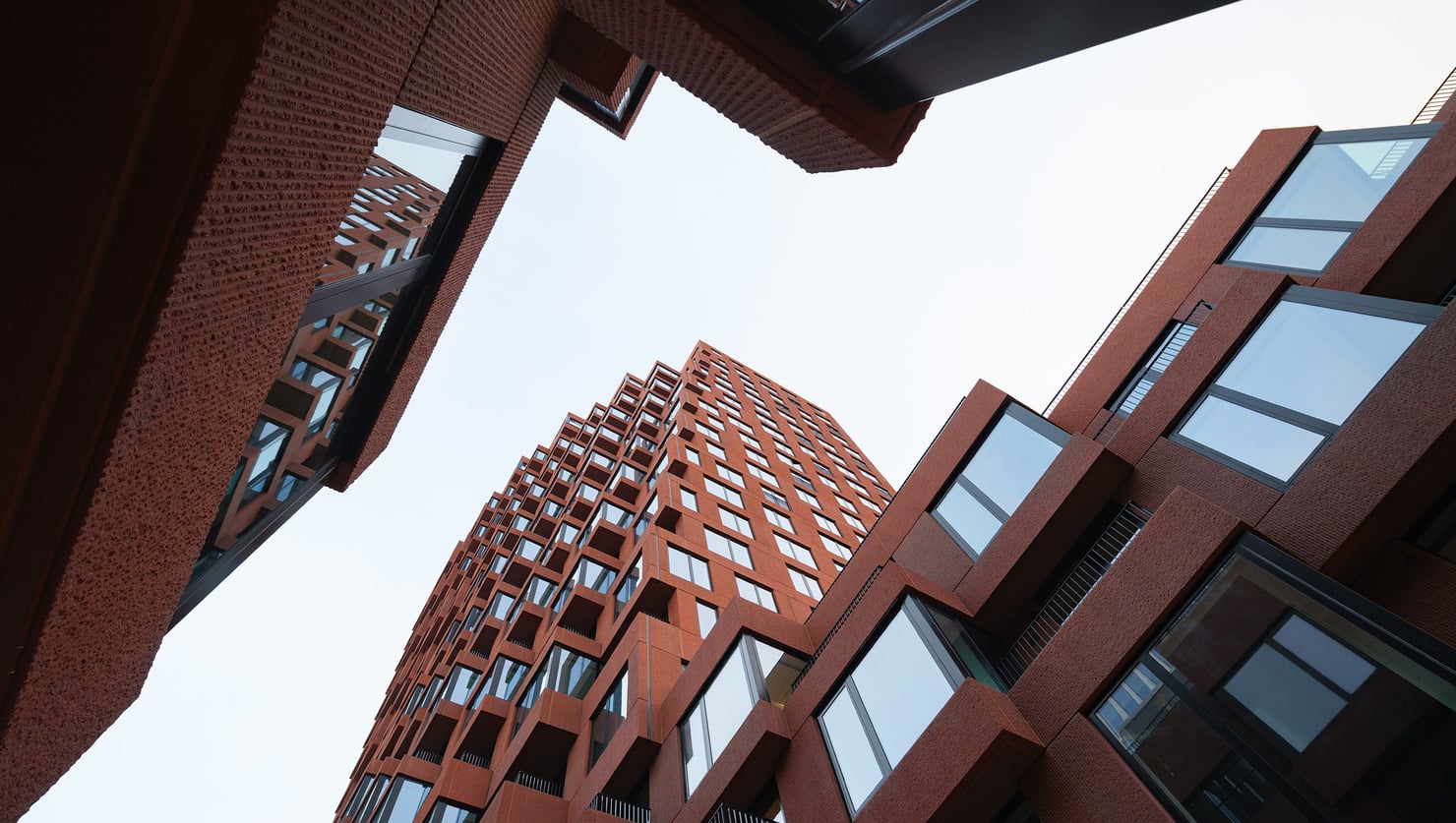
Mission Rock, San Francisco (2023): Inspired by natural rock formations, this office building designed by MVRDV is distinguished by a striking terraced structure. The façade of textured concrete in warm earth tones is integrated into its surroundings.
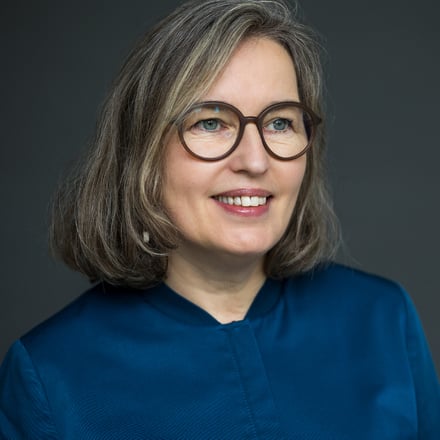
Nathalie de Vries, Dutch architect and urban planner at the internationally renowned architectural practice MVRDV, which she founded in Rotterdam in 1993 together with the architects Winy Maas and Jacob van Rijs. MVRDV is known for forward-looking, experimental projects that combine architecture and urban planning. In her work, de Vries places great importance on sustainability, social interaction and the creation of flexible spaces. Since 2017 she has also been Professor for Architectural Design and Public-Sector Building at the Technical University Delft.
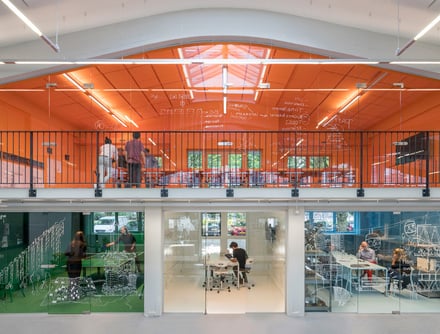
MVRDV House (Rotterdam): The headquarters of the architectural practice MVRDV in the heart of Rotterdam covers an area of 2,400 square metres. The building is divided into five segments with gabled roofs that combine to form a collective whole. Opened in 2016, the office has space for 200 employees.
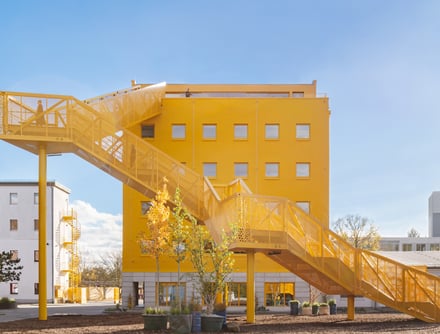
Building 1, Atelier Gardens, Berlin (2023): In a redesign by MVRDV and Hirschmüller Schindele Architekten, the 1990s office building gained a striking yellow façade and a zig-zag outdoor staircase. The patchwork of small office units in the interior was replaced by an open plan configuration that allows for flexible utilisation. A modular pavilion made from prefabricated wooden modules on the roof offers additional working and event space.
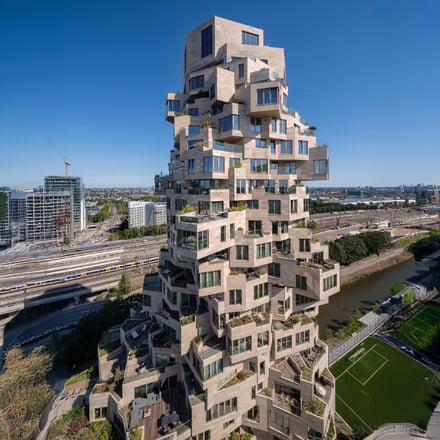
Valley, Amsterdam (2021): This mixed-used building in the Zuidas district includes three towers measuring 67, 81 and 100 metres. It incorporates apartments, offices, retail, gastronomy and cultural facilities. One striking feature here is the terraced façades, with their over 13,000 shrubs, bushes and trees, as well as a publicly accessible “valley” with vegetation on the fourth and fifth floors. The project was awarded the Emporis Skyscraper Award for the best new high-rise.
You talk about a “new collectivity”. How do you apply this in your projects? Does it emerge automatically from your spatial concepts or does it need to be facilitated somehow? In my experience, spatial approaches like this don’t always function as planned in different cultures.
That’s true, we need “cultural translators” and intercultural thinking. That’s why heterogeneous teams and collaboration with local partners is so important. But even within a country or a city, local needs and behaviour patterns can differ enormously. So we have to have a wide repertoire of ideas, methods and measures at hand – and constantly keep the context in view.
Around 250 people from all over the world work in your practice. Should we see this “sociotope” of various cultures as a kind of “new collectivity”, and does the concept also have relevance for your personal life?
We really do learn a lot from one another and from our shared experiences. Whether this intercultural concept is important in my personal life is irrelevant, because that is not the benchmark. But I would say that as architects we need to maintain a spirit of openness, remain open-minded and see the design process as a transparent dialogue.
That’s true, we need “cultural translators” and intercultural thinking. That’s why heterogeneous teams and collaboration with local partners is so important. But even within a country or a city, local needs and behaviour patterns can differ enormously. So we have to have a wide repertoire of ideas, methods and measures at hand – and constantly keep the context in view.
Around 250 people from all over the world work in your practice. Should we see this “sociotope” of various cultures as a kind of “new collectivity”, and does the concept also have relevance for your personal life?
We really do learn a lot from one another and from our shared experiences. Whether this intercultural concept is important in my personal life is irrelevant, because that is not the benchmark. But I would say that as architects we need to maintain a spirit of openness, remain open-minded and see the design process as a transparent dialogue.
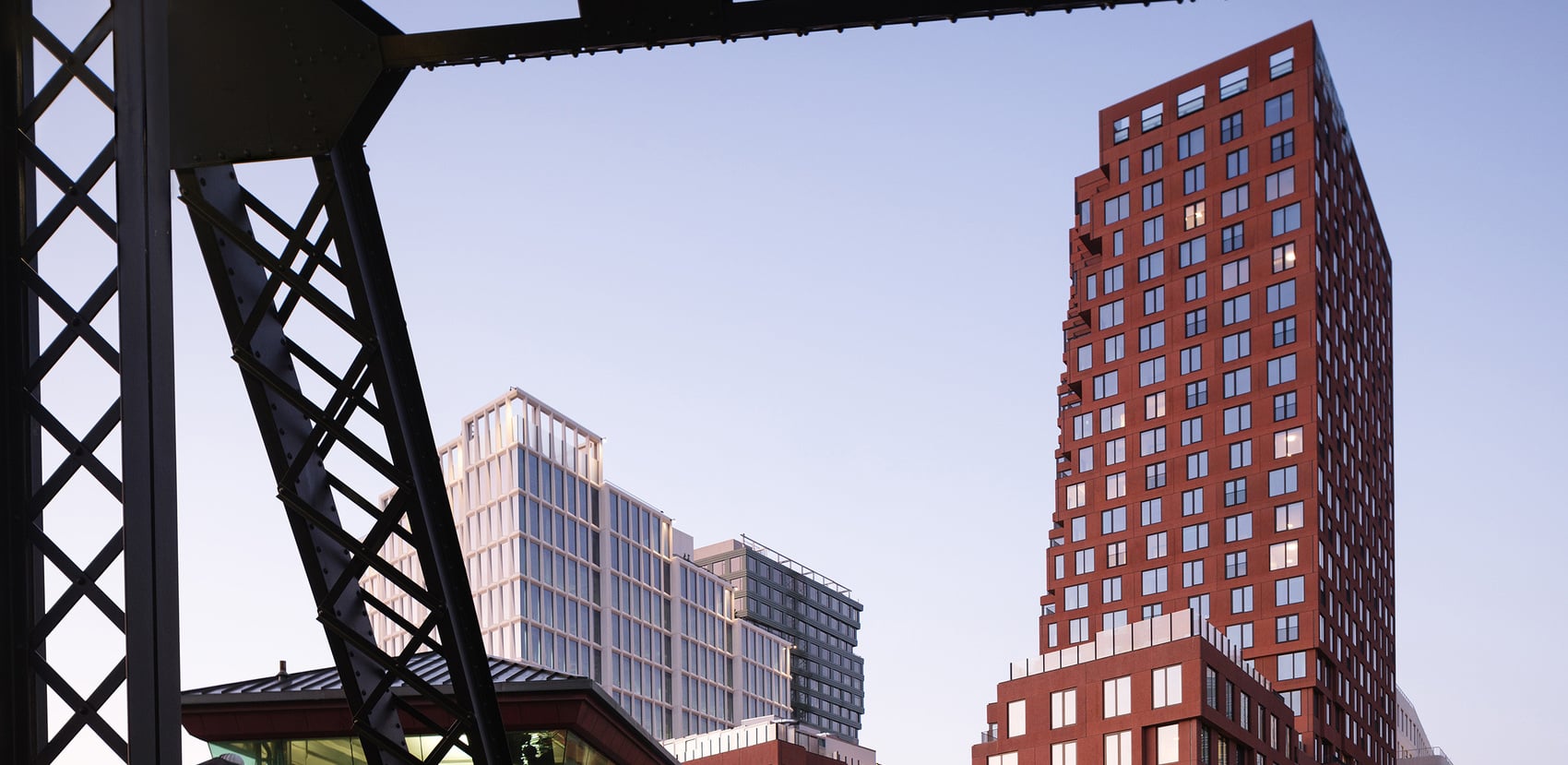
Part of the urban development project Mission Rock, the building combines functional architecture and environmental principles.
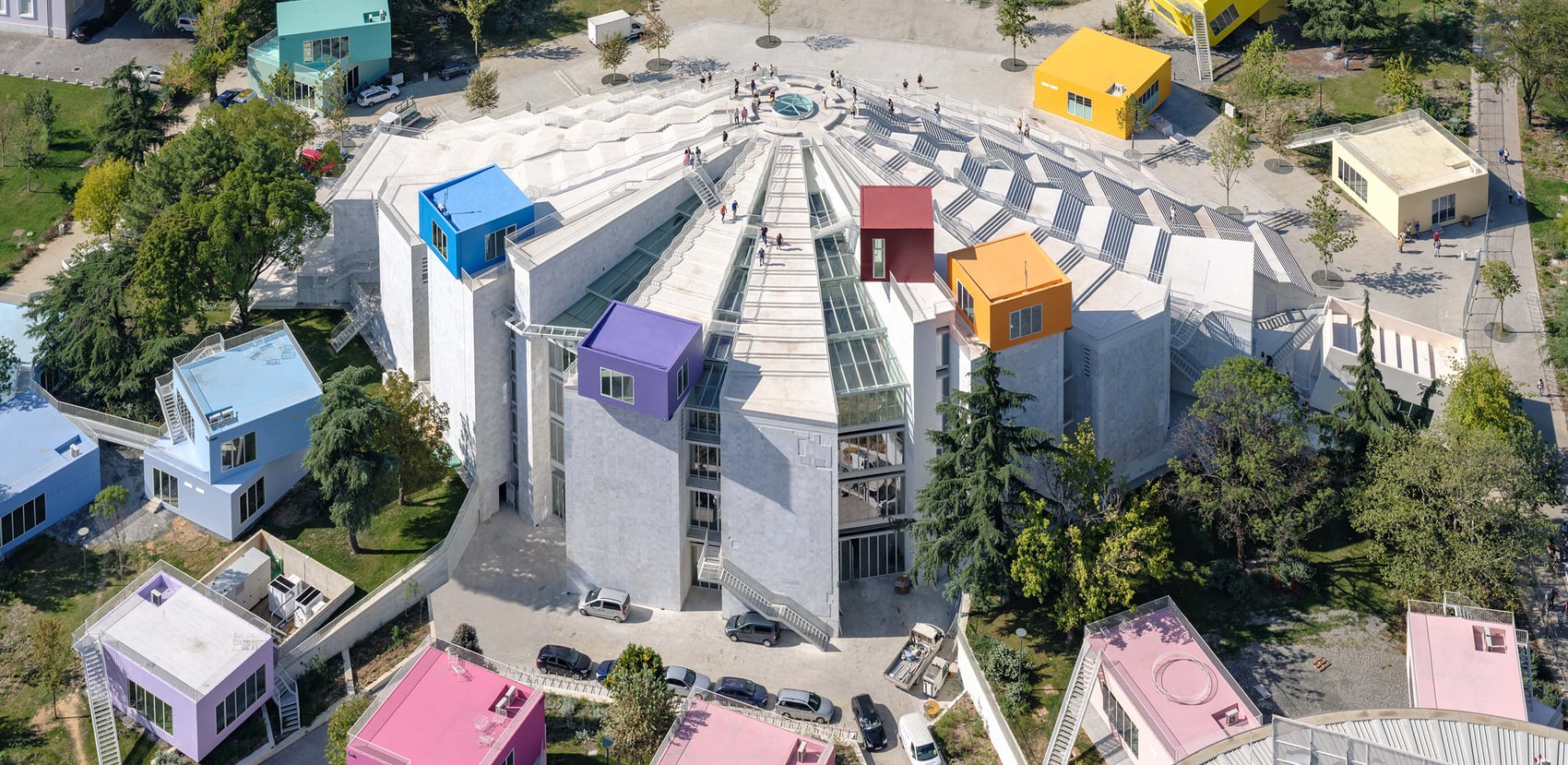
Pyramid in Tirana, Albania (1988/2023): This building was originally designed as a memorial for the Communist head of state and party leader Enver Hoxha. In 2017, MVRDV was commissioned by the Albanian government to transform it into a modern educational and cultural centre. The architects added 16 staircases to the exterior of the pyramid, transforming the flat roof into a publicly accessible space. They also attached 32 coloured cubes inside and outside, which can be used as cafés and studios. In the interior, spaces were restructured with glass surfaces and light shafts introducing more light and greater openness. Since opening in 2023 the building has served as a youth educational centre.
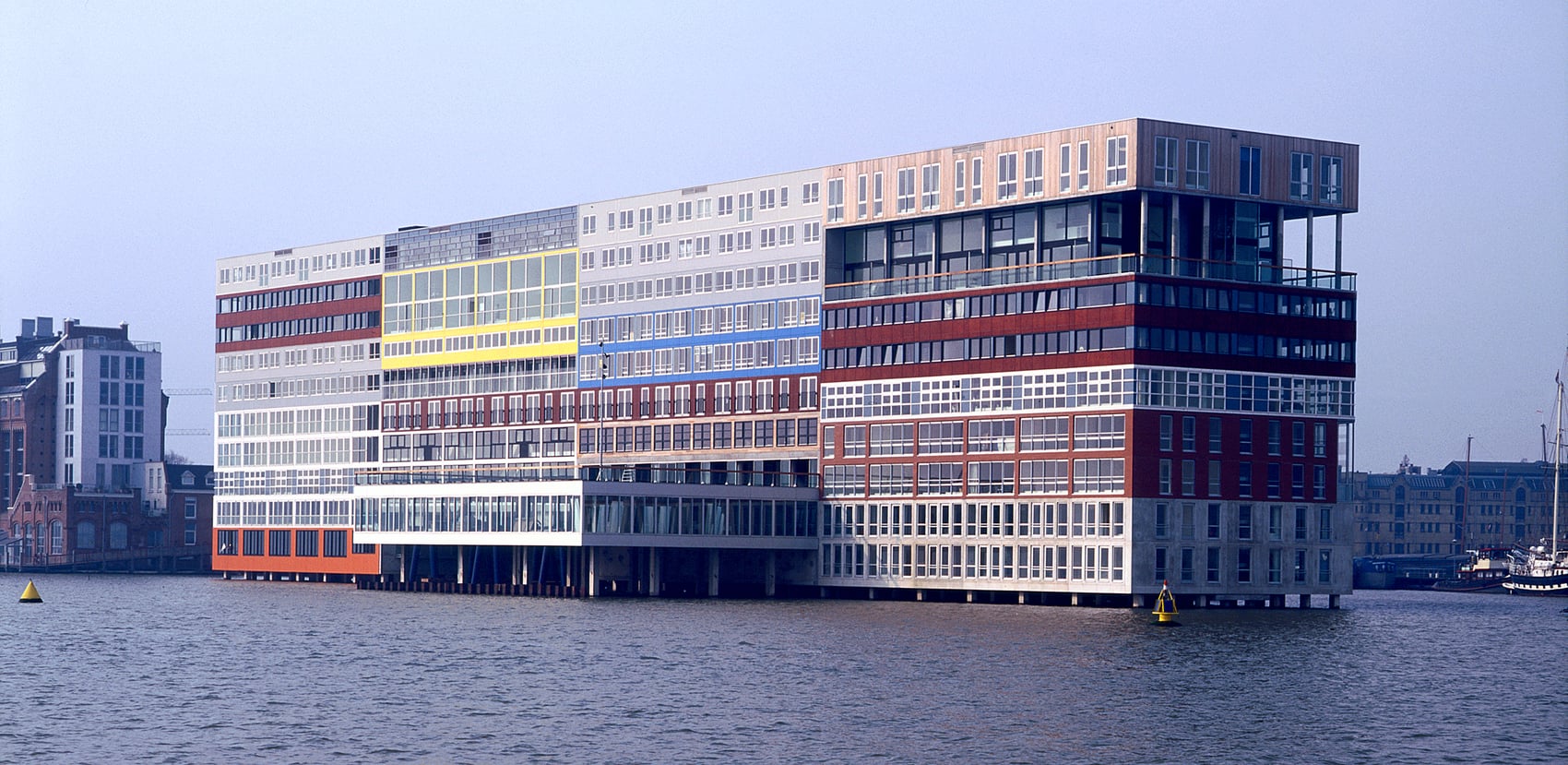
Silodam, Amsterdam (2002): This stacked modular structure recalls a large shipping container. Fittingly it is positioned on an artificial platform with pylons in the waters of the IJ, an arm of the sea, which makes it look as though it is floating.
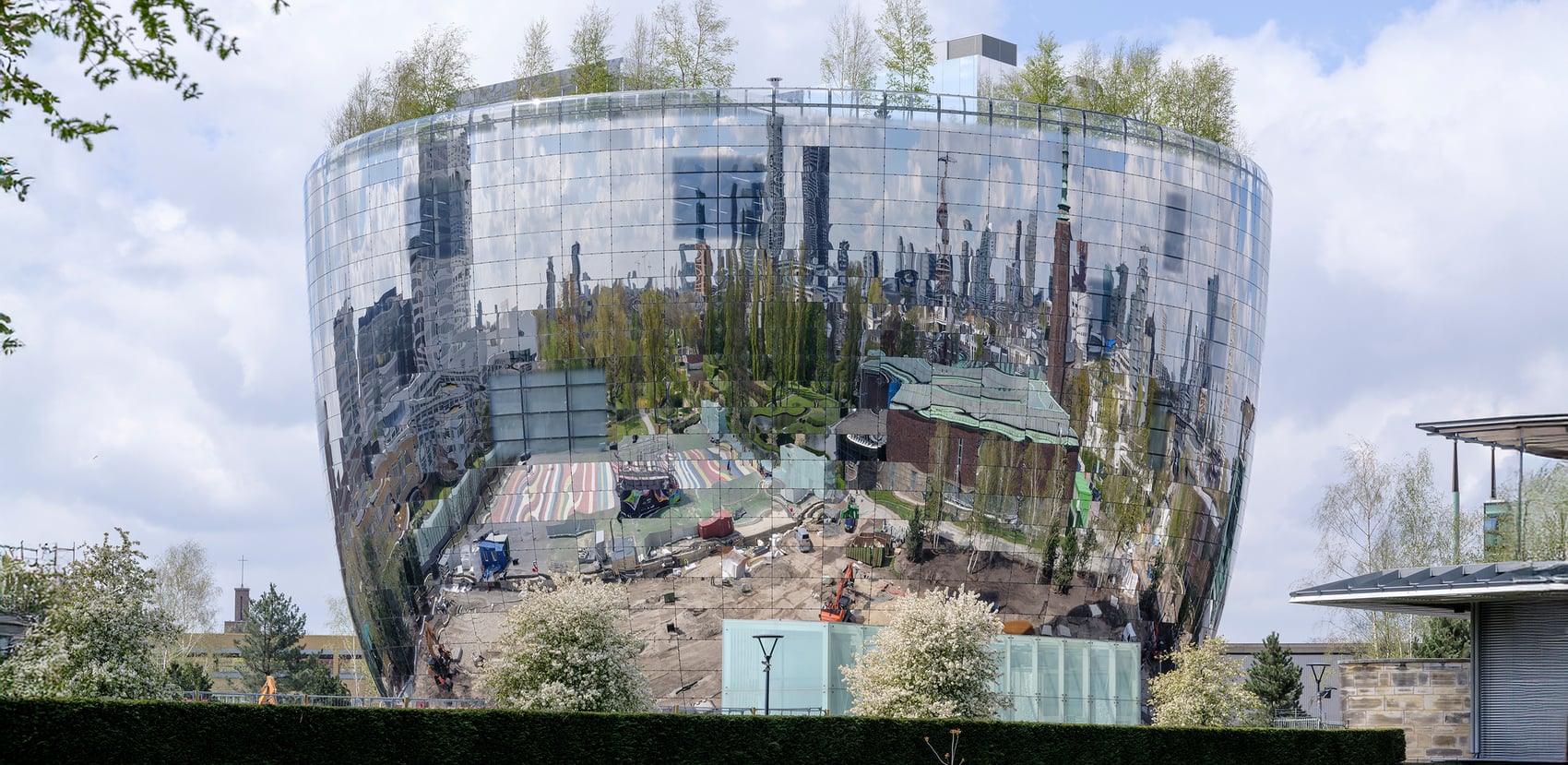
Depot Boijmans Van Beuningen, Rotterdam (2020): The world’s first publicly accessible art depot, designed by MVRDV, is located in Museumspark Rotterdam. The round building, which is 39.5 metres high, has a mirrored façade that reflects its surroundings and visually blends in with them. Inside it houses over 151,000 artworks that are stored in climate-optimised depots, accessible to visitors. The roof garden with its café forms a contrast to the technical and functional usage of the building.
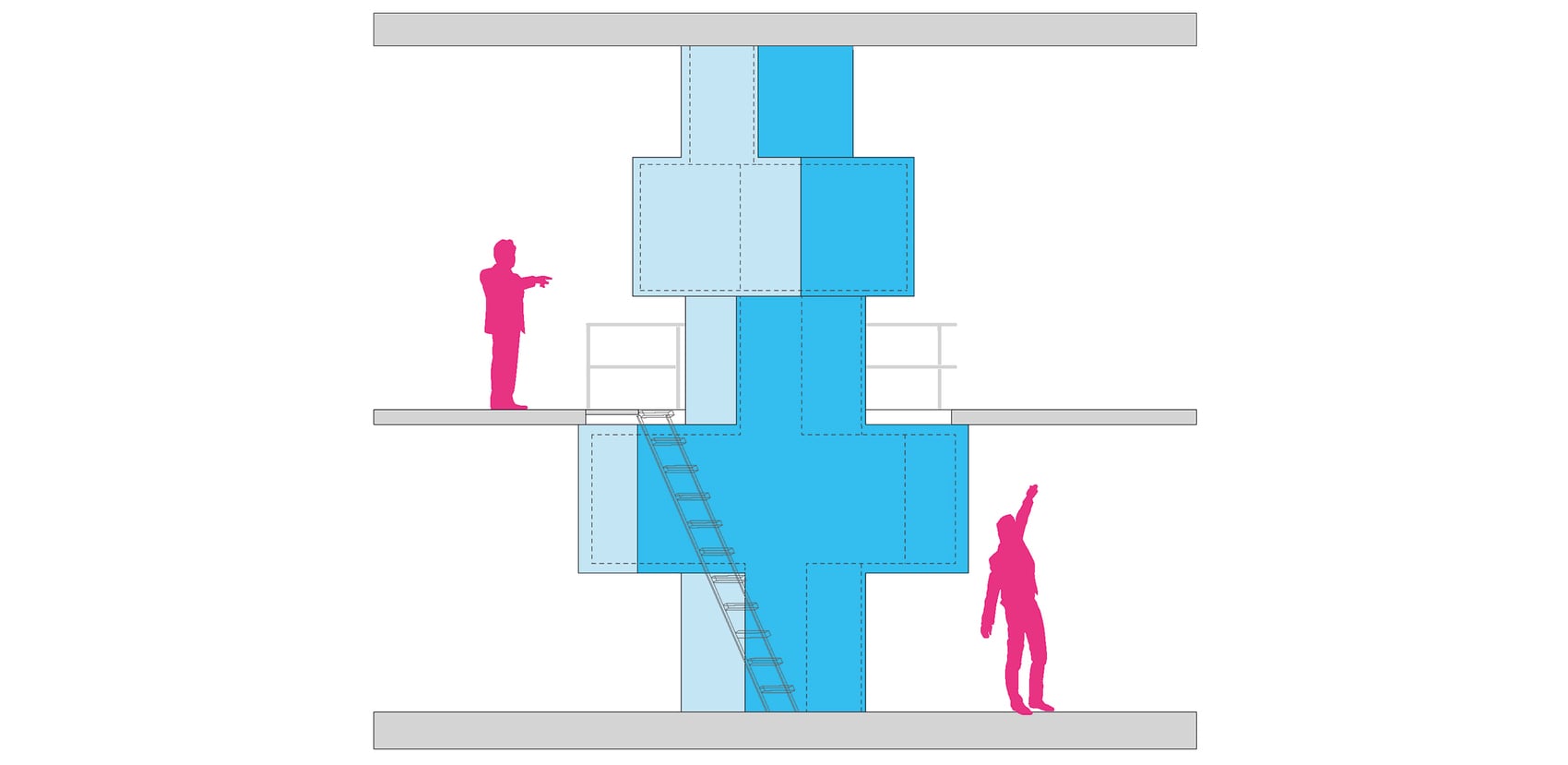
Village: Promoting community through grouped residential and functional areas with shared resources: “The ‘village’ is a metaphor for our belief that we need to develop the next level of standards in the design of residential projects – regardless of the size or location.”
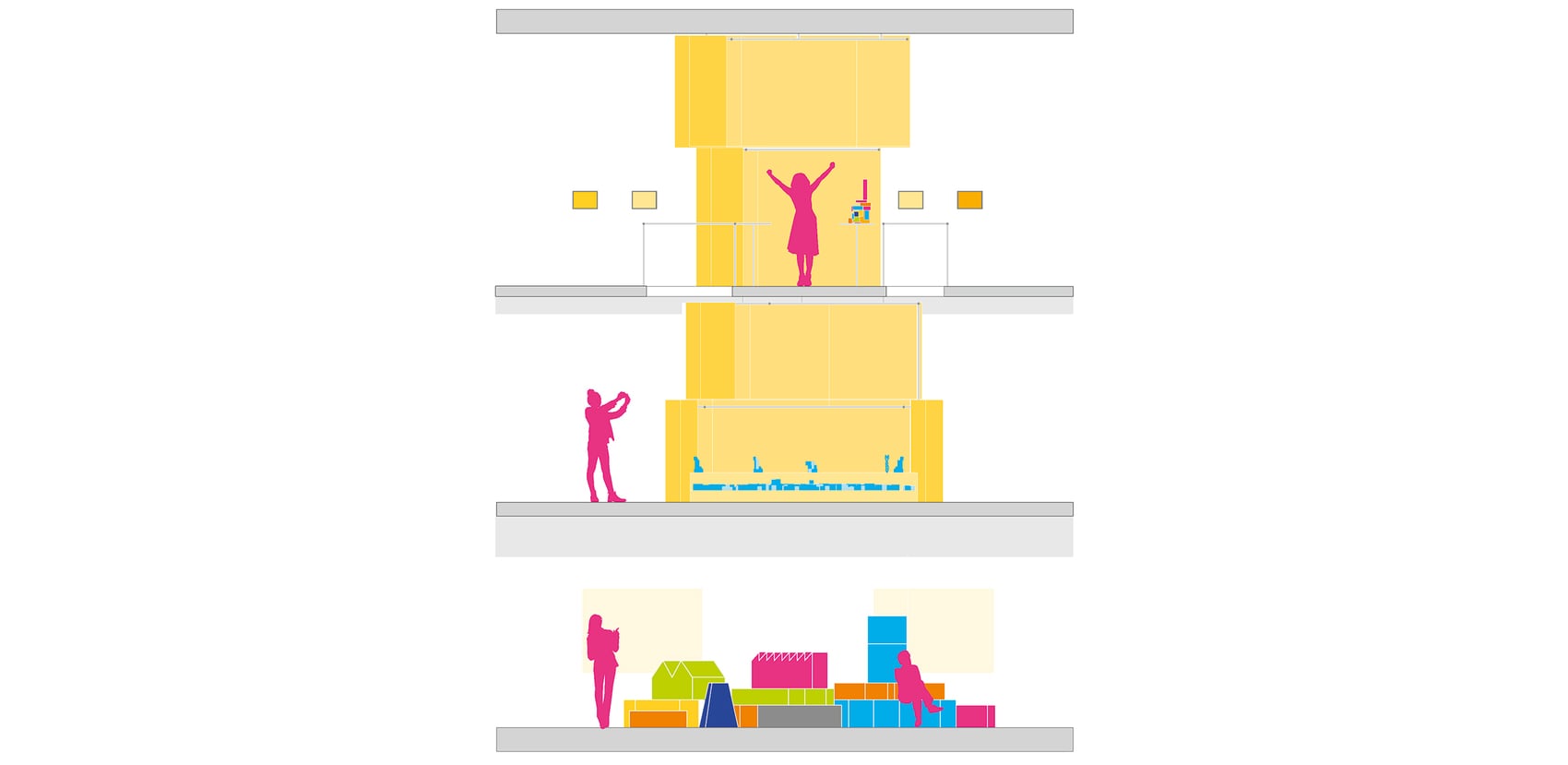
Stack: Vertical layering of functions for more efficient use of space and to promote urban densification: “You can’t have density without stacking. There is almost no other way to fulfil our hunger for more storeys, more buildings and increasing urbanisation than to think about how we can vertically combine functions.”
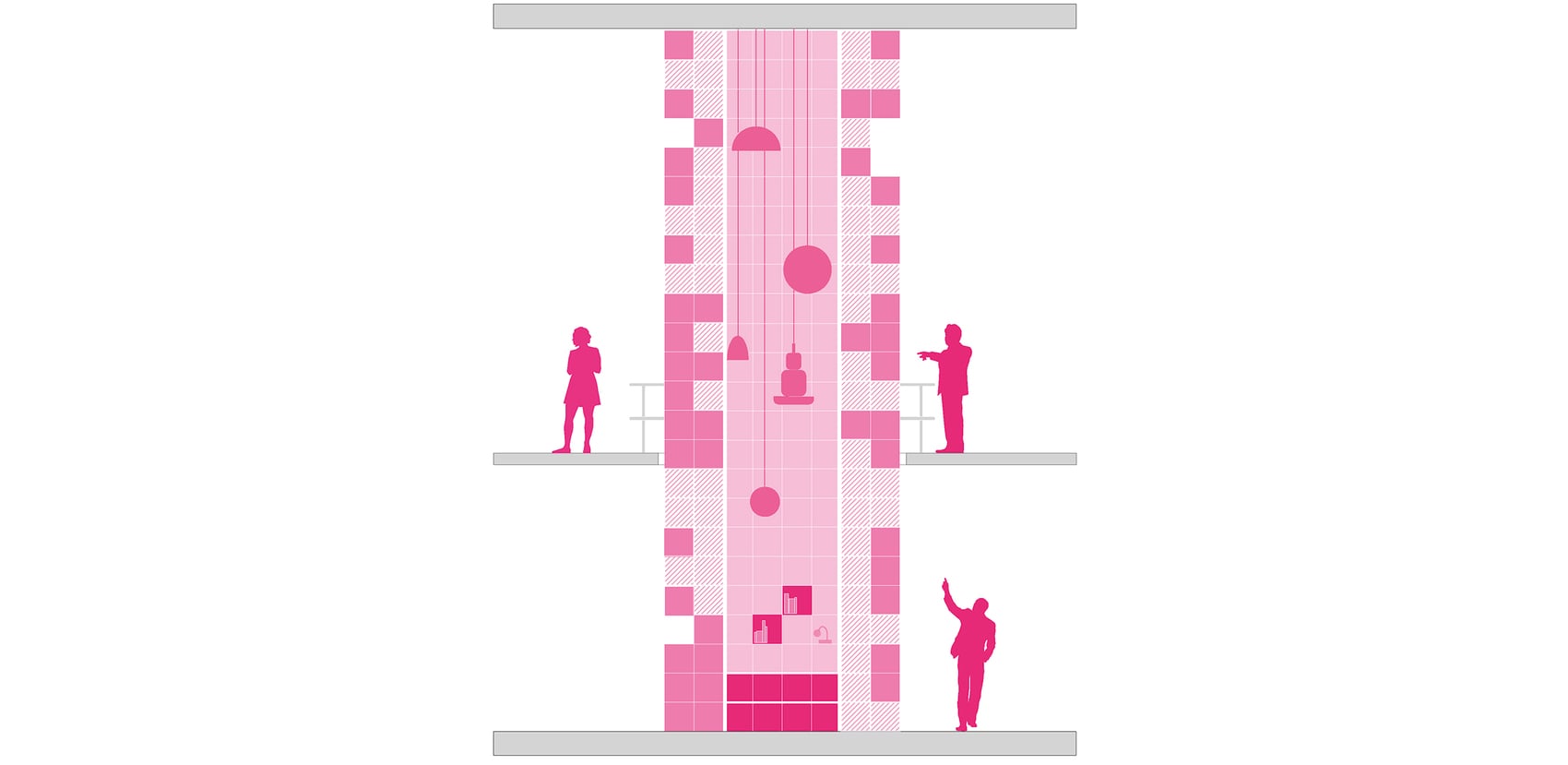
Pixel: Flexible, modular units that can take on various programmes and needs:
“There is space, and there is the start of the space – the smallest unit. What is the smallest unit we work with? The one that contains the ideal and which can form the basis.”
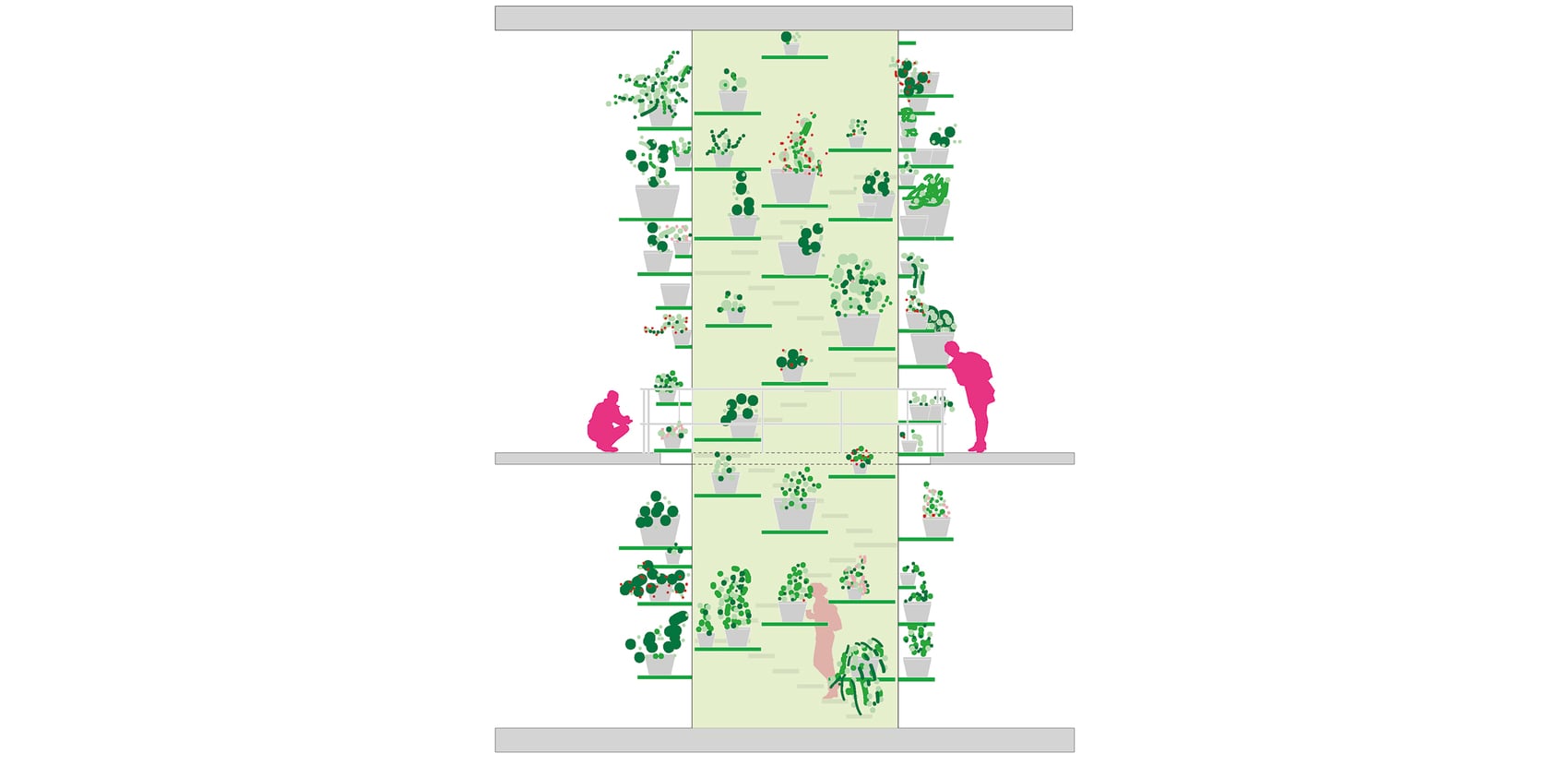
Activator: Spatial activation through multifunctional, environmentally friendly buildings: “We are experiencing the changing of our environment, along with our construction technology. We believe that the construction industry should be more innovative and buildings more productive.”
Still want more?
See here for further interesting reading matter.
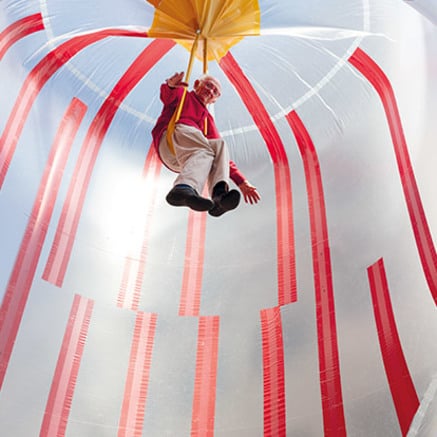
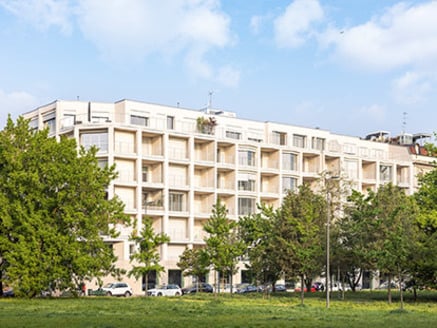
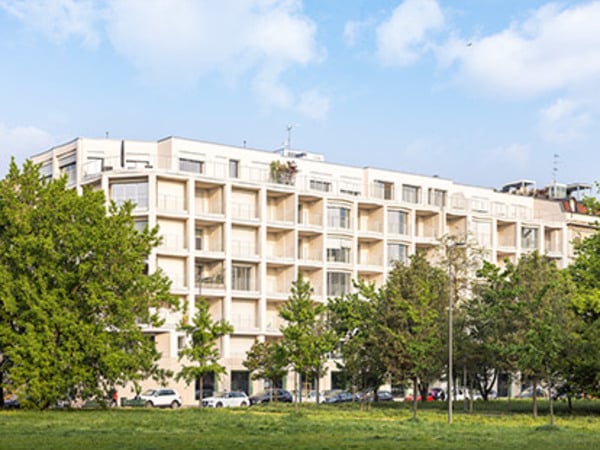
Where urban and green space meet - a residential complex opens onto a park.
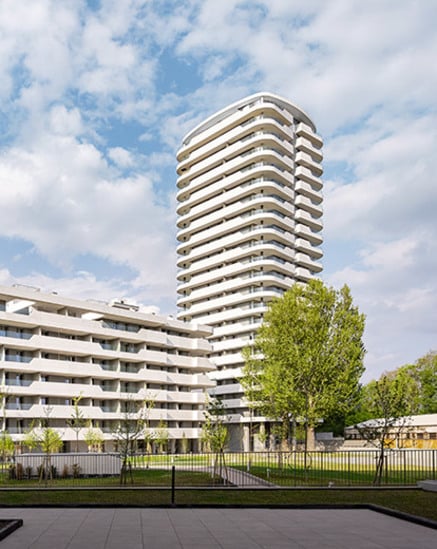
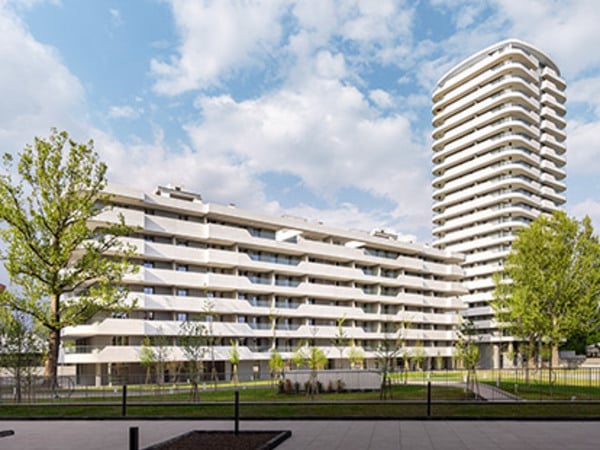
At home in an urban landscape: different systems, a single architectural language.