Our contribution to sustainability? We make windows.
An interview with Joachim Oberrauch.
How exactly does Finstral contribute to sustainability?
Joachim Oberrauch: Our most significant contribution? We make windows. Sounds obvious? But it’s key. Our products save energy, which means they’re not part of the problem, they’re part of the solution. Even if we cannot yet objectively document the impact of modern windows throughout their lifetime in environmental product declarations, the fact remains: they save more carbon than their manufacture produces. According to the industry organisation Glass for Europe, when you exchange windows you offset their production emissions in less than two years through energy savings in the building.
Does sustainability start with the product or the production?
This is a question that has preoccupied us for years. Unfortunately we only have a limited influence on the carbon neutrality of the product; the lion’s share is in the purchased materials. Glass has the greatest impact here, while the materials for the frame are less important. That’s why I’m amazed at the ongoing debate about the environmental benefits of individual frame materials: the difference between wood and uPVC is marginal. However, where we can really save is in our processes. Since we introduced ISO certification for environment and energy management in 2012, we have managed to reduce our emissions – except transportation – by more than three quarters. We will reach zero by 2030.
The EU Green Deal – brake or accelerator for the construction industry?
The Green Deal is a gift to our industry. While the world is changing rapidly, the construction industry is often slow to respond. So this political impetus isn’t just welcome, it’s necessary. In Europe at present, only around one percent of building stock is refurbished each year, which equates to around once every 100 years. From this figure we can see how important it is that we up the tempo. The EU is aiming to increase the refurbishment rate to two or even three percent. Reaching this target will be a huge challenge. That’s why we should welcome any measures that move in this direction.
Is serial refurbishment the key?
Serial refurbishment is a highly promising approach – but only for a small proportion of renovations. Fortunately our industry has developed innovative exchange methods that significantly reduce the expense. That includes minimally invasive slide-on and slide-in installation methods that don’t produce dirt or noise, and don’t require scaffolding to be set up or the occupants to move out. In new builds we use the two-stage installation method with mounting frame. This creates a reliable interface for windows and means we don’t face the same problem if we want to replace the windows again in 30 or 40 years.
What new challenges does climate change present for windows and doors?
Extreme heat, heavy rain, temperature fluctuations – windows have more to cope with than ever. Construction and materials have to be better sealed, they have to be more stable, colourfast and durable than ever. We will probably see a rapidly growing market for products that are designed expressly for climate adaptation.
Does that mean we will have to fundamentally change the way we construct windows?
Durability is the key. If a window lasts twice as long, we save an entire material usage cycle – and therefore a huge amount of carbon emissions. But we can’t achieve that through better technology alone; it also takes sophisticated design. Because if there is one thing the old buildings of Europe have taught us: people conserve what they perceive as beautiful.
What allows a window to function properly over decades?
A window shouldn’t warp over the decades. We ensure lasting angular stability through the bonding of the glass to the frame and by using high-quality fittings with sash lifters and numerous roller bolt locks right round the window. We always affix the fittings in the dry rebate area behind the centre seal, separated from the drainage level. This is a strength of the kind of modern window systems that are standard at Finstral: windows and doors that function for decades with minimal wear.
How can we prevent material ageing in the long term?
Materials primarily age through the impact of weather. So their durability is dependent on both their quality and their qualities. Wood inevitably weathers, no matter how well it’s protected. So at Finstral we only use it for the inside of the window. On the outside and in the core of the profile structure we use rot-free materials such as aluminium and uPVC. To keep aluminium stable in the long term you have to coat it with high-quality materials. So we finish it in accordance with the top standard Qualicoat Seaside in our own aluminium powder coating facility. For uPVC, it is the formula that determines the durability. So we use a uPVC mixture that meets the criteria for the demanding climate class S (hot climate).
Can you not simply extend the lifespan by swapping out individual parts, and thus save resources?
It sounds appealing, but in practice it doesn’t make a lot of sense. If we were to simply swap out the glazing, the other parts – such as the fittings – would have to last twice as long. That is rarely the case. Proportionality plays a part as well: replacing a glass pane takes 30 minutes, fittings at least as long as that. But a complete window replacement, which takes between 30 minutes and two hours depending on the type, provides an entirely new product. And it comes with better thermal insulation, noise protection, burglar resistance, solar protection, ease of use and aesthetics – and a full guarantee.
How recyclable are your windows?
Windows are readily recyclable – provided they are constructed with recycling in mind. That’s why we pursue the principle of modular construction with clear interfaces, and attach great importance to unmixed, uncontaminated and reusable materials. Because the volume of waste later on is decided at the beginning of the product development process.
Minimum 60-year service life
Always long-lasting: the mechanical durability (repeated opening and closing) of Finstral windows is tested not for the standard 20-year period, but for three times as long. Due to the high-quality construction, they are capable of over 60,000 turning and tilting cycles without damage.
Long-term functionality test of a Finstral aluminium-uPVC window door 90 x 230 cm, carried out at the Institut für Fenstertechnik (ift) Rosenheim with 65,000 cycles under the testing standard for long-term functionality EN 12400:2002-10; this equates to more than three times the requirements of the RAL seal.
Joachim Oberrauch: Our most significant contribution? We make windows. Sounds obvious? But it’s key. Our products save energy, which means they’re not part of the problem, they’re part of the solution. Even if we cannot yet objectively document the impact of modern windows throughout their lifetime in environmental product declarations, the fact remains: they save more carbon than their manufacture produces. According to the industry organisation Glass for Europe, when you exchange windows you offset their production emissions in less than two years through energy savings in the building.
Does sustainability start with the product or the production?
This is a question that has preoccupied us for years. Unfortunately we only have a limited influence on the carbon neutrality of the product; the lion’s share is in the purchased materials. Glass has the greatest impact here, while the materials for the frame are less important. That’s why I’m amazed at the ongoing debate about the environmental benefits of individual frame materials: the difference between wood and uPVC is marginal. However, where we can really save is in our processes. Since we introduced ISO certification for environment and energy management in 2012, we have managed to reduce our emissions – except transportation – by more than three quarters. We will reach zero by 2030.
The EU Green Deal – brake or accelerator for the construction industry?
The Green Deal is a gift to our industry. While the world is changing rapidly, the construction industry is often slow to respond. So this political impetus isn’t just welcome, it’s necessary. In Europe at present, only around one percent of building stock is refurbished each year, which equates to around once every 100 years. From this figure we can see how important it is that we up the tempo. The EU is aiming to increase the refurbishment rate to two or even three percent. Reaching this target will be a huge challenge. That’s why we should welcome any measures that move in this direction.
Is serial refurbishment the key?
Serial refurbishment is a highly promising approach – but only for a small proportion of renovations. Fortunately our industry has developed innovative exchange methods that significantly reduce the expense. That includes minimally invasive slide-on and slide-in installation methods that don’t produce dirt or noise, and don’t require scaffolding to be set up or the occupants to move out. In new builds we use the two-stage installation method with mounting frame. This creates a reliable interface for windows and means we don’t face the same problem if we want to replace the windows again in 30 or 40 years.
What new challenges does climate change present for windows and doors?
Extreme heat, heavy rain, temperature fluctuations – windows have more to cope with than ever. Construction and materials have to be better sealed, they have to be more stable, colourfast and durable than ever. We will probably see a rapidly growing market for products that are designed expressly for climate adaptation.
Does that mean we will have to fundamentally change the way we construct windows?
Durability is the key. If a window lasts twice as long, we save an entire material usage cycle – and therefore a huge amount of carbon emissions. But we can’t achieve that through better technology alone; it also takes sophisticated design. Because if there is one thing the old buildings of Europe have taught us: people conserve what they perceive as beautiful.
What allows a window to function properly over decades?
A window shouldn’t warp over the decades. We ensure lasting angular stability through the bonding of the glass to the frame and by using high-quality fittings with sash lifters and numerous roller bolt locks right round the window. We always affix the fittings in the dry rebate area behind the centre seal, separated from the drainage level. This is a strength of the kind of modern window systems that are standard at Finstral: windows and doors that function for decades with minimal wear.
How can we prevent material ageing in the long term?
Materials primarily age through the impact of weather. So their durability is dependent on both their quality and their qualities. Wood inevitably weathers, no matter how well it’s protected. So at Finstral we only use it for the inside of the window. On the outside and in the core of the profile structure we use rot-free materials such as aluminium and uPVC. To keep aluminium stable in the long term you have to coat it with high-quality materials. So we finish it in accordance with the top standard Qualicoat Seaside in our own aluminium powder coating facility. For uPVC, it is the formula that determines the durability. So we use a uPVC mixture that meets the criteria for the demanding climate class S (hot climate).
Can you not simply extend the lifespan by swapping out individual parts, and thus save resources?
It sounds appealing, but in practice it doesn’t make a lot of sense. If we were to simply swap out the glazing, the other parts – such as the fittings – would have to last twice as long. That is rarely the case. Proportionality plays a part as well: replacing a glass pane takes 30 minutes, fittings at least as long as that. But a complete window replacement, which takes between 30 minutes and two hours depending on the type, provides an entirely new product. And it comes with better thermal insulation, noise protection, burglar resistance, solar protection, ease of use and aesthetics – and a full guarantee.
How recyclable are your windows?
Windows are readily recyclable – provided they are constructed with recycling in mind. That’s why we pursue the principle of modular construction with clear interfaces, and attach great importance to unmixed, uncontaminated and reusable materials. Because the volume of waste later on is decided at the beginning of the product development process.
Minimum 60-year service life
Always long-lasting: the mechanical durability (repeated opening and closing) of Finstral windows is tested not for the standard 20-year period, but for three times as long. Due to the high-quality construction, they are capable of over 60,000 turning and tilting cycles without damage.
Long-term functionality test of a Finstral aluminium-uPVC window door 90 x 230 cm, carried out at the Institut für Fenstertechnik (ift) Rosenheim with 65,000 cycles under the testing standard for long-term functionality EN 12400:2002-10; this equates to more than three times the requirements of the RAL seal.
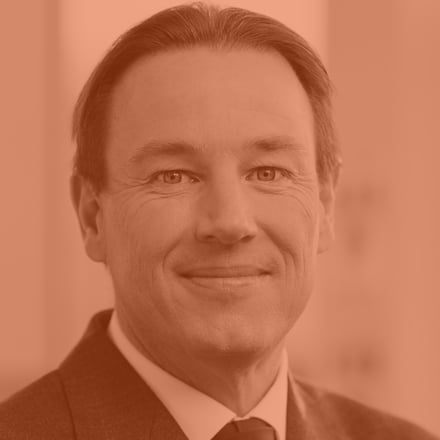
Joachim Oberrauch, born in 1975, is a qualified industrial engineer and President of the Board of Directors. Since 2000 he has been working for Finstral, which was established by his father. He has particular responsibility for the Product Development Division on the Executive Board.
Reframe Resilience
Find more helpful information on this topic here.